




The Policy Crossroads
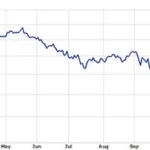
The Indian rupee has staged a modest recovery in recent trading sessions, rebounding nearly one rupee against the dollar after hitting record lows. While the Reserve Bank of India (RBI) has deployed an estimated $1 billion in daily foreign exchange interventions to stabilize the currency, a growing consensus among prominent economists suggests that aggressive defense of the rupee may be counterproductive. As the currency fluctuates near the 96-per-dollar threshold, the debate has shifted from merely managing volatility to questioning the necessity of preventing a slide toward the symbolic 100 mark.
Context of Currency Intervention
The RBI’s current strategy involves selling dollar reserves to smooth out sharp fluctuations and prevent panic in the financial markets. This intervention is designed to curb imported inflation and maintain investor confidence during periods of geopolitical uncertainty. However, these actions occur against a backdrop of fluctuating oil prices and shifting global capital flows, which continue to exert downward pressure on the rupee.
The Economic Argument for Depreciation
Leading economic voices are increasingly advocating for a hands-off approach, emphasizing that the psychological barrier of 100 rupees to the dollar is an arbitrary figure. Former NITI Aayog Vice Chairman Arvind Panagariya has publicly urged policymakers to avoid letting this specific number dictate monetary strategy. He argues that allowing the market to determine the currency’s value is a more rational response to current economic conditions than artificial stabilization.
Former Chief Economic Advisor Arvind Subramanian has framed the depreciation as a strategic necessity for India’s global standing. He suggests that a gradual 10 percent decline in the rupee could be vital to aligning Indian export competitiveness with that of China. By allowing the currency to adjust, the economy may naturally pivot toward higher export volumes, effectively correcting trade imbalances without the need for constant central bank intervention.
Risks and Macroeconomic Adjustments
The argument for allowing the rupee to find its natural level is supported by high-profile experts including former RBI Governor Raghuram Rajan and former IMF Chief Economist Gita Gopinath. Gopinath has noted that currency depreciation acts as a natural mechanism to reduce non-essential imports, such as oil, which aligns with long-term government conservation goals. She warns that persistent intervention risks depleting foreign exchange reserves without addressing the underlying macroeconomic fundamentals.
Former RBI Governor D. Subbarao has raised concerns regarding the ‘credibility trap,’ where a failed attempt to defend a currency can lead to a more rapid evaporation of market confidence than a controlled slide. If the central bank attempts to hold a line that the market fundamentals do not support, it may signal weakness rather than strength. This perspective highlights the risk that over-intervention could prove more damaging to India’s financial reputation than allowing the currency to reach a market-determined equilibrium.
Divergent Paths Forward
The government remains cautious, with Chief Economic Advisor V.A. Nageswaran describing the defense of the rupee as a key macroeconomic imperative for the coming fiscal year. This creates a clear tension between the government’s desire for stability and the academic push for market-led adjustment. While the RBI continues to balance these competing interests, market participants are keeping a close watch on the pace of reserve depletion.
Looking ahead, the primary indicator for the industry will be the RBI’s willingness to scale back its daily dollar sales. If the central bank shifts toward a more hands-off policy, the rupee may face accelerated depreciation in the short term, testing the resilience of domestic importers and the competitiveness of the export sector. Investors are now assessing whether the upcoming fiscal policies will prioritize currency stability or allow for the structural adjustments that many economists believe are necessary for long-term growth.