



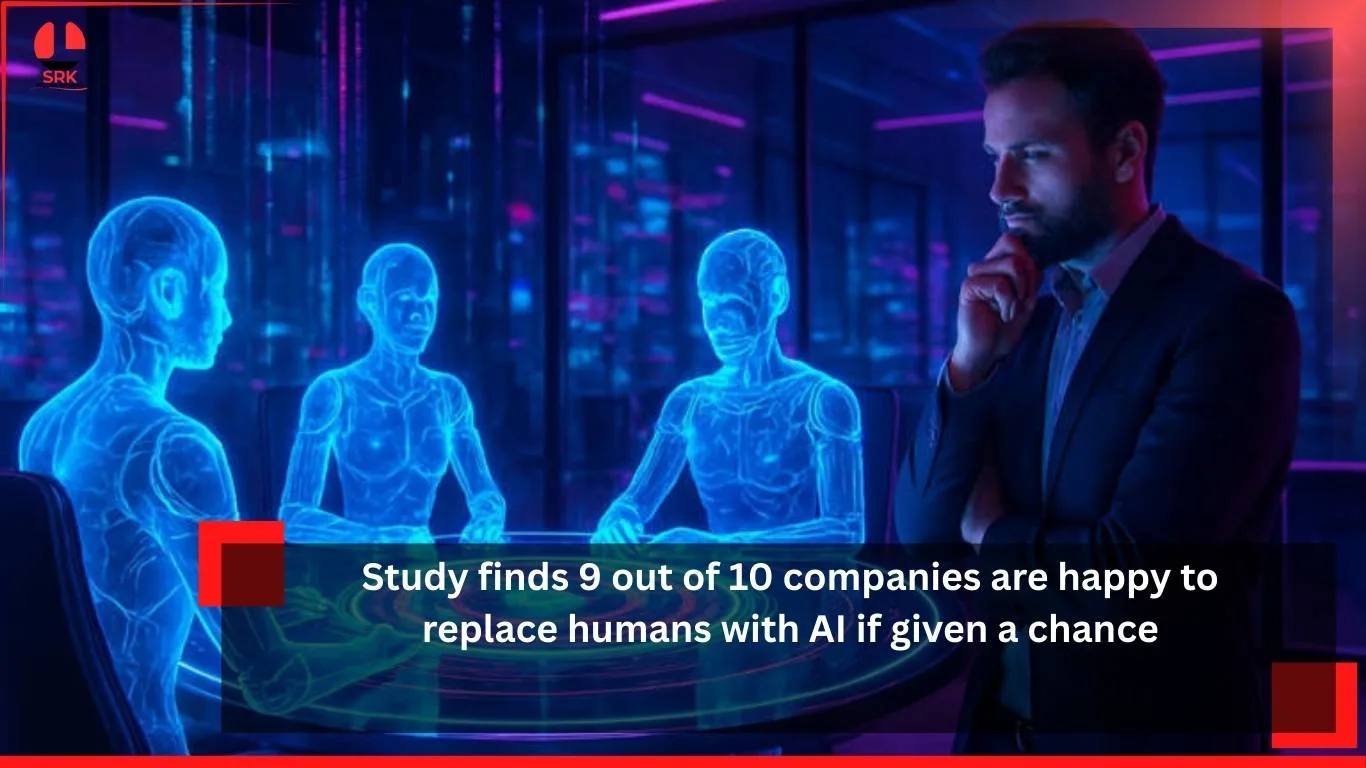
A recent study has revealed a striking trend in the global corporate landscape: nine out of ten companies would willingly replace human workers with artificial intelligence (AI) if given the opportunity. This finding underscores the accelerating pace of automation and digital transformation across industries, raising questions about the future of work, employment, and human-machine collaboration.
The Core Findings of the Study
The study highlights several key insights into corporate attitudes toward AI adoption:
- High Willingness for Replacement: 90% of surveyed companies expressed readiness to substitute human roles with AI systems.
- Cost Efficiency: Companies view AI as a tool to reduce operational costs and improve productivity.
- Scalability: AI systems can handle repetitive tasks at scale without fatigue.
- Strategic Advantage: Firms believe AI adoption enhances competitiveness in global markets.
This data reflects a growing corporate belief that AI is not just a supportive technology but a potential replacement for human labor in many functions.
Why Companies Prefer AI Over Humans
The preference for AI stems from several factors:
- Consistency: AI delivers uniform performance without human error.
- Speed: Automated systems process data and tasks faster than humans.
- Availability: AI operates 24/7 without breaks, holidays, or downtime.
- Adaptability: Machine learning allows AI to evolve with new data.
- Cost Savings: Reduced salaries, benefits, and HR overheads make AI financially attractive.
Comparative Analysis of Human vs. AI Workforce
| Aspect | Human Workforce | AI Workforce |
|---|---|---|
| Reliability | Subject to fatigue, errors | Consistent, error-free |
| Cost | Salaries, benefits, training | Initial investment, low maintenance |
| Scalability | Limited by human capacity | Infinite scalability with infrastructure |
| Creativity | High, innovative problem-solving | Limited, data-driven |
| Emotional Intelligence | Strong interpersonal skills | Weak, lacks empathy |
| Availability | Restricted by working hours | 24/7 continuous operation |
Pivot Analysis: Corporate Gains vs. Social Impact
| Dimension | Corporate Gains | Social Impact |
|---|---|---|
| Productivity | Higher efficiency, faster output | Job displacement, unemployment risks |
| Cost Efficiency | Reduced expenses, higher profits | Economic inequality, wage stagnation |
| Innovation | Accelerated digital transformation | Reduced human creativity in workplaces |
| Workforce Dynamics | AI-driven operations | Need for reskilling and upskilling |
| Long-Term Sustainability | Competitive advantage | Social unrest if adaptation is slow |
Broader Implications for Global Economy
The study’s findings carry significant implications:
- Employment Challenges: Millions of jobs could be automated, leading to widespread displacement.
- Reskilling Imperative: Workers must adapt by learning new skills aligned with AI-driven industries.
- Economic Polarization: Wealth may concentrate among companies that successfully adopt AI.
- Policy Considerations: Governments will need to regulate AI adoption to balance corporate gains with social welfare.
- Global Competitiveness: Nations embracing AI may gain economic dominance, while others risk falling behind.
Challenges Ahead
While AI adoption offers clear benefits, challenges remain:
- Ethical Concerns: Replacing humans raises moral questions about dignity of work.
- Bias in AI Systems: Algorithms may perpetuate discrimination if not properly managed.
- Security Risks: AI systems are vulnerable to cyberattacks.
- Human-AI Collaboration: Finding the right balance between automation and human input is critical.
Future Outlook
The trajectory of AI adoption suggests that:
- Hybrid Work Models: Companies may combine AI efficiency with human creativity.
- Reskilling Programs: Governments and corporations will invest in training workers for AI-compatible roles.
- Policy Frameworks: Regulations will emerge to protect workers while encouraging innovation.
- Global AI Economy: AI will become a cornerstone of trade, industry, and governance.
If nine out of ten companies are already willing to replace humans with AI, the future workplace will look radically different within the next decade. The challenge lies in ensuring that this transformation benefits both corporations and society at large.
Disclaimer
This article is intended for informational purposes only. It highlights findings from a study on corporate attitudes toward AI adoption. The content does not constitute financial advice, employment guidance, or official corporate statements. Readers should independently verify details before making career or business decisions.