




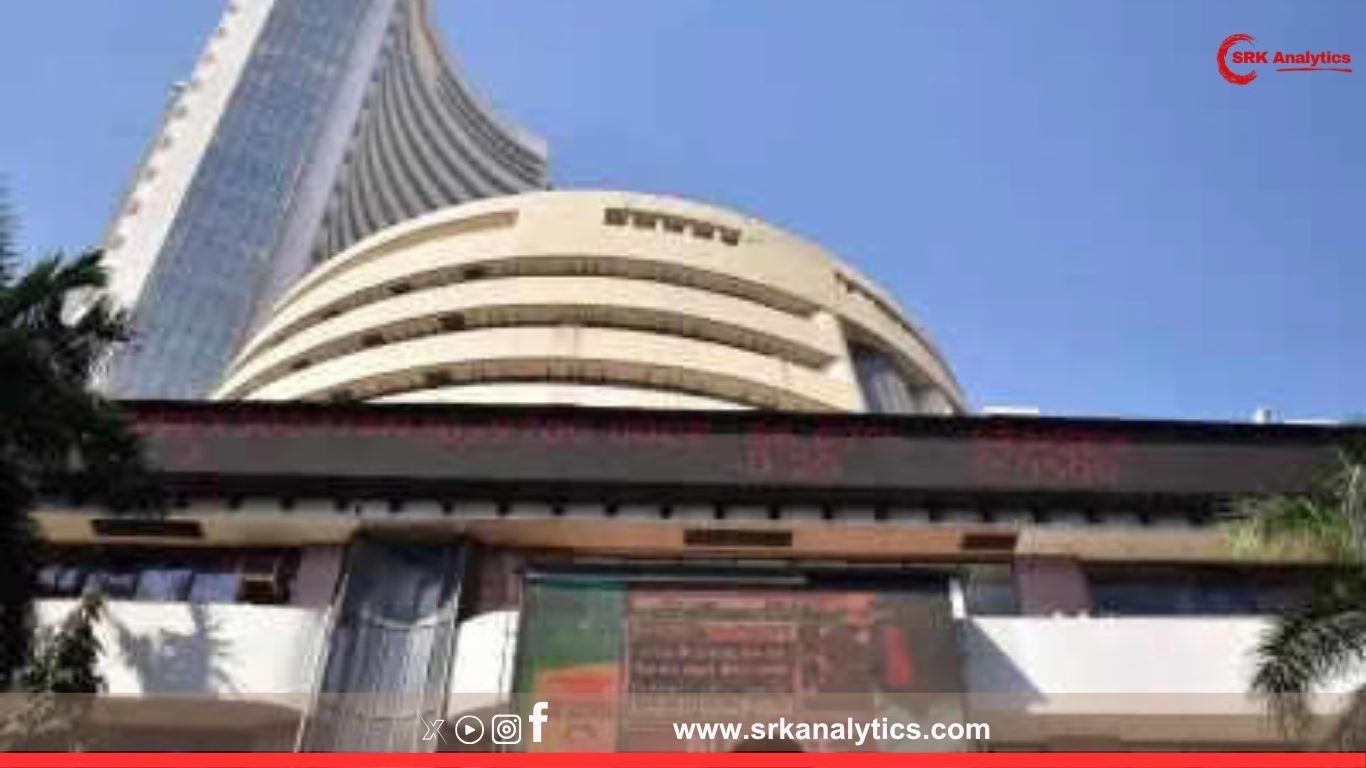
The Indian stock market may be heading towards a historic high as brokerage house Ventura Securities has projected the benchmark Sensex to touch 115,836 by FY28, driven by a robust corporate earnings cycle, strong GDP growth outlook, and the sustained thrust on infrastructure, manufacturing, and financial inclusion. This implies a compounded annual growth rate (CAGR) of 14.5% from the current levels and reflects long-term optimism surrounding India’s economic trajectory.
This bullish estimate, according to Ventura’s FY28 India Strategy Outlook, hinges on earnings momentum across banking, manufacturing, auto, infrastructure, and digital transformation-led sectors, which are expected to sustain double-digit profit growth over the next three years.
Long-Term View: Sensex to Double in Less Than 4 Years
As per Ventura Securities, the Sensex, which is currently trading near the 79,000-mark, is expected to surge to 115,836 points by March 2028, backed by the following key assumptions:
- Corporate earnings CAGR of 17.1% over FY24–FY28
- Nominal GDP growth at ~10.5%
- Stable inflation and interest rate environment
- Continued policy support for capex and manufacturing
- Moderate valuations relative to long-term averages
| Fiscal Year | Projected Sensex EPS (₹) | YoY EPS Growth (%) | Target PE Multiple | Estimated Sensex Level |
|---|---|---|---|---|
| FY24 (Actual) | 2,860 | — | 24x | 78,080 |
| FY25 (Est.) | 3,340 | 16.8% | 25x | 83,500 |
| FY26 (Est.) | 3,860 | 15.5% | 26x | 100,360 |
| FY27 (Est.) | 4,470 | 15.8% | 26x | 111,250 |
| FY28 (Est.) | 5,040 | 12.7% | 23x | 115,836 |
The report emphasized that the 115k+ level is “not just a number but a reflection of India’s sustained policy execution, corporate resilience, and capital market maturity.”
Sectoral Drivers of the Next Leg of Growth
Ventura’s outlook highlights five core sectors likely to propel this Sensex growth trajectory:
- Financial Services
With better asset quality, credit growth recovery, and improved net interest margins, the banking sector, especially PSU and large private banks, is forecasted to contribute heavily to Sensex EPS expansion. - Capital Goods & Infrastructure
As the government maintains its capex push, including roadways, railways, defense, and urban infrastructure, capital goods majors and EPC firms are expected to see margin and order book expansion. - Auto & Ancillaries
Driven by EV adoption, export opportunities, and cyclical recovery in rural demand, the auto sector is expected to generate high double-digit earnings. - Information Technology
While FY24 remained sluggish, IT is likely to rebound by FY26 on the back of GenAI spending, cloud modernization, and enterprise digital transformation. - Consumer Discretionary & Retail
A demographic dividend, rising disposable income, and Tier 2/3 consumption surge will drive sustained growth across branded retail, QSR, and lifestyle segments.
| Sector | FY24 Earnings Weight (%) | Expected CAGR FY24–28 (%) | Key Drivers |
|---|---|---|---|
| Financial Services | 36 | 17.5 | Credit growth, digital banking, NPAs decline |
| Capital Goods/Infra | 10 | 20.1 | Infra spend, manufacturing incentives |
| IT Services | 14 | 12.8 | GenAI, cloud migration |
| Auto & Ancillaries | 7 | 18.3 | EV growth, exports, rural rebound |
| Consumer & Retail | 6 | 16.5 | Urban demand, D2C, aspirational consumption |
Valuation & Macro Anchors: What Makes This Realistic?
While several market watchers express caution on elevated valuations, Ventura insists that India’s premium valuations are justified by earnings visibility, macro stability, and improved capital efficiency. The projected Sensex PE of 23x by FY28 remains aligned with historical medians during high-growth cycles.
The brokerage also points to India’s improving debt-to-GDP ratio, healthy forex reserves, digital penetration, and stable political framework as macro enablers of the index’s long-term appreciation.
Key Enablers to Watch Through FY28
| Macro/Micro Factor | Outlook FY24–FY28 |
|---|---|
| Corporate Profit/GDP | Expected to rise from 4.1% to 6.0% |
| Capex Cycle | Manufacturing-led, driven by PLI & infra focus |
| FDI Inflows | Rising in electronics, defense, renewables |
| Retail Participation | Growing with demat surge, SIP flows |
| Government Reforms | GST, labor, logistics, power sector in focus |
| Digital Infrastructure | UPI 2.0, e-commerce, ONDC expansion |
What Can Derail the Sensex March to 115K?
Despite the bullish outlook, Ventura acknowledges several downside risks that could impact the trajectory:
- Geopolitical tensions (e.g., Middle East, Taiwan, South China Sea)
- Global recession or Fed-induced monetary tightening
- Commodity price spikes, especially oil
- Disruptions to supply chains or export demand
- Policy slippages or implementation delays
- Rural distress or inflation-led demand compression
The firm stresses that while these are potential hurdles, India’s diversified domestic economy acts as a cushion against external shocks compared to export-dependent peers.
Retail & Institutional Sentiment Still Strong
The rise in SIP (Systematic Investment Plan) flows, direct equity participation, and DIIs (Domestic Institutional Investors) now offsetting FIIs in daily trades has added liquidity resilience to Indian markets.
| Investor Class | Participation Trend FY24–FY25 |
|---|---|
| Retail Investors | 13 crore+ demat accounts; SIPs at ₹21,000 cr/month |
| Domestic MFs | Record inflows; 8 consecutive quarters of buying |
| Foreign Institutional | Net inflow expected in FY26–28 as global EM cycle picks up |
| HNIs & PMS | Higher allocations toward equity as real estate stagnates |
This broad-based support provides confidence that the Sensex rally, if not linear, will be resilient and trend upwards in the medium term.
Conclusion
The projection of Sensex reaching 115,836 by FY28 by Ventura Securities is not just an ambitious number but a reflection of India’s fundamental strength, corporate profit growth, and investor confidence. As the country stays the course on fiscal prudence, digital governance, and manufacturing reforms, the index’s trajectory will likely mirror India’s economic transformation.
Retail investors, while optimistic, are advised to stay diversified, invest via SIPs or long-term equity funds, and avoid speculative short-term behavior as the market navigates through volatility toward this multi-year high.
Disclaimer: This article is meant for informational purposes only and does not constitute financial advice, stock recommendations, or an offer to buy/sell any securities. Investors should conduct their own research or consult with a licensed financial advisor before making investment decisions.