




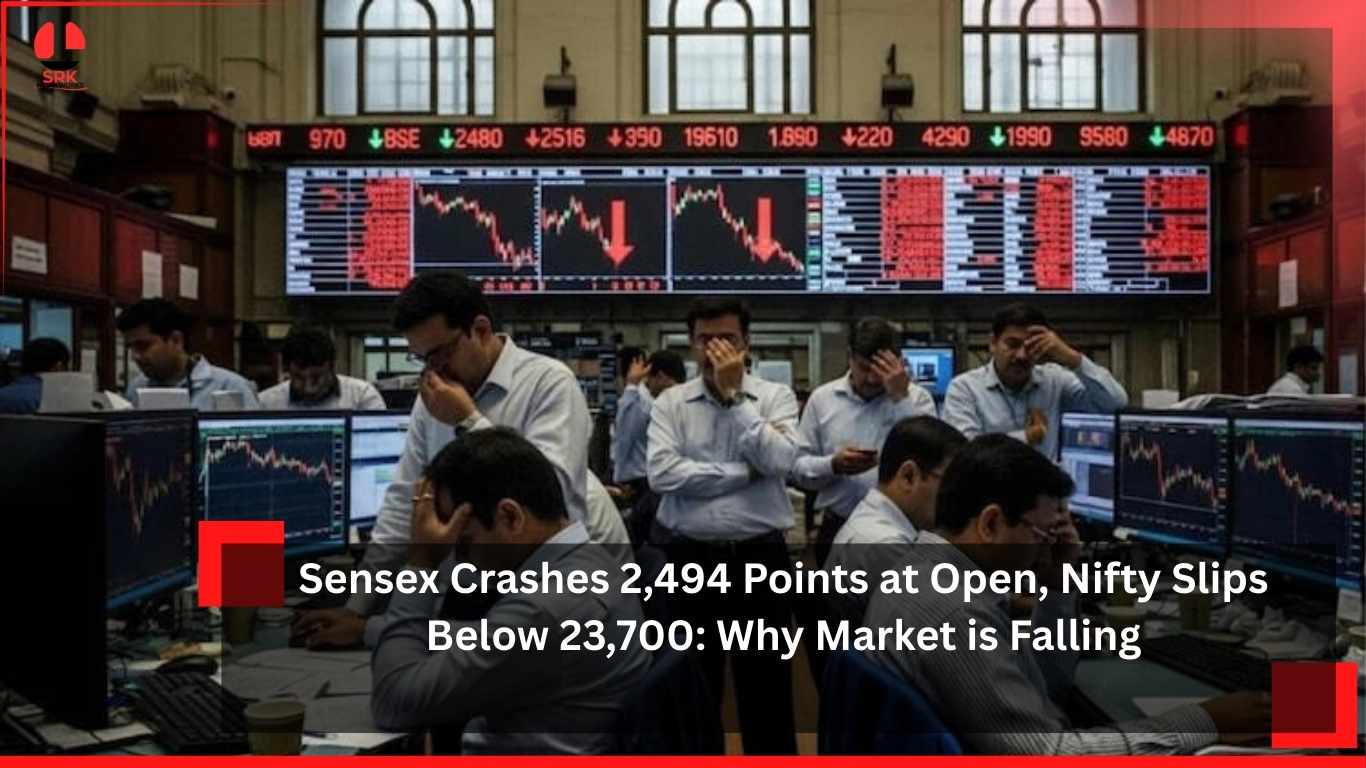
Indian equity markets witnessed a bloodbath at the opening bell today, with the Sensex plunging 2,494 points and the Nifty slipping below 23,700. The crash reflects a combination of global and domestic factors, including geopolitical tensions, surging crude oil prices, foreign capital outflows, and fears of inflationary pressure.
Key Reasons Behind the Market Crash
- Geopolitical Tensions in West Asia
The escalating Iran conflict has rattled global markets, raising fears of prolonged instability and supply chain disruptions. - Crude Oil Surge
Brent crude prices spiked above $110 per barrel, the highest since 2020, increasing India’s import bill and inflationary risks. - Foreign Capital Outflows
Global investors are pulling money out of emerging markets, including India, due to risk aversion and preference for safe-haven assets. - Weak Rupee
The Indian currency hit record lows against the US dollar, adding pressure on import costs and corporate earnings. - Volatility Index Surge
India VIX jumped over 20%, signaling heightened investor fear and uncertainty. - Profit Booking
After recent highs, investors booked profits amid uncertainty, accelerating the fall. - Global Selloff
Asian and European markets also saw declines, amplifying the pressure on Indian equities.
Comparative Analysis of Market Crashes
| Year | Event | Sensex/Nifty Fall | Impact |
|---|---|---|---|
| 2008 | Global Financial Crisis | -2,000 points in a day | Severe recession |
| 2020 | COVID-19 Pandemic | -3,000 points | Lockdowns, economic halt |
| 2022 | Russia-Ukraine War | -1,800 points | Energy crisis, inflation |
| 2026 | Iran Conflict | -2,494 points | Oil surge, rupee weakness |
Pivot Analysis of Current Crash
| Dimension | Immediate Impact | Medium-Term Outlook | Long-Term Implications |
|---|---|---|---|
| Oil Prices | Surged above $110 | Inflationary pressure | Push for renewable energy |
| Rupee Value | Record low | Higher import costs | Policy intervention likely |
| Investor Sentiment | Panic selling | Volatility persists | Stabilization after clarity |
| Economic Growth | Slowed momentum | Recovery depends on oil | Structural reforms needed |
Sectoral Impact
- Energy Stocks: Benefited from rising crude prices.
- Aviation & Transport: Hit hard due to higher fuel costs.
- Banking: Pressure from foreign outflows and rupee weakness.
- IT & Pharma: Mixed impact, with rupee depreciation aiding exports.
What Investors Should Do
- Stay Calm: Avoid panic selling; volatility is expected in the short term.
- Diversify: Focus on defensive sectors like FMCG, pharma, and IT.
- Track Global Developments: Geopolitical clarity will drive recovery.
- Long-Term View: India’s fundamentals remain strong despite short-term shocks.
Conclusion
The Sensex crash of 2,494 points and Nifty’s slip below 23,700 reflect the deep interconnectedness of global geopolitics and financial markets. With crude oil surging and foreign investors pulling out, India faces inflationary risks and currency pressure. However, long-term fundamentals remain intact, and stability will return once geopolitical tensions ease.
Disclaimer
This article is a journalistic analysis based on publicly available financial data and commentary. It does not represent investment advice. Readers are encouraged to consult certified financial advisors before making decisions.