






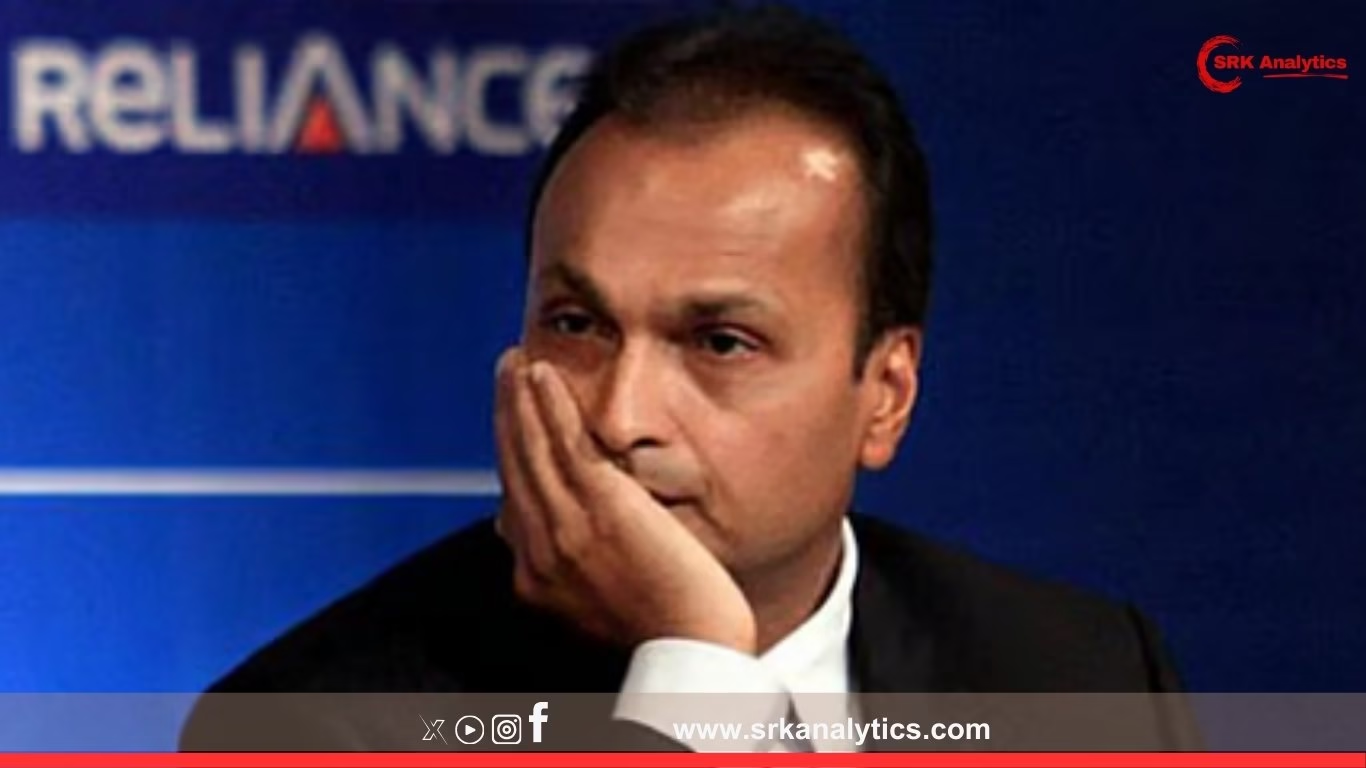
In a significant regulatory development, the Securities and Exchange Board of India (Sebi) has rejected industrialist Anil Ambani’s settlement application relating to alleged violations in connection with investments in Yes Bank bonds. Official documents indicate that the settlement plea, which was aimed at resolving the matter without prolonged litigation, did not meet the regulator’s criteria for acceptance.
This decision intensifies the legal and financial challenges faced by Ambani, who has been under scrutiny over a series of transactions linked to the controversial Yes Bank AT-1 bonds case.
The Case Background
The matter revolves around allegations of regulatory breaches in the sale and marketing of Additional Tier-1 (AT-1) bonds issued by Yes Bank, which became contentious after the bank’s financial troubles in 2020.
AT-1 bonds, high-yield instruments issued by banks, were reportedly mis-sold to certain investors without proper risk disclosures. Following Yes Bank’s restructuring and the Reserve Bank of India’s decision to write down AT-1 bonds worth ₹8,415 crore, several retail investors suffered massive losses.
Sebi launched an investigation into various entities and individuals associated with the distribution and sale of these instruments. Anil Ambani, through his financial services businesses, came under the scanner for his alleged role.
What the Settlement Plea Meant
A settlement application is a regulatory mechanism under which an accused party can propose to resolve enforcement proceedings by paying a monetary penalty or fulfilling certain non-monetary conditions. The purpose is to avoid lengthy legal battles while ensuring regulatory compliance and investor protection.
According to the documents, Ambani’s settlement proposal involved a monetary component, but Sebi concluded that it did not serve the larger interest of investor protection and market integrity. The rejection means that the regulator may proceed with formal adjudication or prosecution in the matter.
Why Sebi Rejected the Plea – Possible Factors
Although Sebi has not publicly detailed its reasons, experts suggest possible grounds:
- Seriousness of Allegations – The alleged mis-selling of AT-1 bonds is considered a major investor protection issue.
- Market-Wide Implications – Accepting a settlement could be seen as setting a precedent in high-profile financial misconduct cases.
- Insufficient Settlement Terms – The proposed monetary penalty may not have been proportionate to the gravity of the allegations.
Timeline of Key Events in the Case
| Date | Event Description |
|---|---|
| 2019 | Yes Bank issues AT-1 bonds, marketed to various investors. |
| Mar 2020 | Yes Bank placed under moratorium; AT-1 bonds worth ₹8,415 crore written down. |
| Apr 2020 | Multiple complaints filed with Sebi over alleged mis-selling. |
| 2021 | Sebi issues show-cause notices to various individuals and entities. |
| 2023 | Anil Ambani files settlement application to Sebi. |
| Aug 2025 | Sebi rejects Ambani’s settlement proposal. |
Impact on Anil Ambani and His Group Businesses
The rejection of the settlement plea could have financial, reputational, and legal consequences for Anil Ambani and companies under the Reliance Capital group umbrella.
- Legal Exposure – Sebi may proceed with adjudication, which could result in higher penalties or trading restrictions.
- Reputational Damage – The continued regulatory action could impact investor confidence in Ambani-led ventures.
- Operational Disruptions – Any potential sanctions could affect the group’s ability to raise funds from capital markets.
AT-1 Bonds – The Controversial Instrument at the Heart of the Case
Additional Tier-1 bonds are perpetual debt instruments that banks use to raise capital. While offering higher returns, they come with significant risks, including the possibility of complete write-off in case of financial distress.
In the Yes Bank case, many retail investors claimed they were not informed about the inherent risks before purchase. Sebi’s action in such cases is aimed at ensuring fair market practices and proper investor disclosures.
Expert Opinions on the Regulatory Move
Market analysts believe Sebi’s rejection signals a tougher stance on settlement applications in matters involving large-scale investor impact.
- Financial Law Expert: “This decision sends a strong message to the market that regulatory violations involving systemic risk and retail investor harm will not be easily compromised.”
- Market Strategist: “For Anil Ambani, this prolongs the uncertainty and could weigh on his group’s ongoing resolution plans with lenders.”
Possible Next Steps for Sebi
With the settlement application rejected, Sebi is likely to:
- Continue with the adjudication process to determine liability.
- Impose monetary penalties or market bans if violations are established.
- Coordinate with other regulators or enforcement agencies for parallel action.
Comparative Overview – High-Profile Settlement Rejections in India
| Year | Entity/Individual | Case Type | Outcome After Rejection |
|---|---|---|---|
| 2018 | Large Brokerage Firm | Insider trading | Higher penalties after adjudication |
| 2020 | PSU Bank Executives | Mis-selling of financial products | Strict enforcement and bans |
| 2025 | Anil Ambani | Mis-selling of AT-1 bonds | Pending adjudication |
Investor Sentiment and Market Reaction
While the news has not significantly moved the broader equity markets, it has raised caution among financial services investors. Many believe that the regulator’s tough stance will enhance investor protection in the long run, even if it causes temporary disruption for certain businesses.
Broader Regulatory Implications
Sebi’s approach in this case underscores three critical regulatory priorities:
- Protection of retail investors from complex, high-risk products.
- Accountability of influential market participants.
- Preservation of trust in India’s capital markets.
Conclusion – A Turning Point in High-Profile Financial Enforcement
The rejection of Anil Ambani’s settlement plea marks a critical phase in the Yes Bank AT-1 bonds investigation. It reflects Sebi’s willingness to take a firm stance against alleged market misconduct, especially when large numbers of retail investors are affected.
The road ahead for Ambani is legally complex, and the eventual outcome could shape future settlement norms in India’s securities market.
Disclaimer: This article is for informational purposes only and does not constitute legal or financial advice. Readers should consult professional advisors before making any decisions related to financial markets or regulatory matters.


searchhacks.click – Color palette felt calming, nothing distracting, just focused, thoughtful design.
trafficsprint.click – Navigation felt smooth, found everything quickly without any confusing steps.
marketingengine.click – Found practical insights today; sharing this article with colleagues later.
marketingninja.click – Pages loaded fast, images appeared sharp, and formatting stayed consistent.
ranksignal.click – Color palette felt calming, nothing distracting, just focused, thoughtful design.
searchsignals.click – Navigation felt smooth, found everything quickly without any confusing steps.
scalewave.click – Loved the layout today; clean, simple, and genuinely user-friendly overall.
reachrocket.click – Pages loaded fast, images appeared sharp, and formatting stayed consistent.
convertio.click – Pages loaded fast, images appeared sharp, and formatting stayed consistent.
linkladder.click – Loved the layout today; clean, simple, and genuinely user-friendly overall.
mailerboost.click – Navigation felt smooth, found everything quickly without any confusing steps.
rankora.click – Navigation felt smooth, found everything quickly without any confusing steps.
adzio.click – Pages loaded fast, images appeared sharp, and formatting stayed consistent.
adlify.click – Navigation felt smooth, found everything quickly without any confusing steps.
admark.click – Mobile version looks perfect; no glitches, fast scrolling, crisp text.