




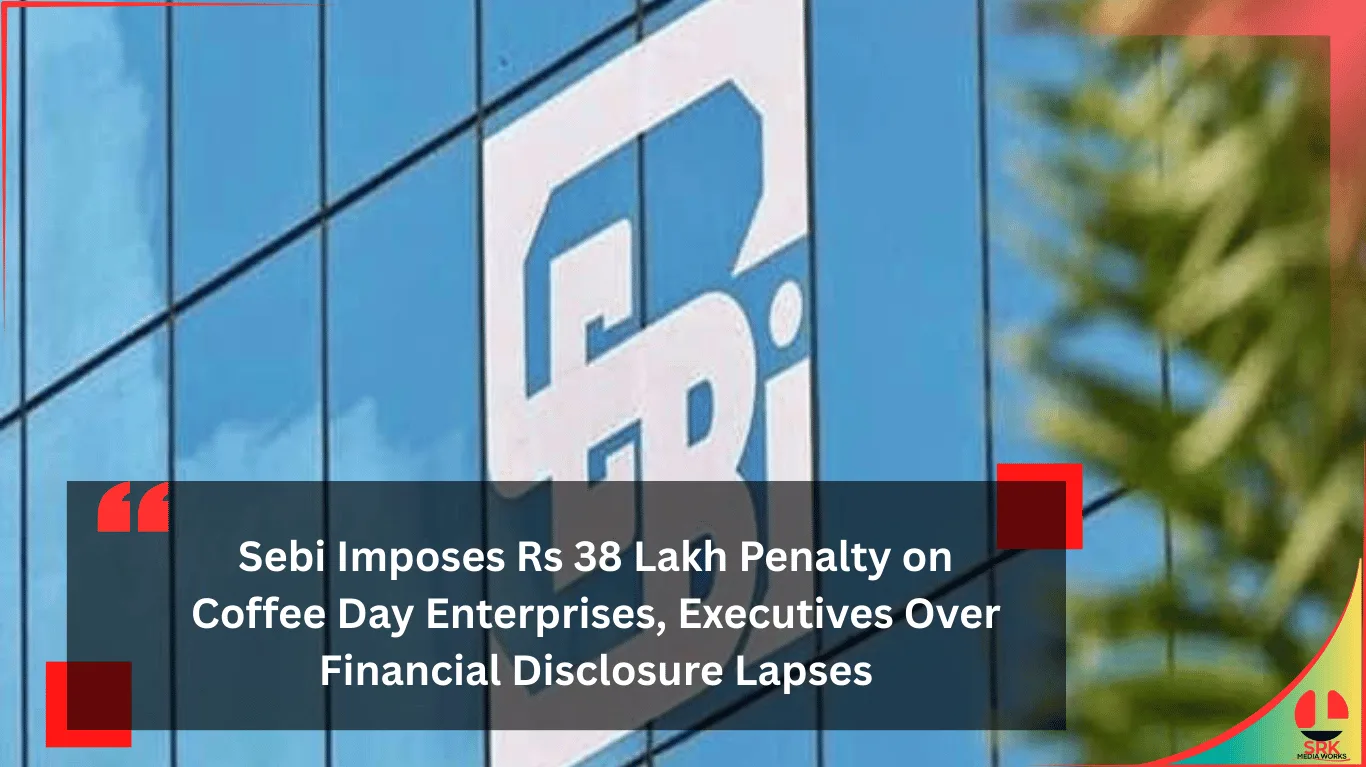
The Securities and Exchange Board of India (SEBI) has imposed a penalty of Rs 38 lakh on Coffee Day Enterprises Ltd (CDEL) and several of its executives for lapses in financial disclosures. The regulator found that the company failed to provide accurate and timely information regarding its financial dealings, raising concerns about transparency and corporate governance standards.
Context of the Penalty
Coffee Day Enterprises, the parent company of the popular Café Coffee Day chain, has faced scrutiny since the tragic death of its founder V.G. Siddhartha in 2019. Investigations revealed significant financial irregularities, including diversion of funds and inadequate disclosures to shareholders. SEBI’s latest order highlights continuing issues with compliance and governance within the company.
Key Highlights
- Penalty Amount: Rs 38 lakh imposed collectively on Coffee Day Enterprises and executives.
- Reason: Failure to disclose material financial information and lapses in compliance.
- Executives Involved: Senior management penalized for oversight failures.
- Regulatory Action: SEBI reinforcing stricter disclosure norms for listed companies.
- Investor Impact: Raises concerns about transparency and governance in mid-cap firms.
Comparative Analysis of Disclosure Lapses in Indian Corporates
| Company/Entity | Nature of Lapse | Regulatory Action | Investor Impact |
|---|---|---|---|
| Coffee Day Enterprises | Financial disclosure lapses | Rs 38 lakh penalty | Weak investor confidence |
| IL&FS Group | Concealed debt exposure | Board superseded, investigations | Severe market disruption |
| DHFL | Misreporting of loans | Bankruptcy proceedings | Retail investor losses |
| Satyam Computers | Accounting fraud | SEBI penalties, board overhaul | Historic corporate scandal |
Pivot Analysis of Sentiment
| Sentiment Category | Impact on Coffee Day | Impact on Regulators | Impact on Investors |
|---|---|---|---|
| Investor Confidence | Shaken – governance concerns persist | SEBI seen as proactive | Retail investors cautious |
| Public Perception | Coffee Day seen as struggling with compliance | Regulators seen as strict | Citizens demand accountability |
| Media Coverage | Extensive – highlights penalty | Balanced – focus on governance | Keeps corporate governance debate alive |
| Policy Response | Push for stricter norms | Reinforces SEBI’s credibility | Investors expect transparency reforms |
Why This Matters
The penalty matters because:
- Corporate Governance: Reinforces the importance of transparency in listed firms.
- Investor Confidence: Ensures accountability to protect shareholder interests.
- Regulatory Oversight: Demonstrates SEBI’s proactive stance in enforcing compliance.
- Market Integrity: Strengthens trust in India’s capital markets.
Challenges Ahead
- For Coffee Day Enterprises: Restoring investor confidence and improving governance.
- For Executives: Ensuring compliance with disclosure norms.
- For SEBI: Balancing strict enforcement with market stability.
- For Investors: Navigating risks in mid-cap and troubled firms.
Opportunities Emerging
- For Coffee Day: Chance to rebuild credibility through stronger governance.
- For Regulators: Reinforce disclosure norms across listed companies.
- For Investors: Push for better transparency in corporate reporting.
- For Market: Strengthens India’s reputation for regulatory oversight.
Broader Implications
The SEBI penalty reflects broader realities in India’s corporate sector:
- Governance Gaps: Many firms struggle with disclosure compliance.
- Regulatory Vigilance: SEBI increasingly proactive in penalizing lapses.
- Investor Trends: Retail investors demand greater accountability.
- Public Narratives: Corporate scandals shape perceptions of market integrity.
Conclusion
SEBI’s imposition of a Rs 38 lakh penalty on Coffee Day Enterprises and its executives underscores the regulator’s commitment to enforcing transparency and accountability in India’s corporate sector. While the penalty highlights governance lapses, it also provides an opportunity for Coffee Day to rebuild credibility and strengthen compliance. For investors, the case serves as a reminder of the importance of due diligence and the role of regulators in safeguarding market integrity.
Disclaimer
This article is a journalistic analysis based on publicly available regulatory information and corporate governance developments. It does not endorse or oppose any company, government, or institution. Readers are encouraged to interpret the content as informative coverage and verify facts independently before forming opinions.