



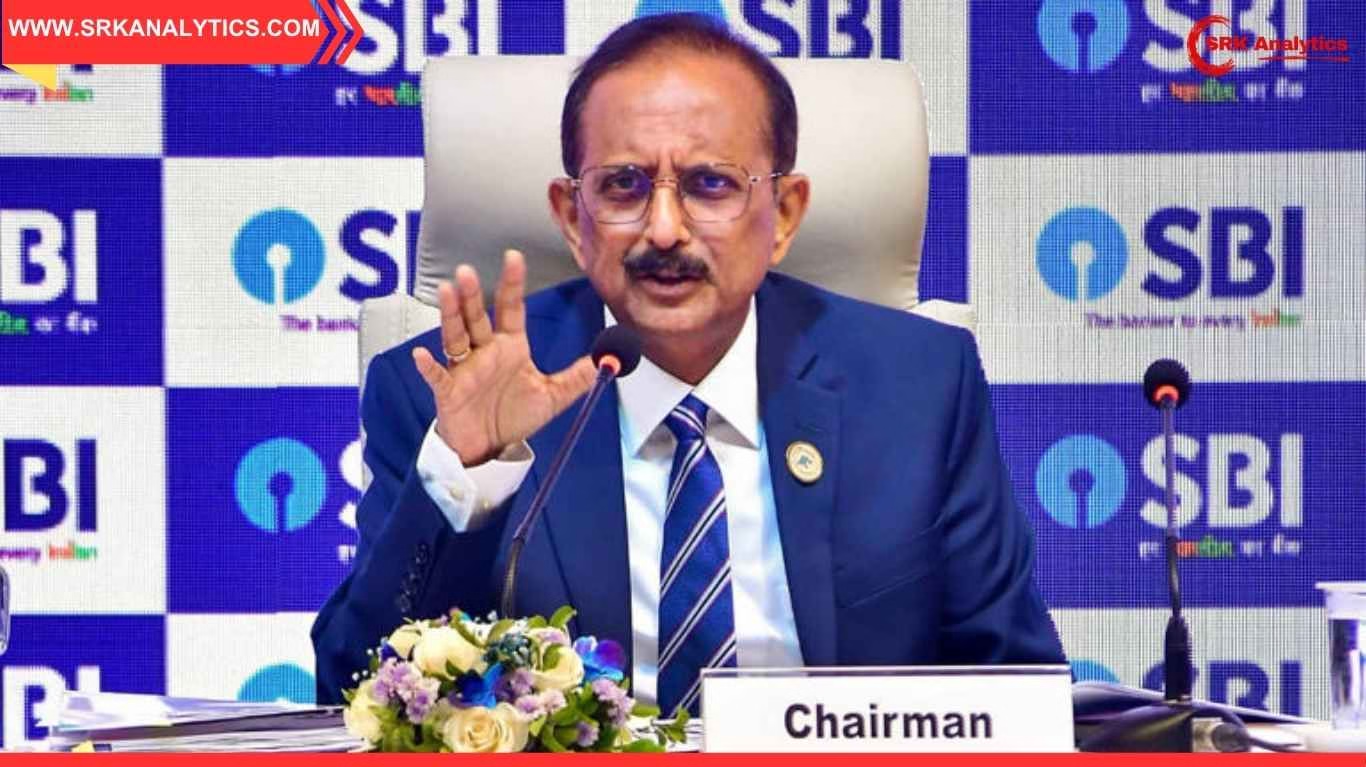
In a significant financial disclosure, State Bank of India (SBI) Chairman CS Setty confirmed that the bank has earned a pre-tax internal rate of return (IRR) of approximately 14% from its strategic investment in Yes Bank. The announcement comes as SBI completed a partial stake sale in the private sector lender, marking a successful culmination of its three-year-long revival initiative.
Setty emphasized that SBI’s involvement in Yes Bank’s reconstruction was never about profit maximization but about ensuring the stability of a systemically important financial institution. “It is a good IRR, but more importantly, this was about ensuring that a critical bank was rescued and put back on track,” he stated.
🧠 SBI’s Strategic Investment in Yes Bank – Key Highlights
| Metric | Details |
|---|---|
| Initial Investment Year | 2020 |
| Stake Acquired | 48.21% (initial), reduced to ~26% post-sale |
| Stake Sold | 13.19% |
| Sale Value | ₹8,889 crore |
| Sale Price per Share | ₹21.50 |
| IRR Achieved | ~14% (pre-tax) |
| Remaining Stake | ~11% |
| Future Plans | No compulsion to hold or sell |
SBI’s exit strategy was executed through a block deal with Sumitomo Mitsui Banking Corporation (SMBC), which acquired the stake without seeking management control.
📊 Timeline of SBI’s Involvement in Yes Bank
| Year | Event Description | Outcome |
|---|---|---|
| 2020 | SBI leads Yes Bank rescue with 48.21% stake | Stabilization of Yes Bank operations |
| 2021 | Gradual improvement in Yes Bank’s financials | NPA reduction, capital infusion |
| 2023 | Yes Bank returns to profitability | Investor confidence restored |
| Sep 2025 | SBI sells 13.19% stake to SMBC | Earns ₹8,889 crore, retains ~11% stake |
| Nov 2025 | CS Setty confirms 14% IRR | Strategic success acknowledged |
The investment not only yielded financial returns but also reinforced SBI’s role as a stabilizer in India’s banking ecosystem.
🗣️ Reactions from Industry and Analysts
| Stakeholder | Commentary Summary |
|---|---|
| CS Setty (SBI Chairman) | “This was about systemic stability, not profit.” |
| Market Analysts | “14% IRR is impressive for a rescue investment.” |
| Investors | “SBI’s exit signals confidence in Yes Bank’s future.” |
| SMBC | “Strategic investment without control; long-term interest.” |
The move is being seen as a textbook example of a successful public sector-led financial turnaround.
📌 Financial Impact on SBI’s Q2 FY26 Results
| Financial Metric | Q2 FY26 Value | YoY Change |
|---|---|---|
| Net Profit | ₹20,160 crore | +9.97% |
| Net Interest Income (NII) | ₹42,984 crore | +3.28% |
| Net Interest Margin (NIM) | 3.09% (domestic) | –18 bps YoY |
| Contribution from Yes Bank Stake Sale | Significant boost to bottom line | – |
The stake sale played a pivotal role in SBI’s strong quarterly performance.
📌 Conclusion
SBI’s strategic investment in Yes Bank has not only stabilized a key private sector lender but also delivered a robust 14% IRR, reinforcing the bank’s dual role as a commercial and systemic actor. With no regulatory or strategic compulsion to hold or exit its remaining stake, SBI retains flexibility in its future decisions. The successful turnaround of Yes Bank stands as a testament to coordinated financial intervention and prudent exit planning.
Disclaimer: This article is based on publicly available financial disclosures, media reports, and official statements. It is intended for informational and editorial purposes only and does not constitute investment advice.