




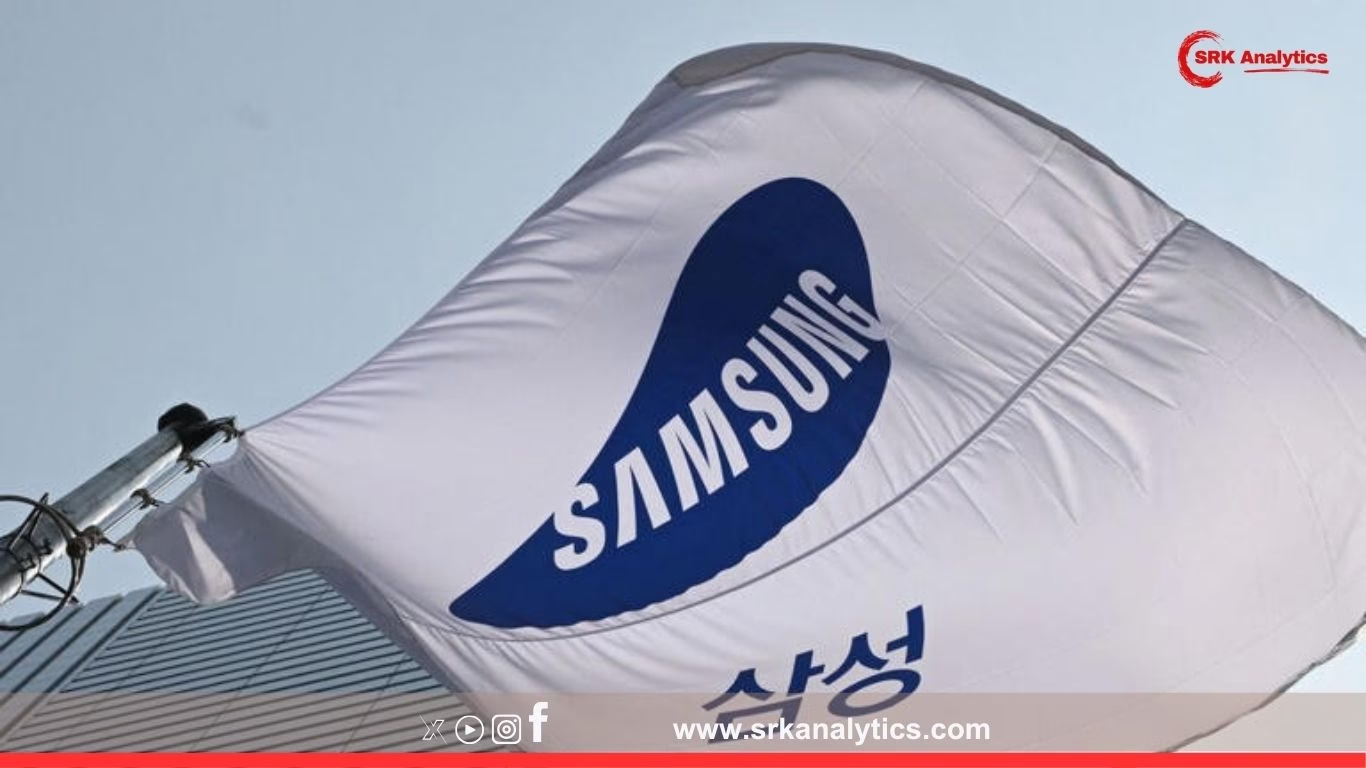
In a move that has electrified global semiconductor markets, Samsung Electronics has reportedly signed a highly confidential chip-supply agreement worth $16.5 billion. The undisclosed deal — believed to be one of the largest in recent history — triggered a significant rally in Samsung shares, pushing the stock to its highest level in over four weeks.
While Samsung has yet to officially confirm the identity of its customer, industry insiders suggest it could be a major global tech company, likely in the AI, data center, or smartphone sectors. The deal is seen as a landmark in the ongoing chip supply race where major manufacturers like Samsung, TSMC, and Intel are aggressively competing for large-scale contracts amid growing demand for high-performance computing (HPC), generative AI, and next-gen smartphones.
$16.5 Billion Deal Could Reshape Global Semiconductor Supply Chain
This strategic chip-supply deal, estimated at $16.5 billion, significantly strengthens Samsung’s position in the global semiconductor ecosystem. The agreement is expected to span several years and likely includes advanced 3nm and 5nm chipsets, tailored for AI accelerators, high-end mobile processors, or cloud infrastructure components.
Samsung’s Foundry Division — which has been ramping up its competitiveness against Taiwan’s TSMC — will likely be the main beneficiary. The company’s cutting-edge fabrication facility in Pyeongtaek, South Korea, and its upcoming plant in Taylor, Texas, are expected to be key production hubs for fulfilling this order.
Samsung Share Price Surge Reflects Investor Optimism
Samsung Electronics’ shares surged by 4.2% during Tuesday’s trading session on the Korea Exchange, closing at ₩78,300, their highest level since late June. This uptick follows a relatively flat performance over the past few weeks and indicates renewed investor optimism about the company’s semiconductor business, which contributes nearly 70% of its operating profit.
| Date | Opening Price (₩) | Closing Price (₩) | % Change |
|---|---|---|---|
| July 26, 2025 | 75,050 | 78,300 | +4.2% |
| July 25, 2025 | 74,800 | 75,050 | +0.3% |
| July 24, 2025 | 74,750 | 74,800 | +0.06% |
Investors are increasingly betting that Samsung’s aggressive investments in next-generation chip technologies — including gate-all-around (GAA) transistor architecture — will yield long-term rewards.
Key Highlights of the Deal (Unofficial)
| Feature | Details (Unofficial Estimates) |
|---|---|
| Deal Value | $16.5 Billion |
| Duration | 3–5 Years |
| Customer | Confidential (Possible top-tier AI/cloud company) |
| Chip Technology | Likely 3nm and 5nm nodes |
| Use Case | AI processors, mobile chips, data center SoCs |
| Manufacturing Sites | Pyeongtaek (Korea), Taylor (Texas, USA) |
| Project Timeline | Begins Q4 2025, full ramp-up by mid-2026 |
Industry Analysts Applaud Samsung’s Win
Semiconductor analysts view this deal as a major strategic win for Samsung, particularly in the context of mounting U.S.-China chip tensions, diversification away from a TSMC-dominated supply chain, and the exponential rise in AI chip demand.
Bernstein Research noted,
“This deal could serve as a strong validation for Samsung’s GAA process and establish it as a preferred foundry for critical compute customers.”
Goldman Sachs added,
“The scale of the agreement implies that Samsung is now seen as a credible alternative to TSMC for cutting-edge nodes, especially in geographies where geopolitical risks loom large.”
Global Semiconductor Competition Intensifies
With Nvidia, AMD, Apple, Google, and Microsoft increasingly designing their own chips, semiconductor manufacturers are under immense pressure to secure long-term contracts. Samsung’s $16.5 billion win positions it favorably in this environment.
| Company | Recent Major Chip Deals | Estimated Value |
|---|---|---|
| Samsung Electronics | Confidential AI/Data deal (2025) | $16.5 Billion |
| TSMC | Apple A-series & M-series chips | $12–15 Billion |
| Intel Foundry | Microsoft, MediaTek (pilot stages) | $4–5 Billion |
This latest win may also drive more companies to diversify chip sourcing to mitigate supply chain risk — an emerging trend post-COVID and amid geopolitical uncertainty.
What This Means for the Chip Industry
- AI Boom Driving Mega-Deals: The appetite for high-performance chips is at an all-time high, especially from companies developing generative AI tools, LLMs (like ChatGPT), and real-time data processors.
- Samsung’s GAA Bet Paying Off: Samsung’s push into GAA transistor tech is gaining traction, with clients showing increasing confidence in the company’s ability to deliver competitive yields.
- Fab Diversification Advantage: With fabs in both Korea and the U.S., Samsung offers geographic diversification — a key requirement for American tech giants amid rising trade tensions.
R&D and Foundry Capex on the Rise
Samsung is already spending over $25 billion annually on semiconductors, and this deal could accelerate the timeline for new foundry investments, especially in the U.S. The company recently reaffirmed its plan to invest $17 billion in its Texas fab, expected to go operational in 2026.
| Year | Samsung Semiconductor Capex | % of Revenue |
|---|---|---|
| 2023 | $22 Billion | 33% |
| 2024 | $25 Billion | 35% |
| 2025* | $28 Billion (est.) | 38% (projected) |
Shareholder Reactions and Forward Outlook
The market response has been overwhelmingly positive. Institutional investors and hedge funds are reportedly increasing exposure to Samsung amid signs that it is closing the gap with TSMC. Several brokerage houses upgraded the stock to “Buy” ratings after the deal.
Forward Outlook:
- Revenue Boost: Samsung’s foundry division is expected to see a 25–30% jump in orders from Q1 2026 onward.
- Strategic Leverage: The agreement provides pricing stability and long-term visibility, key for capex planning.
- Margin Expansion: Higher-margin customized chips could help Samsung improve operating margins from 17% to around 21% over the next 18 months.
Management Remains Tight-Lipped
Samsung has declined to comment on the specifics of the deal, citing client confidentiality agreements. However, a company insider was quoted saying the project would “significantly strengthen Samsung’s leadership in the next generation of compute chips.”
It’s widely speculated that the deal was finalized after months of behind-the-scenes negotiations and technology assessments.
Disclaimer:
This news content is based on market intelligence, industry sources, and available financial data and is intended solely for informational purposes. Readers are advised to conduct independent analysis or consult a professional advisor before making financial or investment decisions.