



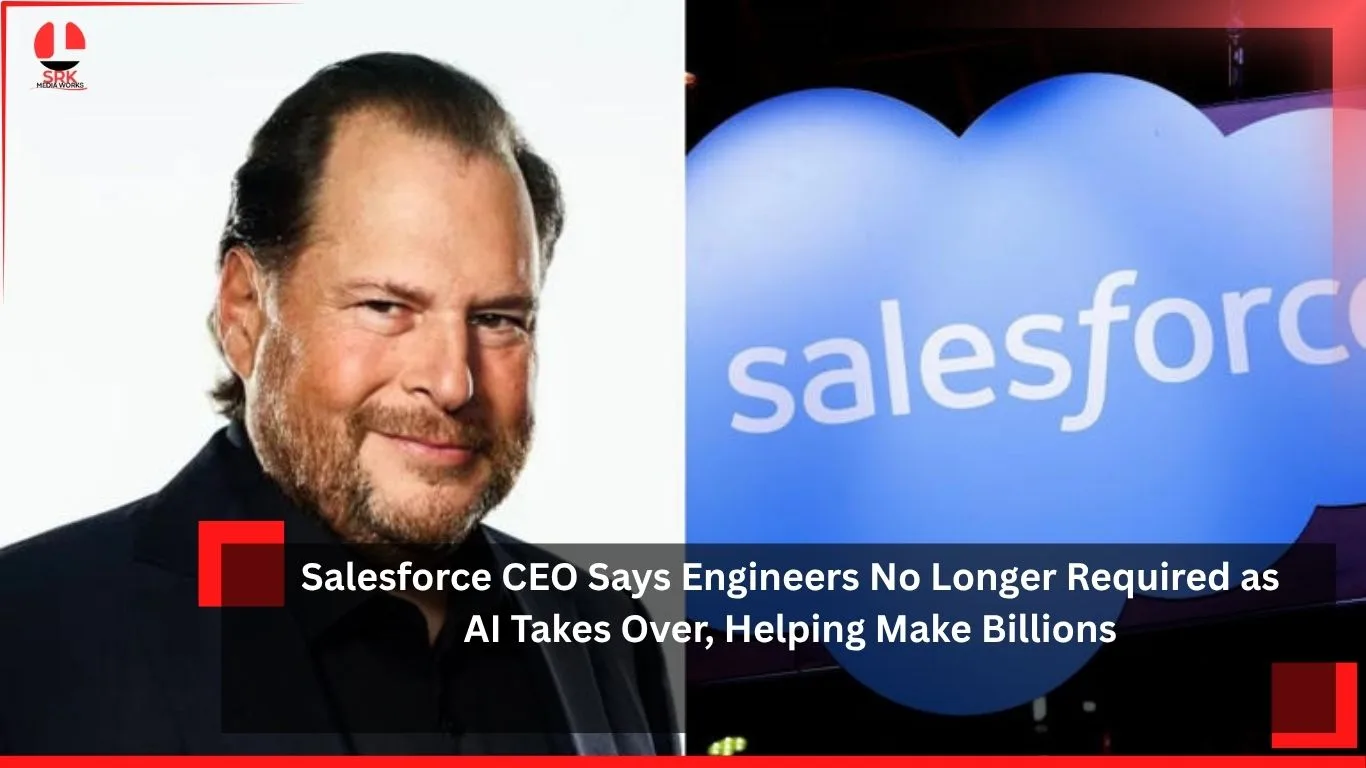
In a bold statement that has sparked debate across the technology industry, the CEO of Salesforce declared that engineers are no longer required as artificial intelligence (AI) takes over core functions, enabling companies to generate billions in revenue with fewer human resources. This remark underscores the growing influence of AI in reshaping the future of work, software development, and corporate profitability.
The CEO’s Vision
The Salesforce chief emphasized that AI is now capable of performing tasks traditionally handled by engineers, including:
- Code Generation: Automated systems can write, test, and deploy code with minimal human intervention.
- System Optimization: AI can monitor and improve performance across platforms in real time.
- Customer Solutions: Intelligent algorithms can design and deliver tailored solutions faster than human teams.
- Revenue Growth: By reducing dependency on engineers, companies can cut costs and scale profits.
Why This Matters
- Workforce Transformation: The statement challenges the traditional role of engineers in tech companies.
- Economic Impact: AI-driven automation could save billions in salaries and operational costs.
- Innovation Speed: AI accelerates product development cycles, reducing time-to-market.
- Ethical Concerns: Questions arise about job displacement and the future of skilled labor.
Comparative Analysis of AI vs Human Engineers
| Aspect | Human Engineers | AI Systems | Impact |
|---|---|---|---|
| Speed | Limited by human capacity | Near-instant execution | Faster product cycles |
| Cost | High salaries, benefits | Lower operational costs | Increased profitability |
| Creativity | Innovative problem-solving | Pattern-based solutions | AI lacks human intuition |
| Scalability | Requires hiring & training | Instantly scalable | Global reach without workforce expansion |
This comparison highlights why CEOs see AI as a game-changer, but also why human creativity remains irreplaceable.
Pivot Analysis: Impact of AI Dominance
| Stakeholder | Short-Term Impact | Long-Term Consequence |
|---|---|---|
| Tech Companies | Reduced costs, higher margins | Dependence on AI ecosystems |
| Engineers | Job insecurity | Need to reskill in AI management |
| Customers | Faster, cheaper solutions | Risk of reduced personalization |
| Global Economy | Productivity surge | Workforce restructuring |
Industry Reactions
- Supporters: Many executives agree that AI can streamline operations and boost profits.
- Critics: Engineers and labor advocates warn of mass job losses and erosion of human expertise.
- Investors: Markets see AI adoption as a driver of future growth, pushing valuations higher.
- Academics: Scholars caution that over-reliance on AI could lead to systemic vulnerabilities.
Challenges Ahead
- Job Displacement: Millions of engineers may face redundancy if AI fully replaces coding roles.
- Ethics & Regulation: Governments may need to regulate AI adoption to protect employment.
- Security Risks: AI-driven systems could be vulnerable to cyberattacks if not monitored.
- Human Oversight: Complex decisions may still require human judgment and accountability.
Possible Outcomes
- AI Dominance: Companies fully embrace AI, reducing engineering teams drastically.
- Hybrid Model: Engineers shift to supervisory roles, guiding AI systems.
- Reskilling Revolution: Workforce adapts by learning AI integration and management.
- Regulatory Intervention: Governments impose limits on AI-driven automation to protect jobs.
Conclusion
The declaration that Salesforce’s CEO believes engineers are no longer required as AI takes over, helping make billions reflects the seismic shift underway in the technology sector. While AI promises efficiency, scalability, and profitability, the human cost of job displacement and ethical concerns cannot be ignored.
The future may not be about eliminating engineers entirely but redefining their roles in an AI-driven world. As companies chase billions in profits, the balance between automation and human creativity will determine the sustainability of this transformation.
Disclaimer: This article is based on reported statements and industry analysis. It does not represent official corporate policy or financial advice. The content is intended for informational purposes only and should not be interpreted as definitive guidance on employment or investment decisions.