





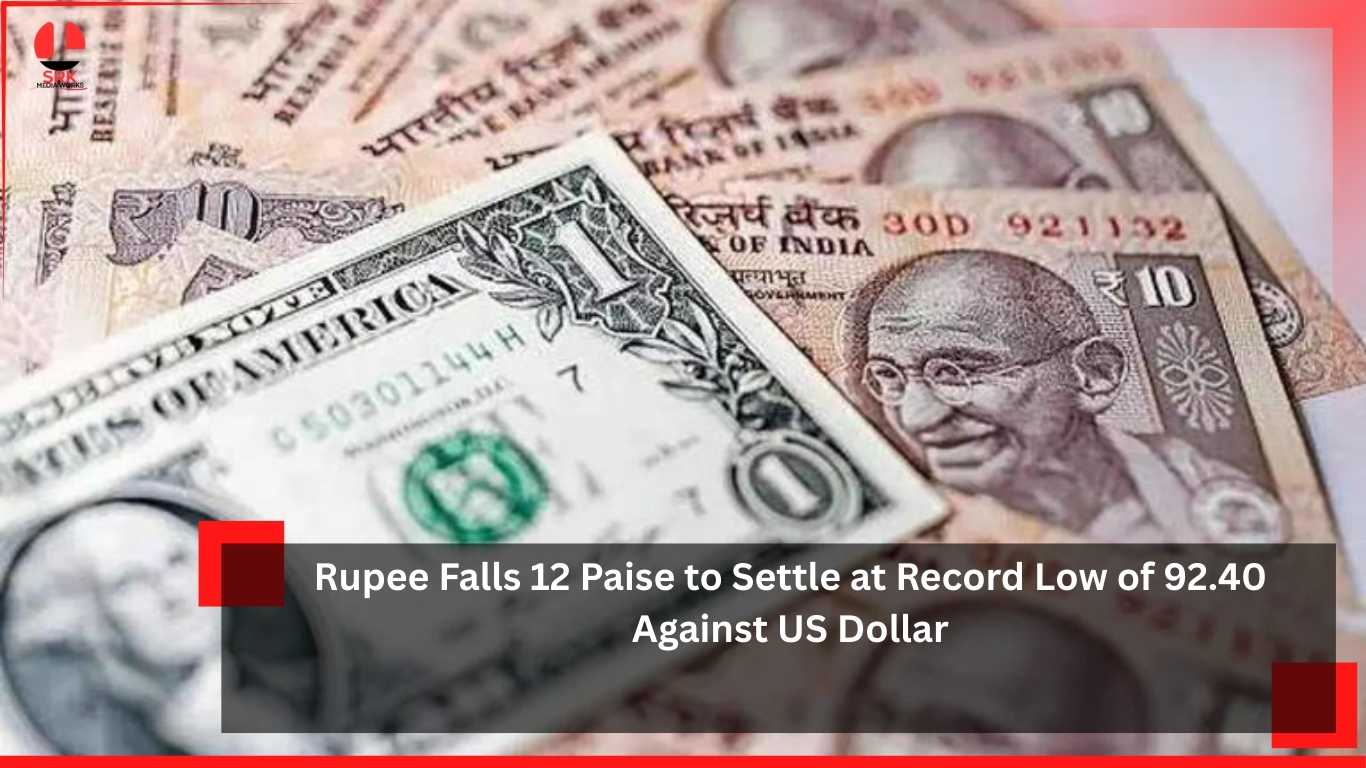
The Indian rupee continued its downward trajectory, closing at a record low of 92.40 against the US dollar, a fall of 12 paise compared to the previous session. This depreciation underscores the mounting pressure on India’s currency markets, driven by strong global demand for the dollar, elevated crude oil prices, and persistent foreign capital outflows.
Key Drivers Behind the Rupee’s Decline
1. Strong US Dollar
- The US dollar has strengthened on the back of robust US economic data.
- Expectations of prolonged higher interest rates by the Federal Reserve have attracted global investors to dollar-denominated assets.
2. Elevated Crude Oil Prices
- Crude oil prices remain above $90 per barrel.
- India, which imports nearly 85% of its crude oil needs, faces rising import bills, adding pressure on the rupee.
3. Foreign Capital Outflows
- Global investors are pulling money out of emerging markets.
- Equity and debt outflows have intensified currency weakness.
4. Domestic Inflation Concerns
- Rising import costs are fueling inflationary pressures.
- The Reserve Bank of India (RBI) faces a balancing act between controlling inflation and stabilizing the currency.
Comparative Analysis of Rupee Performance
| Year | Average Exchange Rate (₹/$) | Annual Depreciation (%) |
|---|---|---|
| 2022 | 78.50 | 5.2 |
| 2023 | 82.10 | 4.6 |
| 2024 | 86.30 | 5.1 |
| 2025 | 90.20 | 4.5 |
| 2026 | 92.40 (Record Low) | 2.4 (YTD) |
This table highlights the rupee’s consistent depreciation trend over the past five years, culminating in the record low of 92.40.
Sector-Wise Impact of Rupee Depreciation
| Sector | Impact Description |
|---|---|
| Importers | Higher costs for crude oil, electronics, machinery |
| Exporters | Gains from stronger dollar receipts |
| Aviation | Rising jet fuel costs increase ticket prices |
| Consumers | Inflationary pressure reduces purchasing power |
| Government | Fiscal strain due to higher subsidy burden |
Analytical View: Rupee vs Global Currencies
| Currency | Performance Against USD (2026 YTD) | Trend Description |
|---|---|---|
| Indian Rupee | -2.4% | Record low at 92.40 |
| Chinese Yuan | -1.8% | Weakening amid trade issues |
| Japanese Yen | -3.2% | Hit by monetary easing |
| Euro | -1.5% | Pressured by energy costs |
| British Pound | -2.0% | Inflation-driven weakness |
The rupee’s fall is part of a broader trend of emerging market currencies weakening against the US dollar.
Government and RBI’s Dilemma
The government and RBI face a challenging situation:
- Protecting consumers from inflationary shocks.
- Ensuring currency stability through interventions.
- Managing fiscal deficit while balancing subsidies and import bills.
Possible measures include:
- RBI intervention in forex markets.
- Encouraging foreign investment inflows.
- Promoting exports to offset import costs.
Conclusion
The rupee’s fall to a record low of 92.40 against the US dollar reflects the combined impact of global dollar strength, elevated crude oil prices, and capital outflows. While exporters may benefit from stronger dollar receipts, importers, consumers, and the government face mounting challenges.
India’s path forward lies in balancing immediate interventions with long-term strategies such as diversifying energy sources, boosting exports, and strengthening foreign investment inflows. The rupee’s trajectory will remain a critical indicator of India’s economic resilience in the months ahead.
Disclaimer
This article is intended for informational purposes only. It does not constitute financial or investment advice. Readers are encouraged to consult financial experts before making decisions related to currency trading, forex investments, or economic policy. The content is based on publicly available information and market analysis.