


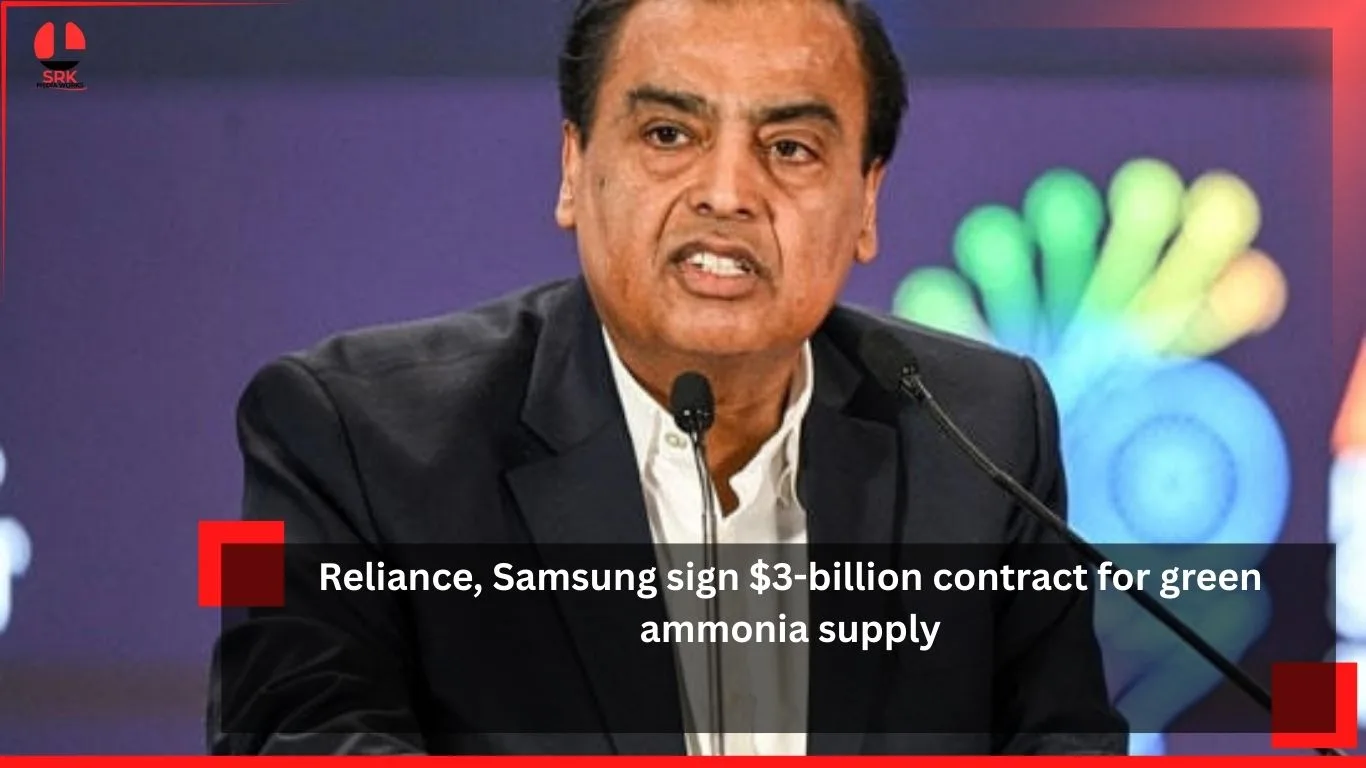
India’s clean energy ambitions have received a major boost with Reliance Industries Limited (RIL) and Samsung signing a $3-billion contract for the supply of green ammonia. This landmark agreement marks one of the largest global deals in the renewable energy sector, positioning India as a key supplier of sustainable fuels to international markets. The partnership highlights the growing importance of green hydrogen and its derivatives, such as green ammonia, in shaping the future of energy and trade.
Strategic Importance of the Deal
The $3-billion contract between Reliance and Samsung is not just a commercial agreement—it is a strategic collaboration aimed at accelerating the global transition toward clean energy. Green ammonia, produced using renewable energy and green hydrogen, is emerging as a critical fuel for industries, shipping, and power generation.
Key objectives of the deal include:
- Ensuring long-term supply of green ammonia to Samsung’s global operations.
- Strengthening India’s role as a hub for renewable energy exports.
- Supporting global decarbonization efforts in heavy industries and shipping.
- Enhancing Reliance’s leadership in clean energy production and innovation.
Reliance’s Role in Green Ammonia Production
Reliance has been aggressively investing in renewable energy projects, including solar, wind, and hydrogen. The company’s green ammonia initiative is part of its broader plan to achieve net-zero carbon emissions by 2035. With this contract, Reliance will:
- Expand its green hydrogen and ammonia production facilities.
- Integrate advanced technologies for efficient conversion and storage.
- Build large-scale renewable energy parks to power ammonia production.
- Strengthen supply chain infrastructure for global exports.
This positions Reliance as a global leader in sustainable fuel production, capable of meeting rising international demand.
Samsung’s Global Sustainability Strategy
Samsung, a global technology and manufacturing giant, is increasingly focusing on sustainability across its operations. By securing green ammonia supply from Reliance, Samsung aims to:
- Reduce carbon emissions in its manufacturing processes.
- Transition toward cleaner fuels in logistics and shipping.
- Align with global sustainability goals and regulatory requirements.
- Strengthen its brand as a leader in eco-friendly innovation.
This partnership reflects Samsung’s commitment to integrating sustainability into its global supply chain.
Comparative Analysis of Reliance and Samsung Commitments
| Aspect | Reliance Industries (India) | Samsung (Global) |
|---|---|---|
| Investment Scale | $3-billion contract, renewable expansion | Long-term procurement commitment |
| Focus Area | Green hydrogen, green ammonia production | Sustainable manufacturing, logistics |
| Infrastructure Development | Renewable energy parks, ammonia plants | Integration of green fuels in operations |
| Market Impact | Export hub for clean fuels | Reduced carbon footprint globally |
| Sustainability Contribution | Net-zero by 2035 target | Eco-friendly supply chain transformation |
Pivot Analysis: Production vs. Consumption
| Dimension | Reliance (Production) | Samsung (Consumption) |
|---|---|---|
| Financial Scale | Large-scale renewable investment | Procurement and operational integration |
| Technology Adoption | Hydrogen-to-ammonia conversion | Green fuel adoption in manufacturing |
| Environmental Benefits | Reduced emissions in energy sector | Cleaner global supply chain |
| Global Positioning | Export leader in green fuels | Sustainability-driven global brand |
| Long-Term Sustainability | Renewable energy dominance | Eco-friendly manufacturing leadership |
Broader Implications for India
The Reliance-Samsung deal carries significant implications for India’s economy and global positioning:
- Economic Growth: Exporting green ammonia creates new revenue streams and jobs.
- Energy Leadership: India strengthens its role as a renewable energy powerhouse.
- Environmental Impact: Large-scale green fuel production reduces carbon emissions.
- Global Trade Integration: India becomes a key supplier in the global clean energy market.
Challenges Ahead
Despite the optimism, challenges remain:
- High costs of green hydrogen and ammonia production.
- Need for advanced storage and transportation infrastructure.
- Policy consistency across states and international markets.
- Global competition from other renewable energy exporters.
Addressing these challenges will be critical to sustaining India’s leadership in green energy.
Future Outlook
The $3-billion Reliance-Samsung contract sets the stage for a new era in global energy trade. Over the next decade, India could witness:
- Expansion of green ammonia exports to multiple global partners.
- Integration of renewable energy with industrial supply chains.
- Emergence of India as a global hub for hydrogen and ammonia innovation.
- Strengthened resilience against climate change and energy crises.
This partnership not only secures India’s place in the global clean energy market but also accelerates the world’s transition toward sustainable fuels.
Disclaimer
This article is intended for informational purposes only. It highlights recent developments in the renewable energy sector involving Reliance and Samsung. The content does not constitute financial advice, investment recommendations, or official corporate statements. Readers should independently verify details before making financial or business decisions.