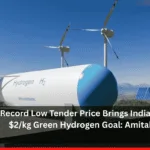




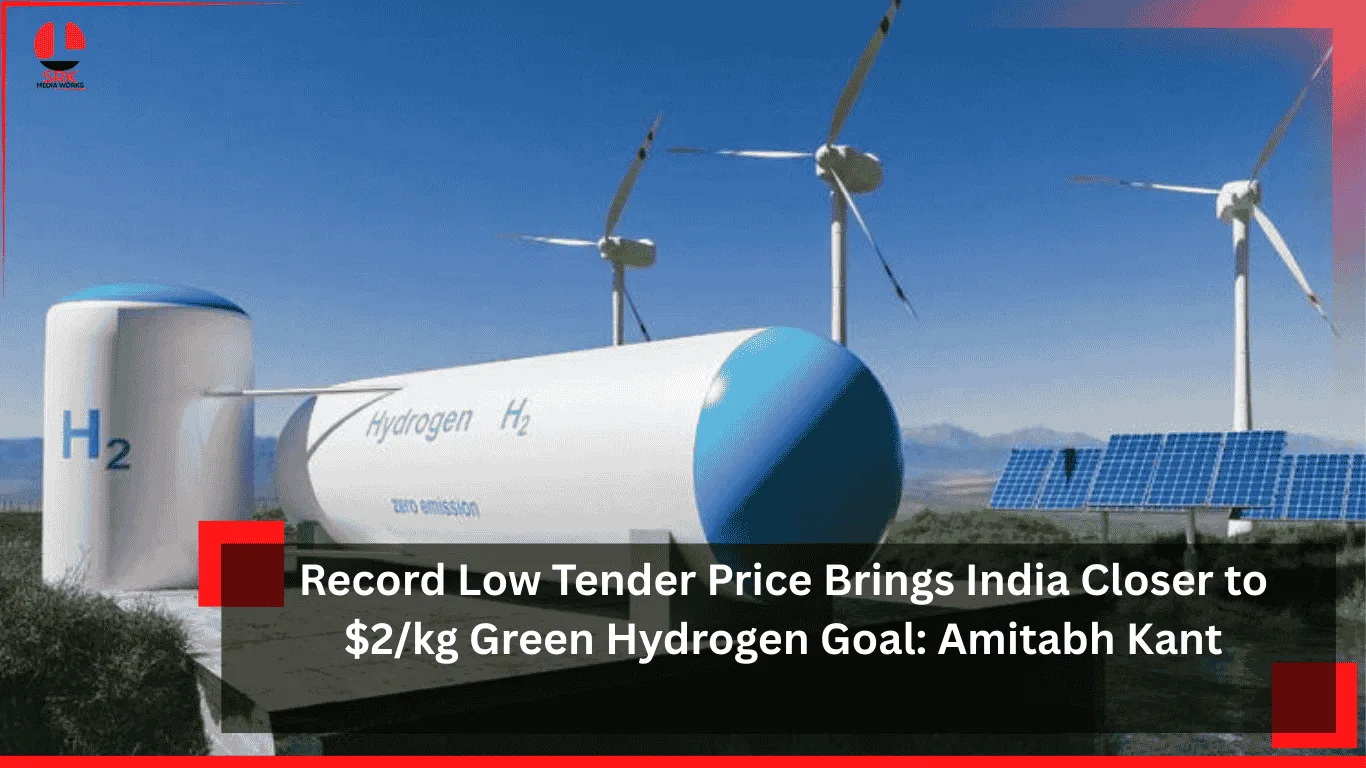
India’s ambitious push toward clean energy has received a major boost with record low tender prices for green hydrogen projects. According to Amitabh Kant, India is now closer than ever to achieving its target of producing green hydrogen at $2 per kilogram, a milestone that could transform the country’s energy landscape and accelerate its transition to net-zero emissions.
Background of India’s Green Hydrogen Mission
The National Green Hydrogen Mission, launched by the Government of India, aims to position the country as a global hub for green hydrogen production and exports. The mission focuses on reducing dependence on fossil fuels, cutting carbon emissions, and creating new economic opportunities in renewable energy.
Green hydrogen, produced using renewable electricity to split water into hydrogen and oxygen, is considered a clean alternative to fossil fuels in industries such as steel, cement, fertilizers, and transportation.
Key Highlights
- Record Tender Prices: Recent auctions have seen bids at historically low levels, bringing production costs closer to the $2/kg target.
- Global Competitiveness: India’s pricing is now competitive with international benchmarks.
- Policy Support: Government incentives, subsidies, and infrastructure investments are driving momentum.
- Industrial Adoption: Sectors like steel and fertilizers are preparing to integrate green hydrogen into operations.
Comparative Analysis of Hydrogen Costs
| Country | Current Cost (per kg) | Target Cost | Timeline |
|---|---|---|---|
| India | $3.5 – $4.0 | $2.0 | By 2030 |
| EU | $5.0 – $6.0 | $2.5 | By 2030 |
| USA | $4.0 – $5.0 | $2.0 | By 2030 |
| China | $3.0 – $4.0 | $2.0 | By 2028 |
This table shows India’s progress compared to global peers, highlighting its competitive edge.
Why $2/kg Matters
- Industrial Adoption: At $2/kg, green hydrogen becomes economically viable for large-scale industrial use.
- Energy Security: Reduces dependence on imported fossil fuels.
- Climate Goals: Helps India meet its net-zero target by 2070.
- Export Potential: Positions India as a global supplier of affordable green hydrogen.
Growth Drivers Behind India’s Progress
- Renewable Energy Expansion: India’s rapid growth in solar and wind capacity lowers electricity costs.
- Government Incentives: Subsidies and tax benefits encourage investment.
- Private Sector Participation: Major conglomerates are investing in hydrogen projects.
- Global Partnerships: Collaborations with international firms accelerate technology adoption.
Historical Context of India’s Hydrogen Push
| Year | Milestone | Impact |
|---|---|---|
| 2021 | Launch of National Hydrogen Mission | Policy framework established |
| 2023 | First pilot projects | Proof of concept |
| 2025 | Large-scale tenders | Competitive pricing achieved |
| 2026 | Record low tender prices | Closer to $2/kg goal |
This timeline shows India’s steady progress toward affordable green hydrogen.
Expert Opinions
- Energy Analysts: Believe India’s $2/kg target is achievable within the next few years.
- Industry Leaders: Highlight the importance of scaling infrastructure to meet demand.
- Policy Makers: Stress that continued government support is crucial for success.
Broader Implications
- For Industry: Affordable hydrogen will transform steel, cement, and fertilizer production.
- For Consumers: Cleaner energy sources could reduce long-term costs.
- For Economy: Creates new jobs and investment opportunities in renewable energy.
- For Environment: Significant reduction in carbon emissions across sectors.
Conclusion
India’s record low tender prices for green hydrogen mark a turning point in its clean energy journey. As Amitabh Kant emphasized, the country is now closer than ever to achieving the $2/kg target, which will unlock industrial adoption, strengthen energy security, and position India as a global leader in green hydrogen.
With strong policy support, private sector investment, and technological innovation, India’s green hydrogen mission is set to reshape the future of energy, driving sustainable growth and climate resilience.
Disclaimer
This article is based on publicly available information and expert analysis. The details of tender prices and policy initiatives are subject to change with evolving market conditions. Readers are advised to treat the content as informational and not as definitive investment or policy guidance.