




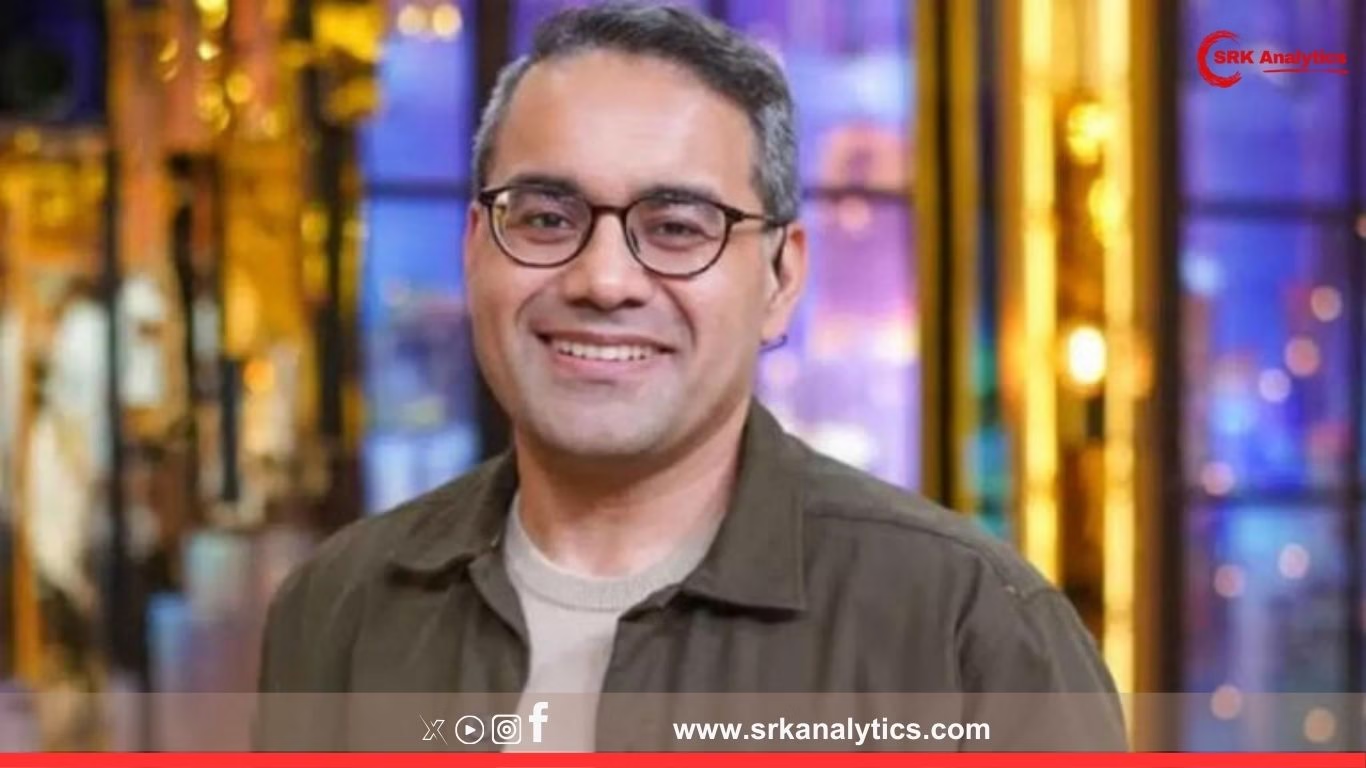
India’s sweeping ban on real-money gaming (RMG) has triggered an unexpected wave of entrepreneurial activity, according to Snapdeal cofounder and Titan Capital partner Kunal Bahl. In a post that quickly gained traction across social media, Bahl described the aftermath of the Online Gaming Bill 2025 as a “Cambrian explosion” of startup formation, with displaced talent from the gaming sector now launching ventures across consumer tech, social platforms, and esports.
The Online Gaming Bill 2025, passed by Parliament and signed into law by President Droupadi Murmu last week, prohibits all forms of real-money online games—whether based on skill, chance, or both. The legislation introduces strict penalties, including fines up to ₹1 crore and jail terms of up to three years for violators. While the government has framed the move as a crackdown on fraud, addiction, and money laundering, the fallout has been swift and far-reaching.
🧭 Timeline of Events Leading to the Startup Surge
| Date | Event Description | Impact on Industry |
|---|---|---|
| August 18, 2025 | Online Gaming Bill passed in Parliament | Legal framework for RMG ban established |
| August 22, 2025 | Presidential assent granted | Law officially enacted nationwide |
| August 23, 2025 | Major RMG platforms shut down | Dream11, My11Circle, MPL suspend operations |
| August 24, 2025 | Kunal Bahl posts on X about startup boom | Titan Capital flooded with founder pitches |
| August 25, 2025 | VC firms begin scouting ex-RMG talent | Surge in early-stage investment interest |
The ban has disrupted an industry that had raised over $2 billion in venture capital and supported more than 2,000 startups and 200,000 jobs across tech, design, and marketing.
📊 Impact of the RMG Ban on India’s Startup Ecosystem
| Sector Affected | Estimated Value at Risk | Key Players Impacted | Talent Migration Trend |
|---|---|---|---|
| Real-Money Gaming | $15 billion | Dream11, MPL, WinZO, Games24x7 | Founders pivoting to new ventures |
| Payments & Fintech | ₹20,000–₹30,000 crore/month | Razorpay, Paytm, Cashfree | Loss of gaming-linked transaction volume |
| Advertising & Media | ₹500 crore/year | Talent agencies, celebrity endorsers | Pullback from gaming endorsements |
| Consumer Tech Startups | Surge in new ideas | Titan Capital, Blume Ventures, Accel | RMG professionals launching startups |
According to Bahl, many professionals from the RMG sector are opting to start their own ventures rather than join established companies. “We are quite amazed by their well-rounded grasp of consumer tech at scale,” he wrote on X.
🔍 Kunal Bahl’s Statement: A Call to Founders
Bahl, who also serves as a judge on Shark Tank India, emphasized the depth of talent within the RMG industry:
“The RMG industry has some of the brightest talent across product, tech, marketing, among other functions. The events of last week have unleashed a Cambrian explosion of new startup formation.”
He extended an open invitation to aspiring founders:
“If you intend to startup, do get in touch with our team or write into startups at titancapital dot vc. We would love to talk to you about partnering with you on your entrepreneurship journey.”
| Kunal Bahl’s Observations | Implications for VC Landscape |
|---|---|
| “Brightest talent in RMG” | High-quality founder pipeline |
| “Cambrian explosion of startups” | Surge in early-stage investment activity |
| “Consumer tech at scale” | Potential for scalable B2C innovations |
| “Open call to founders” | Titan Capital positioning for deal flow |
Titan Capital, which has backed unicorns like Mamaearth and Urban Company, is now actively scouting for ideas emerging from the RMG fallout.
🧠 Government’s Justification vs Industry Backlash
The government has defended the ban as a necessary step to curb addiction, financial losses, and illegal activities linked to real-money gaming. IT Secretary S. Krishnan clarified that casual gaming and esports remain unaffected and open for innovation.
However, industry leaders and state officials have criticized the blanket nature of the ban. Karnataka’s IT & Biotechnology Minister Priyank Kharge called it “bad policy making,” warning that it could cost the government ₹20,000 crore annually in GST and income tax revenue.
| Stakeholder | Position on RMG Ban | Key Concerns |
|---|---|---|
| Government of India | Supports ban for public safety | Fraud, addiction, terror financing |
| State Governments | Oppose blanket ban | Revenue loss, job cuts, startup disruption |
| Venture Capitalists | Pivoting to new sectors | Talent redeployment, investment risk |
| Gaming Platforms | Shutting down RMG operations | Legal compliance, brand reputation |
The law’s passage has also led to a media pullback, with talent agencies advising celebrities to distance themselves from gaming endorsements.
📉 Fallout for RMG Platforms and Endorsers
Major platforms like Dream11, My11Circle, MPL, and PokerBaazi have suspended real-money offerings. Bollywood celebrities and sports stars who previously endorsed these apps are now scaling back visibility.
| Platform Name | Status Post-Ban | Celebrity Endorsers Affected |
|---|---|---|
| Dream11 | RMG suspended | MS Dhoni, Hardik Pandya |
| My11Circle | Shut down RMG services | Sourav Ganguly, Rashmika Mandanna |
| MPL | Wound down RMG segment | Virat Kohli, Shubman Gill |
| PokerBaazi | Operations halted | Ranveer Singh, Neha Sharma |
Media buying teams have reportedly pulled ads from social platforms, TV, and OTT channels to avoid regulatory scrutiny.
🔥 Emerging Startup Themes Post-RMG Ban
The talent migration from RMG is expected to fuel innovation in adjacent sectors:
- Casual Gaming: Skill-based games without monetary stakes
- Esports Platforms: Competitive gaming with sponsorship models
- Social Gaming Networks: Community-driven engagement apps
- Gaming Infrastructure: Payment gateways, analytics, anti-fraud tech
- Creator Economy Tools: Monetization for streamers and influencers
VCs are now recalibrating their portfolios to support these emerging categories.
📌 Conclusion
The real-money gaming ban may have disrupted an entire industry, but it has also unleashed a wave of entrepreneurial energy that could reshape India’s startup landscape. Kunal Bahl’s “Cambrian explosion” analogy captures the moment perfectly: a sudden, rapid proliferation of new ventures driven by displaced talent, deep domain expertise, and a hunger to build.
As Titan Capital and other investors rally behind this new wave, the next few months could define the future of consumer tech, gaming, and digital entertainment in India. What began as a regulatory crackdown may well become the launchpad for the country’s next generation of unicorns.
—
Disclaimer: This article is based on publicly available news reports and official statements as of August 26, 2025. It is intended for informational purposes only and does not constitute legal, financial, or investment advice.