




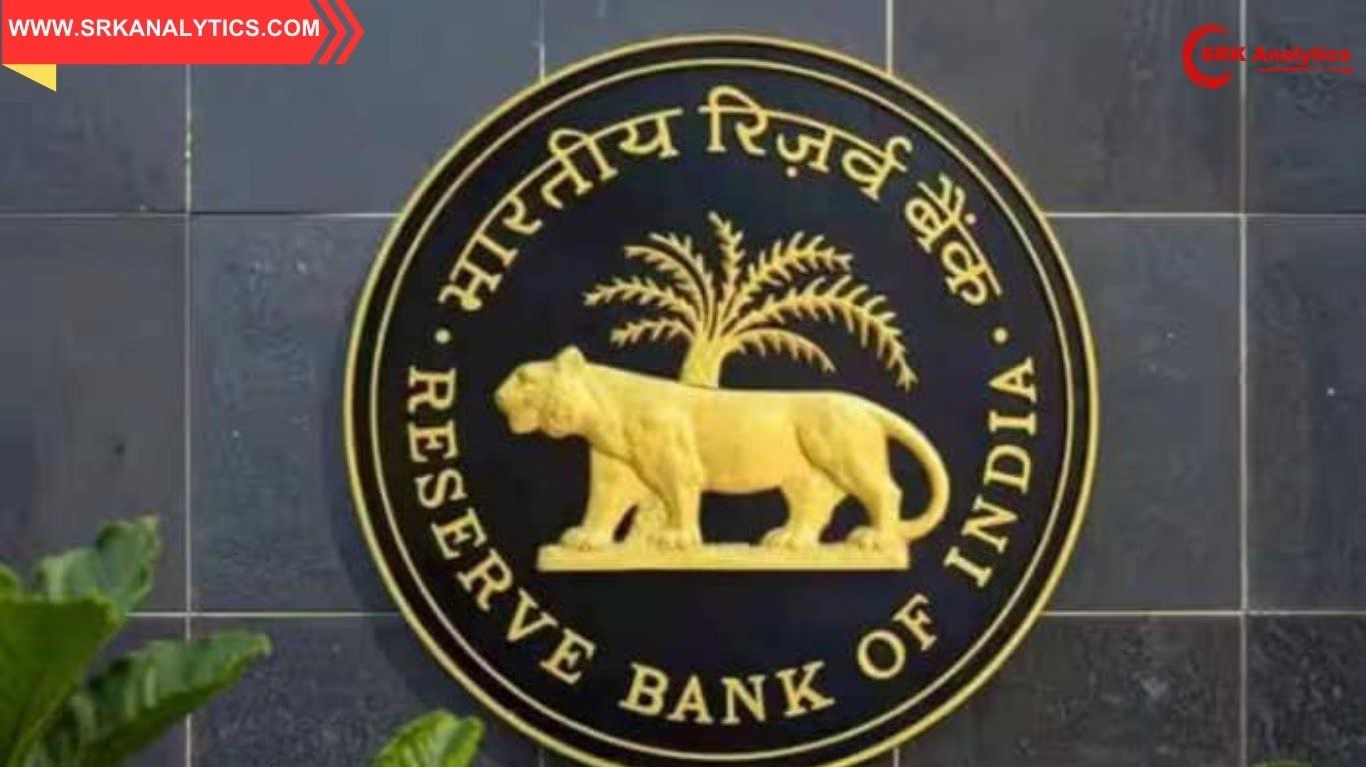
Global investment bank Goldman Sachs has suggested that the Reserve Bank of India (RBI) may consider further rate cuts if the much-anticipated India-US trade deal faces delays. The analysis highlights the delicate balance between India’s monetary policy, trade negotiations, and global economic conditions.
Background of the Situation
- India and the US have been negotiating a comprehensive trade deal aimed at reducing tariffs and boosting bilateral trade.
- Delays in finalizing the agreement could impact India’s export competitiveness and foreign investment inflows.
- Goldman Sachs believes that the RBI may respond with rate cuts to stimulate domestic demand and offset external pressures.
- The move would align with RBI’s broader strategy of supporting growth amid global uncertainties.
Key Highlights
| Indicator | Details |
|---|---|
| Institution in Focus | Reserve Bank of India (RBI) |
| External Factor | India-US trade deal delay |
| Potential Action | Further rate cuts |
| Analyst Source | Goldman Sachs |
| Broader Context | Global economic volatility, trade negotiations |
Trade Deal vs RBI Policy
| Factor | Trade Deal Finalized | Trade Deal Delayed | Implication |
|---|---|---|---|
| Export Competitiveness | Strengthened | Weakened | Pressure on growth |
| Foreign Investment | Increased | Reduced | Capital outflows |
| RBI Policy | Neutral stance | Possible rate cuts | Stimulus for demand |
| Inflation Outlook | Stable | Potential rise | Policy recalibration |
| Long-Term Outlook | Balanced growth | Stimulus-driven growth | Uncertain trajectory |
Why This Story Matters
- Economic Growth: Trade deals directly impact India’s GDP trajectory.
- Monetary Policy: RBI’s decisions influence borrowing costs and investment.
- Global Integration: Reflects India’s dependence on external trade relations.
- Investor Confidence: Signals how India manages uncertainty.
- Future Outlook: Sets precedent for policy responses to global delays.
RBI’s Perspective
- RBI aims to balance inflation control with growth support.
- Rate cuts may be considered if external shocks threaten domestic stability.
- The central bank remains cautious about global volatility.
Goldman Sachs’ Analysis
- Goldman Sachs emphasizes that delays in the India-US trade deal could weaken investor sentiment.
- Rate cuts would provide stimulus to domestic demand.
- The analysis reflects broader concerns about global trade tensions.
Expert Opinions
- Economists: Suggest rate cuts could support growth but risk inflation.
- Policy Analysts: Highlight the importance of trade deals in shaping monetary policy.
- Investors: Monitor RBI’s stance for signals on market direction.
- Critics: Warn that excessive reliance on rate cuts may undermine fiscal discipline.
Challenges Ahead
- Inflation Management: Balancing growth stimulus with price stability.
- Global Volatility: Navigating external shocks and currency fluctuations.
- Trade Negotiations: Ensuring timely conclusion of India-US deal.
- Investor Sentiment: Maintaining confidence amid uncertainty.
- Policy Coordination: Aligning monetary and fiscal strategies.
Opportunities
- Domestic Demand Boost: Rate cuts stimulate consumption and investment.
- Export Diversification: Encourages India to expand trade beyond US markets.
- Policy Innovation: Strengthens RBI’s adaptive approach.
- Investor Engagement: Signals proactive management of risks.
- Global Positioning: Reinforces India’s resilience in uncertain times.
Broader Context of India’s Economic Policy
- India has pursued reforms to strengthen trade and investment.
- RBI’s monetary policy plays a crucial role in managing growth and inflation.
- Trade deals with major partners like the US are critical for long-term stability.
- Delays highlight the interconnectedness of global and domestic factors.
Sectoral Breakdown of Impact
| Sector | Impact | Strategic Importance |
|---|---|---|
| Exports | Weakened competitiveness | Trade growth |
| Imports | Higher costs | Inflationary pressure |
| Banking | Rate cuts affect lending | Stimulus for demand |
| Investment | Reduced inflows | Capital market stability |
| Consumers | Lower borrowing costs | Boost to spending |
Media Coverage
- Headlines emphasize Goldman Sachs’ warning about RBI’s potential rate cuts.
- Analysts debate whether monetary policy can offset trade delays.
- Coverage highlights the broader implications for India’s economy.
- The story continues to dominate discussions in financial and policy circles.
Conclusion
Goldman Sachs’ analysis that the RBI may cut rates further if the India-US trade deal is delayed underscores the complex interplay between global negotiations and domestic monetary policy. While rate cuts could provide short-term relief by boosting demand, they also raise challenges in managing inflation and investor sentiment. The outcome of the trade deal will be pivotal in shaping India’s economic trajectory in 2026.
Disclaimer
This article is intended for informational purposes only and does not constitute financial or professional advice. Policies, statements, and outcomes are subject to change based on evolving circumstances. Readers are encouraged to follow official updates for accurate information. The author and publisher are not responsible for any decisions made based on this article.