



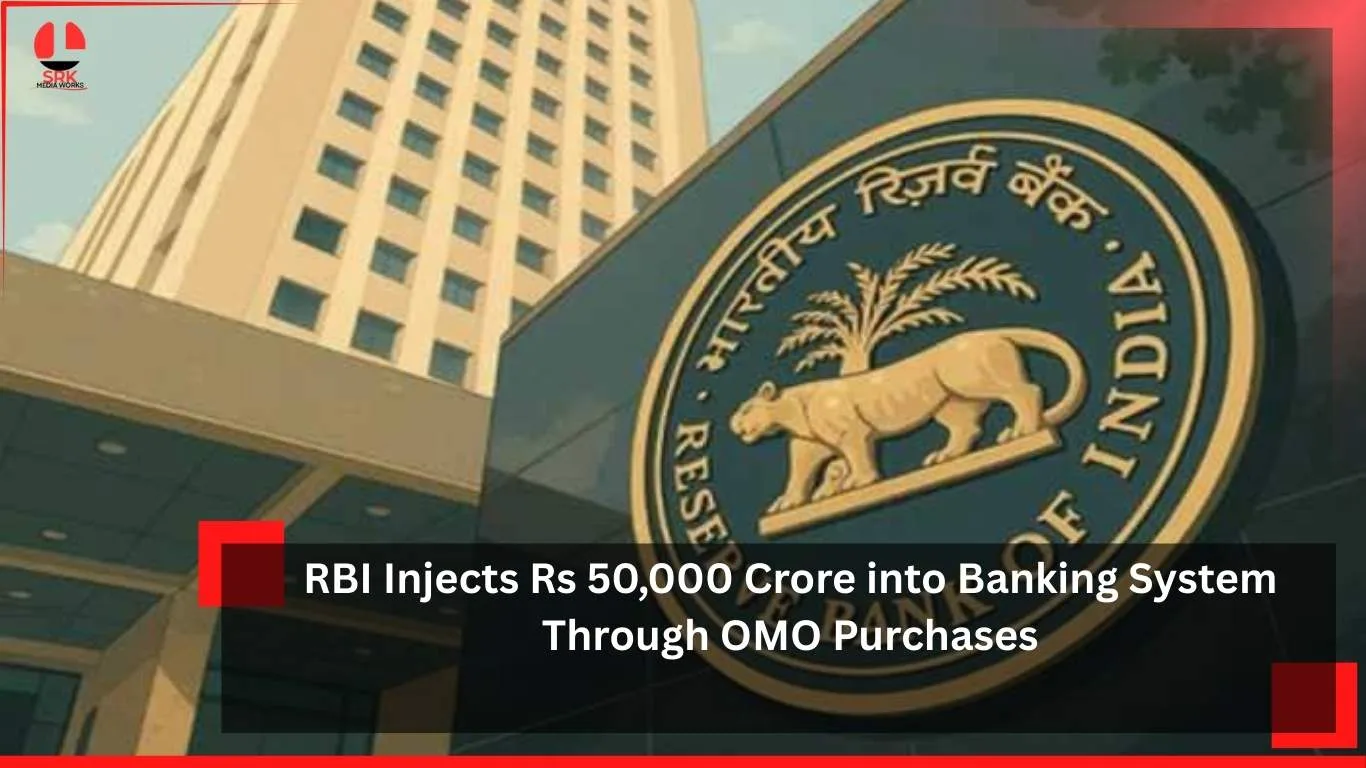
The Reserve Bank of India (RBI) has announced a significant liquidity infusion of Rs 50,000 crore into the banking system through Open Market Operations (OMO) purchases. This move is aimed at stabilizing liquidity conditions, supporting credit growth, and ensuring smooth functioning of financial markets amid evolving economic challenges.
The Announcement
The RBI confirmed that the liquidity injection will be carried out via government securities purchases under OMO. By purchasing these securities, the central bank provides additional liquidity to commercial banks, enabling them to lend more freely and meet the rising demand for credit in the economy.
Officials emphasized that the measure is part of RBI’s proactive approach to balance inflation control with growth support, ensuring that liquidity remains adequate without fueling excessive inflationary pressures.
Background: What Are OMO Purchases?
Open Market Operations are one of the key monetary policy tools used by central banks worldwide. They involve buying or selling government securities to regulate liquidity in the banking system.
Key Objectives of OMO Purchases:
- Liquidity Management: Ensures banks have sufficient funds for lending.
- Interest Rate Stability: Helps maintain balance in money markets.
- Credit Flow: Supports businesses and households by easing borrowing conditions.
- Economic Growth: Facilitates investment and consumption by improving liquidity.
Comparative Analysis of RBI’s Liquidity Measures
| Year | Liquidity Injection (Rs Crore) | Method | Economic Context |
|---|---|---|---|
| 2020 | 1,00,000+ | LTRO, OMO | Pandemic crisis support |
| 2022 | 75,000 | OMO | Inflation management |
| 2024 | 60,000 | VRR auctions | Growth stabilization |
| 2026 | 50,000 | OMO purchases | Credit demand, liquidity adjustment |
This comparison shows how RBI has consistently used liquidity tools to respond to evolving economic challenges.
Pivot Analysis: Impact of RBI’s Rs 50,000 Crore Injection
| Stakeholder | Immediate Impact | Long-Term Outcome |
|---|---|---|
| Banks | Increased liquidity | Enhanced lending capacity |
| Businesses | Easier access to credit | Boost in investment and expansion |
| Households | Lower borrowing costs | Increased consumption and housing demand |
| Financial Markets | Stabilized interest rates | Improved investor confidence |
| Economy | Short-term liquidity support | Sustained growth momentum |
Economic Significance
The liquidity injection comes at a crucial time when credit demand is rising across sectors. With businesses seeking funds for expansion and households looking for loans, the RBI’s move ensures that banks can meet these demands without facing liquidity constraints.
Broader Economic Effects:
- Credit Growth: Banks can extend more loans to industries and consumers.
- Investment Boost: Easier financing for infrastructure and corporate projects.
- Consumption Rise: Lower interest rates encourage spending.
- Market Stability: Reduced volatility in bond and money markets.
Public Sentiment
Financial experts and market participants have welcomed the RBI’s decision, viewing it as a timely intervention to support growth. Investors expressed confidence that the move will stabilize yields and improve liquidity in debt markets. Businesses and households anticipate easier access to loans, while analysts caution that inflationary risks must be monitored.
Historical Context
RBI has frequently used OMO purchases during periods of liquidity stress. Similar measures were taken during the global financial crisis, the COVID-19 pandemic, and subsequent inflationary cycles. The current move reflects continuity in RBI’s strategy of balancing growth with price stability.
Global Context
Central banks worldwide use similar tools to manage liquidity. The Federal Reserve in the US, the European Central Bank, and the Bank of Japan regularly conduct OMO operations to stabilize financial systems.
Global Comparisons of Liquidity Measures
| Central Bank | Liquidity Tool | Recent Action | Outcome |
|---|---|---|---|
| Federal Reserve (USA) | Treasury purchases | $100 billion injection | Stabilized bond markets |
| ECB (Europe) | Asset purchase program | €80 billion | Supported eurozone growth |
| Bank of Japan | JGB purchases | ¥10 trillion | Maintained ultra-low rates |
| RBI (India) | OMO purchases | Rs 50,000 crore | Boosted liquidity and credit flow |
Conclusion
The RBI’s decision to inject Rs 50,000 crore into the banking system through OMO purchases marks a decisive step in supporting India’s economic momentum. By ensuring adequate liquidity, the central bank aims to balance growth and inflation, stabilize financial markets, and strengthen credit availability. As the economy continues to evolve, this intervention underscores RBI’s proactive role in safeguarding financial stability.
Disclaimer
This article is based on publicly available reports and expert analysis. It is intended for informational purposes only and does not represent official financial statements or policy documents from the Reserve Bank of India. Readers should note that monetary policy decisions are subject to change based on evolving economic conditions.