



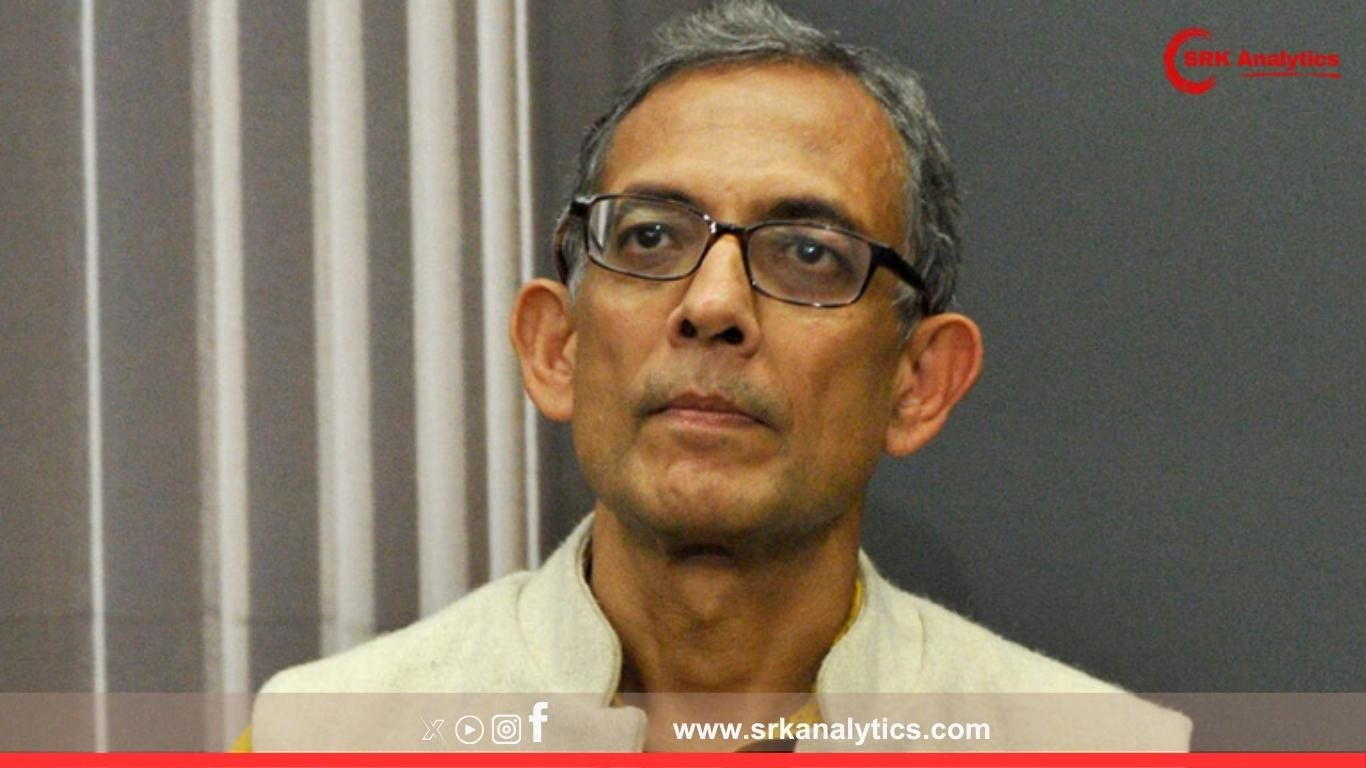
India’s energy strategy has once again come into the spotlight after Nobel Prize-winning economist Abhijit Banerjee urged policymakers to reconsider the long-term viability of importing discounted Russian oil. Speaking at a recent economic policy forum, Banerjee suggested that the benefits of cheap crude should be weighed against potential geopolitical and trade repercussions, particularly in light of India’s aspirations to strengthen ties with the United States and other Western economies.
According to Banerjee, the question is not just about energy pricing but about broader trade-offs in foreign policy, global trade access, and long-term economic resilience. He also drew a connection between India’s oil import decisions and the ongoing discussions around US tariff removals on Indian goods, warning that the two issues may be more closely linked than they appear on the surface.
The Russian Oil Discount Advantage and Its Risks
Since early 2022, following the Russia-Ukraine conflict and subsequent Western sanctions, India has emerged as one of the largest buyers of Russian crude. The appeal has been clear — Russian oil is sold at a discount compared to global benchmarks, helping India manage its energy import bill amid volatile global prices.
However, Banerjee highlighted that short-term cost savings might come at the expense of long-term diplomatic leverage.
“Discounted oil is attractive, but we have to think hard about the cost of possible retaliatory measures from trade partners,” he said.
The US Connection: Tariff Removal and Strategic Alignment
Banerjee’s remarks took a sharper turn when he linked the debate on Russian oil to the issue of US tariffs on Indian exports. Over recent years, several Indian goods have lost preferential tariff treatment under the US Generalized System of Preferences (GSP). While there have been talks about restoring some of these benefits, the geopolitical climate could influence negotiations.
| Key Issue | India’s Position | US Position | Potential Link to Oil Imports |
|---|---|---|---|
| Russian Oil Imports | High volume, discounted pricing | Seeks reduction in purchases by allies | May view oil imports as contrary to strategic partnership |
| Tariff Removal | Wants restoration of GSP benefits | Conditional based on broader trade cooperation | Could use oil imports as leverage |
| Strategic Ties | Strengthening defense, trade links | Wants alignment on foreign policy | Oil purchases from Russia may weaken trust |
Banerjee’s concern: “If the US perceives India’s Russian oil imports as undermining its sanctions regime, it could slow down or even block tariff relief measures.”
Domestic Economic Considerations
From a purely economic standpoint, discounted Russian oil has been a boon for inflation control and fiscal stability. Lower crude prices help reduce India’s import bill, narrow the current account deficit, and keep retail fuel prices relatively stable for consumers.
Yet, policymakers are aware that overreliance on a single source of discounted supply could expose the economy to sudden shocks if geopolitical dynamics shift. For instance, any abrupt sanction tightening or logistical disruption in Russian supply routes could force India to scramble for costlier alternatives.
| Economic Metric | With Discounted Russian Oil | Without Discounted Russian Oil |
|---|---|---|
| Fuel Inflation | Moderated | Higher pressure on CPI |
| Import Bill | Lower by $3–5 billion annually | Higher import costs |
| Trade Balance | Marginally improved | Worsened deficit |
| Fiscal Impact | Reduced subsidy burden | Increased fiscal pressure |
The Global Diplomacy Factor
Banerjee’s warning underscores a reality many analysts agree with — energy imports are no longer just an economic decision; they are a core element of foreign policy. The United States and European Union have been quietly signaling that large-scale purchases of Russian crude by partners like India may not align with their strategic objectives.
In parallel, India has been actively seeking to expand its trade with the West, secure technology partnerships, and attract foreign investment. The challenge lies in balancing strategic autonomy with international expectations.
Policy Options Under Discussion
Experts suggest multiple pathways India could consider to navigate this policy dilemma:
- Gradual Diversification of Oil Sources – Reduce dependency on Russian oil while sourcing competitively from Middle Eastern and US suppliers.
- Energy Transition Acceleration – Invest more aggressively in renewables and domestic oil exploration to cut import reliance.
- Strategic Bargaining – Use Russian oil purchases as a negotiation lever in broader trade talks with the US and EU.
- Multilateral Energy Alliances – Engage in forums like IEA+ to build collective bargaining power and avoid isolation.
The Strategic Trade-Off
Banerjee framed the issue as a classic cost-benefit dilemma:
- Benefit: Significant short-term savings and inflation control from discounted oil.
- Cost: Potential strain on high-value trade relationships and missed tariff benefits.
The economist emphasized that India’s decision should factor in long-term economic growth prospects, which are heavily influenced by export market access, rather than focusing solely on short-term energy savings.
Market & Investor Reactions
Investors are closely watching how this policy debate unfolds. Indian energy companies, particularly refiners, have benefited from cheap Russian oil margins, while export-oriented sectors like textiles, engineering goods, and chemicals are eager for tariff relief in the US.
If policymakers move towards reducing Russian oil imports in exchange for trade concessions, it could shift stock market sentiment in favor of export-heavy industries. On the other hand, maintaining current oil import patterns could continue supporting refinery profitability but might limit trade gains elsewhere.
Looking Ahead
The government faces a challenging balancing act — protecting domestic economic stability while not jeopardizing long-term trade goals. Banerjee’s remarks have added urgency to the debate, pushing policymakers to think beyond immediate price benefits and consider strategic positioning in a shifting global order.
Whether India chooses to gradually scale back Russian oil imports or continue leveraging the discount for economic stability, the decision will have ripple effects on its diplomatic relationships, trade negotiations, and energy security strategy for years to come.
Disclaimer: This article is intended solely for informational purposes and does not constitute investment, trade, or policy advice. Readers are encouraged to consult financial and policy experts before making decisions related to energy imports or international trade.