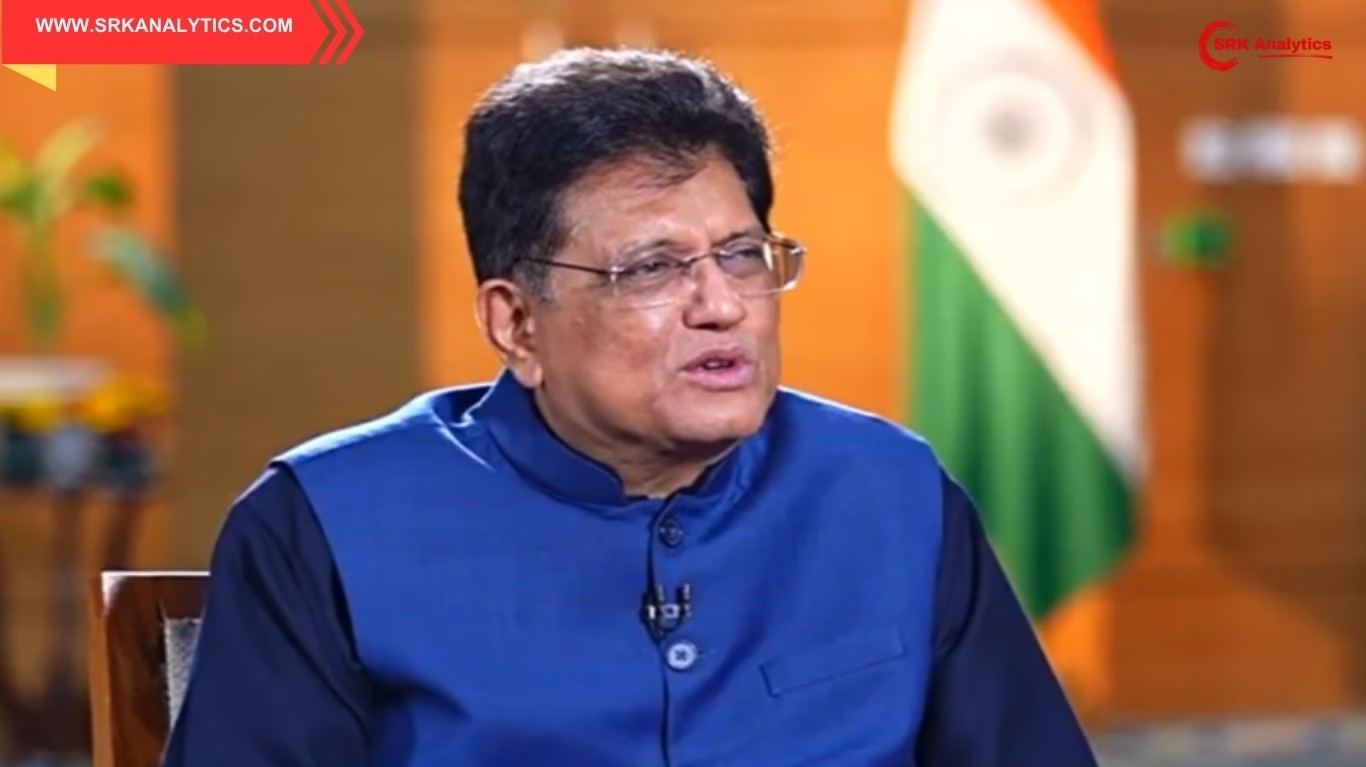
Union Minister of Commerce and Industry Piyush Goyal has strongly criticized the previous United Progressive Alliance (UPA) government, claiming that its excessive focus on China came at the expense of strengthening trade ties with the European Union (EU). According to Goyal, this miscalculation not only cost India valuable trade opportunities but also slowed down the country’s economic growth trajectory during a crucial period.
Goyal’s Key Argument
Goyal argued that while China was prioritized as a major trading partner under UPA’s leadership, India failed to capitalize on the EU’s willingness to deepen economic cooperation. The EU, being one of the largest trading blocs in the world, offered India significant potential for exports, investments, and technology partnerships.
By neglecting these opportunities, Goyal believes India missed out on:
- Enhanced market access for Indian goods and services
- Stronger investment flows from European companies
- Greater collaboration in technology and innovation
- A balanced trade strategy that could have reduced dependence on China
India-EU Trade Potential
The European Union has consistently been one of India’s largest trading partners. However, trade negotiations between India and the EU have often stalled due to disagreements over tariffs, market access, and regulatory standards.
| Year | India-EU Trade Volume | Key Developments |
|---|---|---|
| 2005 | $50 billion | Early discussions on FTA |
| 2010 | $80 billion | UPA prioritizes China ties |
| 2015 | $100 billion | Talks stall over tariff issues |
| 2020 | $115 billion | Renewed interest in EU partnership |
| 2025 | $150 billion | Ongoing negotiations for FTA |
This table highlights how trade volumes grew but failed to reach their full potential due to stalled negotiations.
China-Centric Approach Under UPA
During the UPA era, India’s trade with China expanded rapidly. Imports of electronics, machinery, and consumer goods surged, while Indian exports struggled to keep pace.
| Factor | Impact |
|---|---|
| Heavy imports from China | Widened trade deficit |
| Limited diversification | Over-reliance on Chinese supply chains |
| Weak EU engagement | Missed opportunities for balanced growth |
| Technology dependence | Slowed domestic innovation |
Goyal’s critique suggests that this imbalance weakened India’s bargaining power and left the economy vulnerable to external shocks.
Current Government’s Strategy
Under the present administration, India has sought to recalibrate its trade strategy by:
- Reviving negotiations with the EU for a Free Trade Agreement (FTA)
- Diversifying supply chains to reduce dependence on China
- Strengthening ties with other regions such as ASEAN, Africa, and Latin America
- Promoting domestic manufacturing under initiatives like “Make in India”
Expert Opinions
Economists and trade analysts have noted that while China remains a critical trading partner, India’s long-term growth requires deeper engagement with the EU. The EU offers not only a vast consumer market but also advanced technology, sustainable practices, and investment opportunities that align with India’s development goals.
Comparative Analysis of Trade Strategies
| Region | UPA Era Focus | Current Strategy | Outcome |
|---|---|---|---|
| China | Heavy reliance | Reduced dependence | Balanced approach |
| EU | Neglected | Renewed negotiations | Potential FTA |
| USA | Moderate ties | Strengthened partnerships | Increased investment |
| ASEAN | Limited | Expanded outreach | Growing trade volumes |
This comparison shows how India’s trade strategy has shifted towards diversification and balance.
Implications for Economic Growth
Goyal’s critique underscores the importance of strategic trade partnerships. By missing opportunities with the EU, India may have slowed its economic growth during the UPA years. Stronger EU ties could have boosted exports, created jobs, and accelerated industrial modernization.
Conclusion
The headline “Piyush Goyal’s Critique: UPA’s China Focus Cost India EU Trade Opportunities and Economic Growth” reflects the essence of this debate. Goyal’s remarks highlight the need for balanced trade strategies that avoid over-reliance on a single partner.
As India continues negotiations with the EU, the lessons from the past serve as a reminder that diversification, foresight, and strategic engagement are essential for sustainable economic growth.
Disclaimer
This article is intended for informational and analytical purposes only. It reflects current perspectives within the political and economic discourse. The content does not represent official statements from the UPA or EU authorities. Readers should verify facts through authoritative sources before drawing conclusions.