




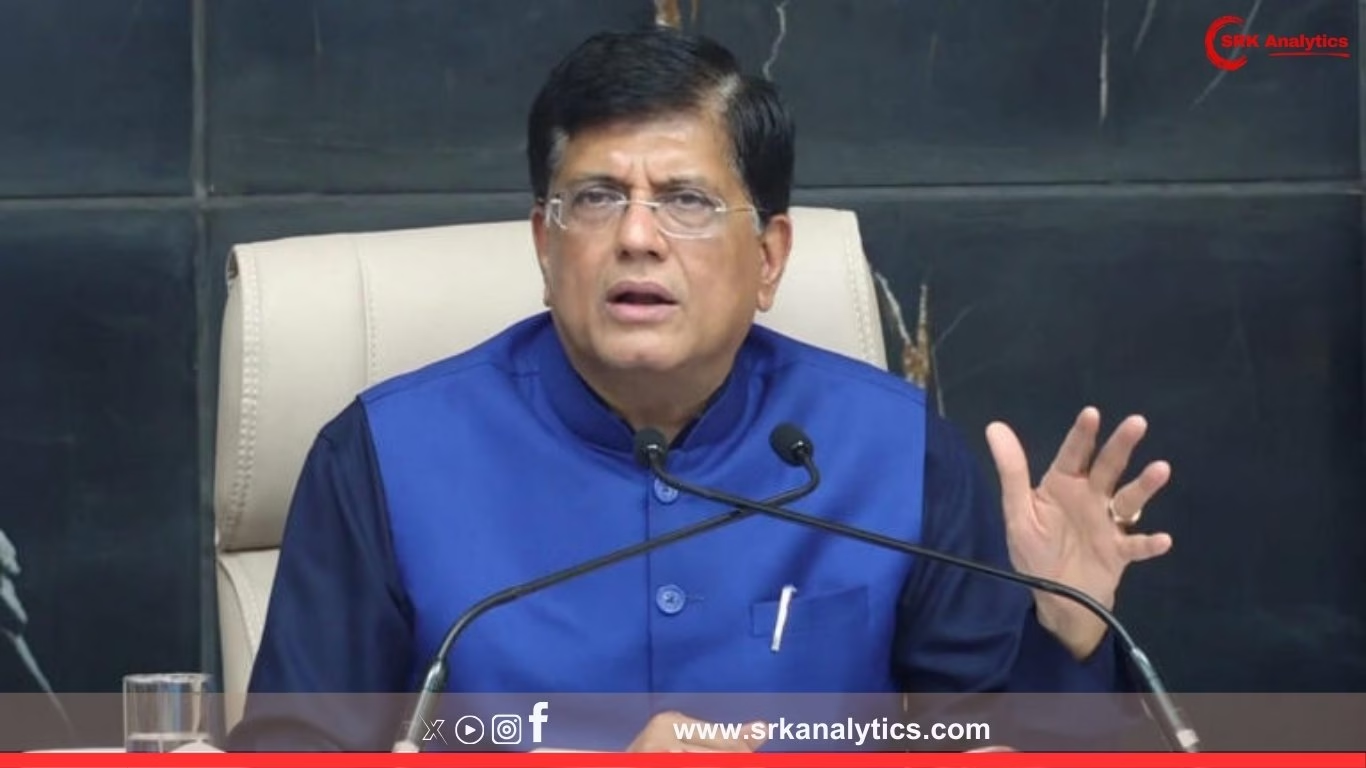
Union Commerce and Industry Minister Piyush Goyal is expected to travel to Washington in the next few days to advance negotiations on the proposed India-US Bilateral Trade Agreement (BTA), according to senior government sources. The visit follows a seven-hour meeting held in New Delhi on September 16 between US Chief Negotiator Brendan Lynch and Indian counterpart Rajesh Agrawal, which both sides described as “constructive” and “promising.”
The upcoming trip marks Goyal’s second visit to Washington this year, after his May meeting with US Commerce Secretary Howard Lutnick. It comes amid renewed diplomatic warmth between President Donald Trump and Prime Minister Narendra Modi, and a shared commitment to doubling bilateral trade to $500 billion by 2030.
—
India-US Bilateral Trade Agreement: Status Update
| Attribute | Details |
|---|---|
| Current Trade Volume | $191 billion |
| Target Trade Volume by 2030 | $500 billion |
| Negotiation Rounds Completed | 5 |
| Next Milestone | First tranche by Fall 2025 |
| Lead Negotiators | Brendan Lynch (US), Rajesh Agrawal (India) |
The BTA aims to streamline tariffs, enhance market access, and resolve long-standing trade irritants between the two nations.
—
Key Issues on the Table
| Trade Concern | India’s Position | US Position |
|---|---|---|
| 50% Tariff on Indian Goods | Seeking rollback | Imposed due to Russian oil imports |
| Digital Services Tax | Defending sovereign right | Seeking exemption for US tech firms |
| Agricultural Market Access | Limited concessions | Demanding wider entry |
| Pharma and Generics | Seeking regulatory harmonization | Pushing for IP protection |
| Energy Trade | Defending oil diversification | Linking to sanctions compliance |
The tariff issue remains a flashpoint, with India arguing that its oil purchases from Russia are within sovereign rights and global norms.
—
Timeline of Recent Developments
| Date | Event |
|---|---|
| May 2025 | Goyal meets US Commerce Secretary Lutnick in Washington |
| July–August 2025 | US imposes 50% tariff on Indian exports |
| September 16 | Daylong bilateral meeting in New Delhi |
| September 18 | Goyal confirms talks are “moving in the right direction” |
| September 20 | Reports confirm Goyal’s Washington visit “in next few days” |
The September 16 meeting marked the first in-person engagement since the tariff escalation, signaling a thaw in trade tensions.
—
India-US Trade Snapshot (FY 2024–25)
| Metric | Value |
|---|---|
| Total Bilateral Trade | $131.84 billion |
| Indian Exports to US | $86.5 billion |
| US Share in India’s Exports | 18% |
| US Share in India’s Imports | 6.22% |
| US Share in India’s Total Trade | 10.73% |
The United States remains India’s largest trading partner for the fourth consecutive year, underscoring the strategic importance of the BTA.
—
Diplomatic Signals and Political Optics
| Leader | Statement |
|---|---|
| Donald Trump | Called Modi a “friend,” signaling diplomatic reset |
| Narendra Modi | Responded warmly, paving way for resumed talks |
| Piyush Goyal | “Negotiations are going on… India and the US are natural partners” |
The tone of recent exchanges suggests a shift from confrontation to collaboration, with both sides keen to finalize the trade pact.
—
Expected Outcomes from Goyal’s Visit
| Objective | Likely Impact |
|---|---|
| Tariff Rollback Negotiations | Relief for Indian exporters |
| Finalization of First Tranche | Boost investor confidence |
| Digital Trade Framework | Clarity for tech and e-commerce sectors |
| Regulatory Harmonization | Easier market access for pharma and textiles |
| Strategic Energy Dialogue | Safeguard India’s oil diversification policy |
The visit is expected to accelerate progress on multiple fronts, with a focus on resolving tariff disputes and finalizing key chapters of the BTA.
—
Conclusion: Goyal’s Washington Visit Could Be a Turning Point in India-US Trade Relations
As Piyush Goyal prepares to visit Washington in the coming days, the stakes are high for both India and the United States. With five rounds of negotiations already completed and a shared goal of doubling trade volumes by 2030, the timing is critical. The visit could unlock solutions to tariff tensions, digital trade disputes, and regulatory bottlenecks—setting the stage for a landmark agreement.
For Indian exporters, tech firms, and investors, the outcome of this visit could reshape market dynamics and restore momentum to a relationship that has weathered geopolitical headwinds. As both nations reaffirm their status as “natural partners,” the world watches closely.
—
Disclaimer: This article is based on publicly available government statements, verified news reports, and trade data. It is intended for informational purposes only and does not constitute financial, diplomatic, or legal advice. All developments are subject to official confirmation and ongoing negotiations.