




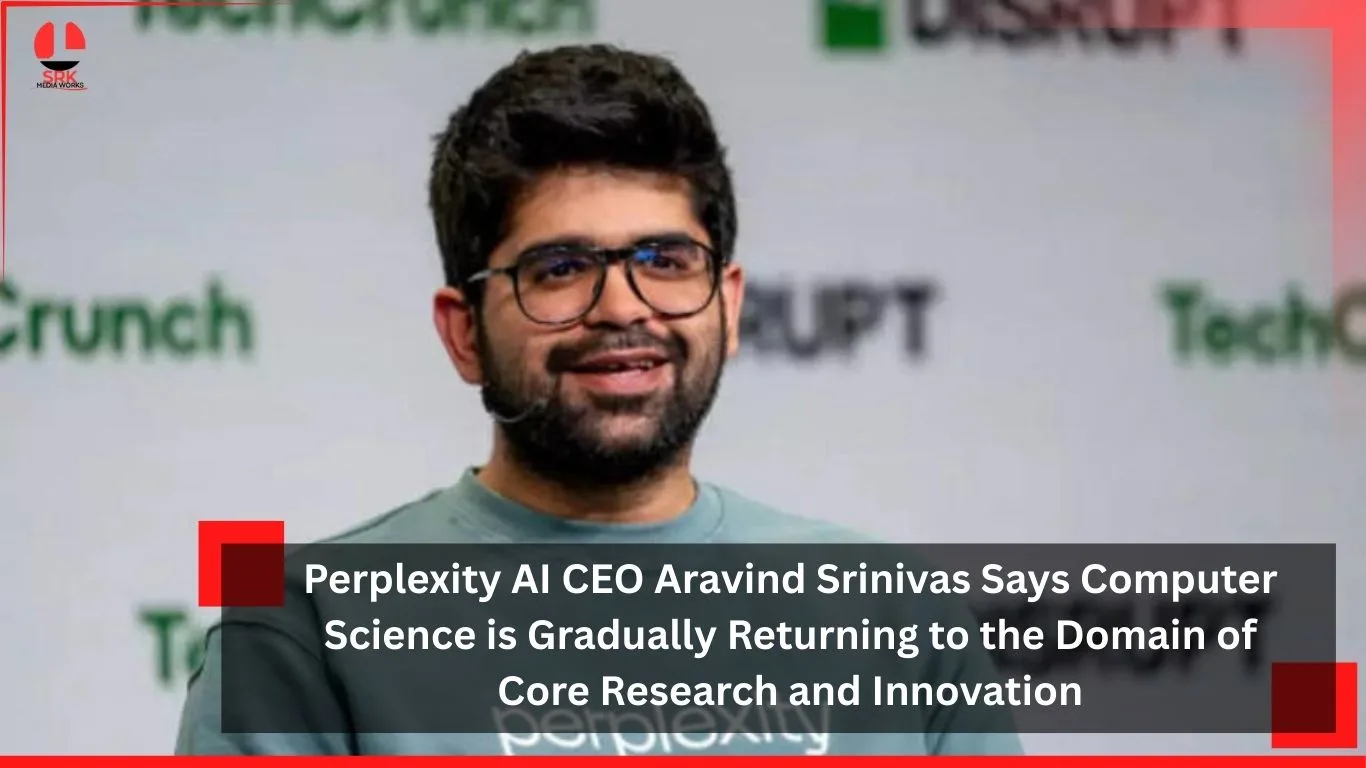
Perplexity AI’s Chief Executive Officer, Aravind Srinivas, has shared a thought-provoking perspective on the future of computer science, emphasizing that the discipline is gradually returning to its original domain of deep research, innovation, and fundamental problem-solving. His remarks highlight the evolving nature of technology and the renewed importance of academic rigor in shaping the next generation of breakthroughs.
Computer Science: From Applied Engineering to Core Research
Over the past few decades, computer science has often been viewed through the lens of applied engineering, with a focus on building applications, platforms, and consumer-facing technologies. However, Srinivas believes that the field is now shifting back toward its roots—where theoretical foundations, algorithmic innovation, and scientific exploration drive progress.
Key Shifts in Focus
- Algorithmic Research: Renewed interest in optimization, complexity theory, and advanced algorithms.
- Artificial Intelligence: Moving beyond applications to explore fundamental questions in machine learning and reasoning.
- Quantum Computing: A domain requiring deep theoretical knowledge and research-driven innovation.
- Systems Design: Revisiting core principles of distributed systems, operating systems, and networking.
- Ethics and Governance: Integrating philosophy and social sciences into computer science research.
The Role of AI in Reshaping Computer Science
Artificial Intelligence has become the centerpiece of modern computer science. Srinivas pointed out that while AI applications are widespread, the real breakthroughs lie in understanding the science behind intelligence, reasoning, and learning.
Innovation Drivers in AI
- Large Language Models (LLMs): Exploring their limitations and potential for reasoning.
- Neuroscience-Inspired Computing: Bridging biology and computer science.
- Explainability and Trust: Building systems that are transparent and reliable.
- Energy Efficiency: Researching sustainable computing models.
Comparative Analysis of Computer Science Domains
| Domain | Past Focus (Applied) | Emerging Focus (Research) | Growth Potential |
|---|---|---|---|
| Software Engineering | Application building | Algorithmic efficiency | Moderate |
| Artificial Intelligence | Consumer AI tools | Fundamental reasoning | Very High |
| Quantum Computing | Experimental stage | Core theoretical research | Very High |
| Networking & Systems | Infrastructure | Distributed intelligence | High |
| Ethics & Governance | Limited attention | Integrated frameworks | High |
Pivot Analysis of Future Computer Science
| Area of Research | Academic Impact | Industry Impact | Strategic Priority |
|---|---|---|---|
| Algorithms | Strong theoretical base | Efficiency in systems | Very High |
| Machine Learning | New models, theories | AI-driven industries | Very High |
| Quantum Computing | Foundational research | Next-gen computing | High |
| Human-Computer Interaction | Cognitive studies | User-centric design | Moderate |
| Ethics & Policy | Governance frameworks | Responsible AI | High |
The Academic-Industry Collaboration
Srinivas emphasized that the future of computer science will depend on stronger collaboration between academia and industry. While companies like Perplexity AI are pushing boundaries in applied AI, universities and research institutions are essential for exploring fundamental questions.
Benefits of Collaboration
- Faster translation of research into real-world applications.
- Shared resources for high-cost research like quantum computing.
- Development of ethical frameworks for responsible innovation.
- Training the next generation of computer scientists.
Challenges in Returning to Core Research
Despite optimism, Srinivas acknowledged challenges such as:
- Funding Constraints: Fundamental research often requires long-term investment.
- Talent Shortage: Need for more researchers trained in theoretical computer science.
- Commercial Pressures: Industry focus on short-term profits can overshadow deep research.
- Global Competition: Nations competing for leadership in AI and quantum computing.
The Road Ahead
Computer science is entering a new era where the balance between applied engineering and core research will define its trajectory. Srinivas’s vision suggests that the next decade will be marked by breakthroughs in algorithms, AI reasoning, quantum computing, and ethical frameworks.
Conclusion
Aravind Srinivas’s perspective reflects a broader trend in the technology world: a return to fundamentals. As computer science gradually reclaims its identity as a research-driven discipline, the synergy between academia and industry will be crucial. The future of computing will not only be about building applications but also about solving deep scientific questions that shape humanity’s relationship with technology.
Disclaimer
This article is a synthesized news-style content created for informational and SEO purposes. It is not an official press release or financial advice. Readers are encouraged to verify details from official company communications and academic sources before making business or investment decisions.