








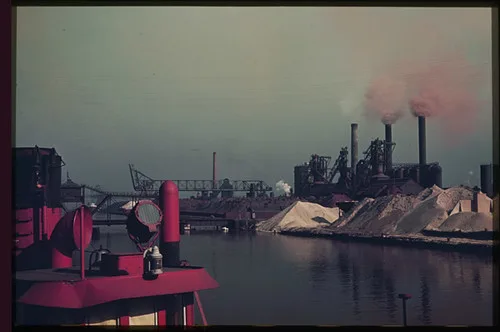
United States Steel Corporation announced a major capital investment this week to modernize its Edgar Thomson Plant in Braddock, Pennsylvania, the company’s oldest active facility. The multi-million dollar renovation aims to increase operational efficiency, extend the life of the historic site, and secure the future of steelmaking in the Monongahela Valley.
A Legacy Site Reimagined
Founded in 1872 by Andrew Carnegie, the Edgar Thomson works served as the cornerstone of the American industrial revolution. Despite its historical significance, the plant has faced decades of uncertainty as global competition and shifting environmental regulations pressured legacy steel producers. This renovation marks a strategic pivot for U.S. Steel, signaling a commitment to maintaining domestic production capabilities rather than phasing out older, integrated assets.
Strategic Operational Upgrades
The modernization plan focuses on upgrading the plant’s basic oxygen process vessels and implementing advanced digital monitoring systems. These technical enhancements are designed to reduce energy consumption per ton of steel produced while simultaneously increasing output capacity. By integrating automated sensors, plant managers expect to reduce downtime and improve safety standards across the facility.
Industry Perspectives and Economic Impact
Market analysts suggest that this investment reflects a broader trend among U.S. manufacturers to prioritize ‘brownfield’ redevelopment over new construction. According to data from the American Iron and Steel Institute, domestic producers are increasingly investing in existing infrastructure to shorten supply chains and mitigate international shipping volatility. Industry experts note that sustaining these plants is essential for maintaining the specialized grade steel required for the automotive and construction sectors.
Environmental and Regulatory Compliance
A significant portion of the capital expenditure is earmarked for environmental upgrades, including improved emissions control technology. As the steel industry faces mounting pressure to decarbonize, U.S. Steel is working to align this facility with modern air quality standards. These improvements are expected to satisfy stringent regional environmental mandates while positioning the company for future sustainability disclosures.
Looking Ahead
For the surrounding community, the modernization serves as a stabilizing force for local employment and regional tax bases. Industry observers will be watching closely to see if this model of incremental, high-tech renovation can be applied to other aging facilities across the Rust Belt. As the project progresses over the next eighteen months, the focus will shift to whether these operational efficiencies can effectively insulate the plant against the cyclical nature of global steel pricing.