

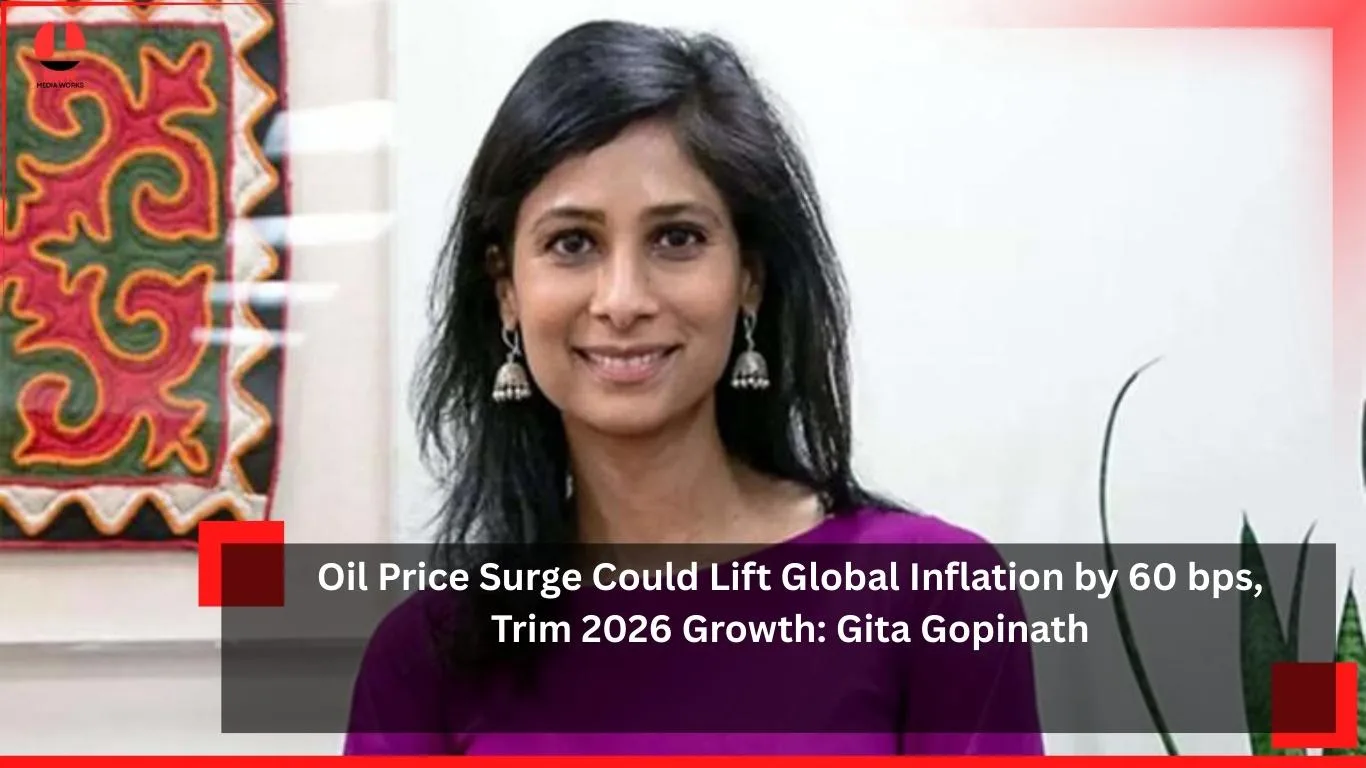
Global economic stability faces fresh challenges as oil prices surge, with International Monetary Fund (IMF) First Deputy Managing Director Gita Gopinath warning that the spike could lift global inflation by 60 basis points (bps) and trim growth in 2026. Her remarks underscore the delicate balance policymakers must maintain between energy markets, inflation control, and growth sustainability.
Background of the Oil Price Surge
Oil prices have risen sharply due to geopolitical tensions, supply disruptions, and increased demand.
- Geopolitical Factors: Conflicts in the Middle East and sanctions on major producers have tightened supply.
- Demand Recovery: Post-pandemic industrial growth and rising consumption have fueled demand.
- Market Speculation: Traders betting on higher prices have added volatility.
Gita Gopinath’s Warning
Gopinath highlighted the risks of sustained high oil prices:
- Inflation Impact: A 60 bps increase in global inflation could strain households and businesses.
- Growth Trim: Global GDP growth in 2026 may be reduced, affecting both advanced and emerging economies.
- Policy Challenge: Central banks face the dilemma of tightening monetary policy without stifling growth.
Comparative Analysis of Oil Price Shocks
| Year | Oil Price Surge Event | Inflation Impact | Growth Impact |
|---|---|---|---|
| 1973 | OPEC Oil Embargo | Global inflation surged | Severe recession in advanced economies |
| 2008 | Oil prices crossed $140/barrel | Inflationary pressures worldwide | Financial crisis compounded effects |
| 2022 | Russia-Ukraine conflict | Energy inflation in Europe | Growth slowdown globally |
| 2026 | Current surge | 60 bps inflation rise projected | Trimmed global growth forecast |
This table shows how oil shocks historically disrupt both inflation and growth.
Political and Social Reactions
The warning has triggered varied responses across governments and institutions:
| Stakeholder Group | Reaction Type | Key Observations |
|---|---|---|
| Central Banks | Cautious | Considering rate hikes to curb inflation |
| Governments | Defensive | Exploring subsidies and strategic reserves |
| Businesses | Concerned | Rising costs of production and logistics |
| Citizens | Anxious | Higher fuel and food prices affect daily life |
This distribution highlights the widespread impact of oil price surges.
Historical Parallels
Oil shocks have repeatedly reshaped global economic landscapes:
| Year | Incident | Outcome |
|---|---|---|
| 1979 | Iranian Revolution | Oil supply disruption, inflation spike |
| 1990 | Gulf War | Temporary surge, global slowdown |
| 2011 | Arab Spring | Regional instability, price volatility |
| 2026 | Current surge | Inflation rise, growth trim forecast |
This comparison shows how geopolitical events often trigger oil price volatility.
Global Implications
The surge in oil prices has broader consequences:
- Energy Security: Nations dependent on imports face higher risks.
- Supply Chains: Rising transport costs affect global trade.
- Climate Policy: High oil prices may accelerate renewable energy adoption.
Public Sentiment
Public opinion reflects frustration and concern:
- Households: Struggle with higher fuel and food costs.
- Businesses: Worry about shrinking margins and reduced demand.
- Global Citizens: Demand stronger policy responses to stabilize markets.
Future Outlook
The trajectory of oil prices and their impact on inflation and growth remains uncertain. Possible scenarios include:
| Scenario | Description | Potential Impact |
|---|---|---|
| Stabilization | Oil prices stabilize through diplomatic efforts | Inflationary pressures ease, growth recovers |
| Continued Surge | Prices remain high due to prolonged conflict | Inflation rises further, growth slows |
| Renewable Shift | Nations accelerate renewable energy adoption | Long-term resilience, reduced oil reliance |
Conclusion
Gita Gopinath’s warning about the inflationary and growth impact of rising oil prices highlights the fragility of the global economy in 2026. With inflation projected to rise by 60 bps and growth expected to trim, policymakers face the challenge of balancing monetary tightening with economic support. The crisis underscores the need for energy diversification, diplomatic stability, and coordinated global action.
Disclaimer
This article is based on analytical perspectives and available information. It does not confirm or deny confidential IMF forecasts and should not be interpreted as official policy. Readers are encouraged to follow verified economic reports for authoritative updates.