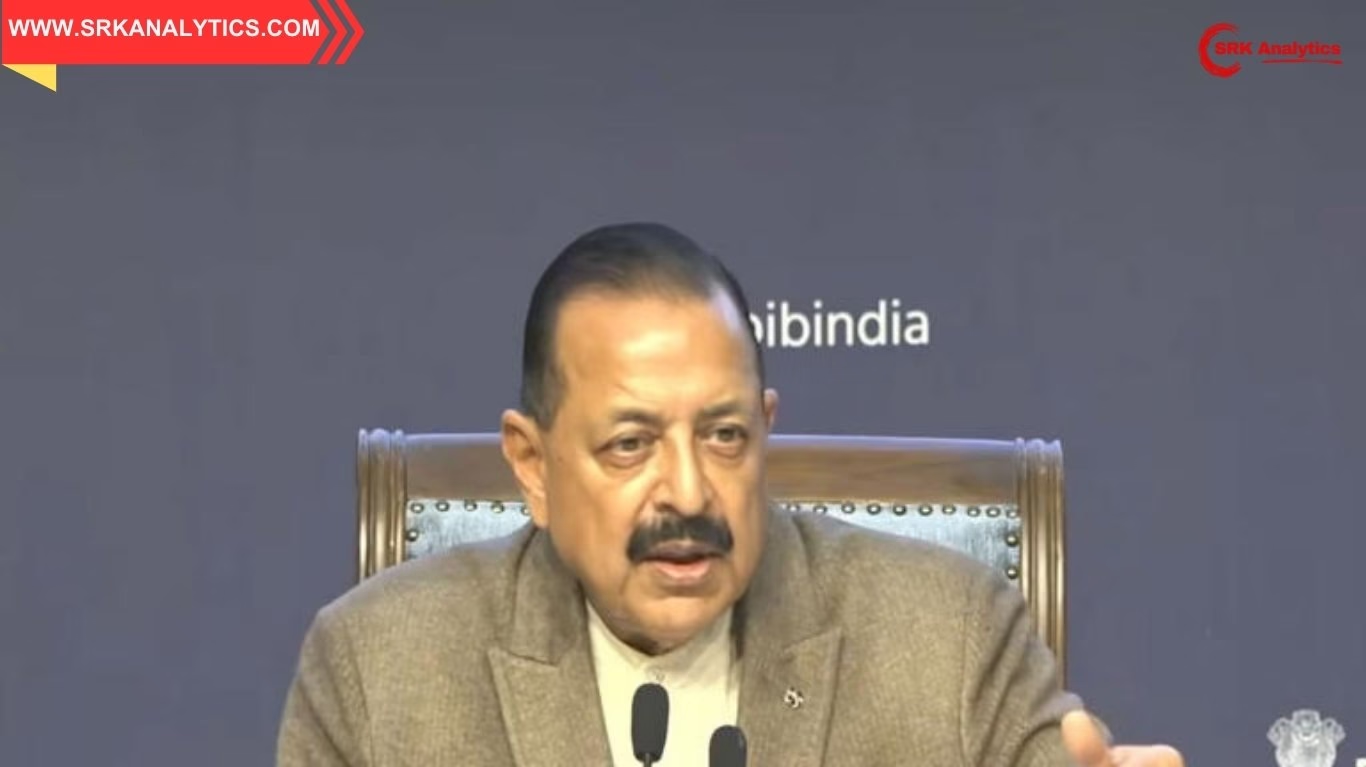





Finance Minister Nirmala Sitharaman has urged the New Development Bank (NDB), also known as the BRICS Bank, to take on a catalytic role in mobilising private sector investments towards sustainable development projects in member countries. Addressing the NDB Board of Governors meeting virtually, Sitharaman highlighted that the bank’s developmental impact would be maximised if it innovates its financial instruments to de-risk and attract private capital flows, especially in emerging and developing economies.
Key Highlights Of Sitharaman’s Address
- Private sector mobilisation critical for infrastructure, clean energy, urban development, and digital inclusion in the Global South.
- NDB should develop blended finance instruments, risk guarantees, and co-lending platforms to crowd in private capital.
- Importance of strong credit ratings to retain investor confidence and reduce cost of capital for member nations.
- Need for enhanced partnerships with multilateral development banks (MDBs) to jointly deliver large-scale, cross-border projects.
NDB’s Current Financial Profile
| Particulars | Data (2024) |
|---|---|
| Total approved projects | 96 |
| Total project financing | $34 billion |
| Member countries | Brazil, Russia, India, China, South Africa, Bangladesh, UAE, Egypt, Uruguay |
| India portfolio | 21 projects worth ~$8.3 billion |
While NDB has achieved significant growth since its inception in 2015, Sitharaman emphasised that its role as a catalyst for private investments remains underutilised.
Why Private Sector Mobilisation Is Crucial
According to estimates by the UN and World Bank, developing countries need annual infrastructure investments of ~$1.5 trillion to meet SDG-linked development targets, out of which:
- Public finance can cover ~35-40%.
- Multilateral and bilateral funding ~10-15%.
- Remaining ~45-50% must come from private sector participation.
| Funding Source | Required Annual Flow ($ trillion) | Current Flow ($ trillion) | Gap (%) |
|---|---|---|---|
| Public | 0.6 | 0.5 | 16.6 |
| Multilateral/Bilateral | 0.2 | 0.15 | 25 |
| Private | 0.7 | 0.35 | 50 |
| Total | 1.5 | 1 | 33 |
Proposed Strategic Shifts For NDB
- Blended Finance Instruments
NDB can structure equity, debt, and guarantee-based blended finance vehicles to lower risks for private investors entering emerging markets. - Partial Credit Guarantees & Risk Sharing Facilities
To enhance bankability of infrastructure projects with long gestation and regulatory uncertainties. - Sustainable Bonds & Green Sukuk
Leveraging ESG-focused capital pools to fund climate resilience, renewable energy, and green infrastructure projects. - Co-lending Partnerships With MDBs and DFI Platforms
Pooling resources and expertise for high-impact regional projects across transport, energy, and digital sectors.
Sitharaman On NDB’s Role In India
India has utilised NDB funding for diverse projects, including:
- Mumbai Metro rail corridors
- Renewable energy generation
- Rural water supply schemes
- National highways expansion
- Smart city development initiatives
However, the FM pointed out that for India’s green transition and infrastructure goals under the National Infrastructure Pipeline ($1.4 trillion), NDB’s catalytic role in bringing in private funds will be indispensable.
Expert Perspectives
- Prof. Rajeswari Sengupta, IGIDR Economist:
“NDB has largely operated as a traditional lender. Unlocking private capital requires innovative financial structuring, stronger credit enhancements, and risk mitigation products.” - Dr. Sachin Chaturvedi, RIS Director General:
“The bank should become a platform for South-South cooperation-driven blended finance, especially in areas like climate adaptation, smart cities, and health infrastructure.”
NDB’s Recent Strategic Initiatives
- Sustainability and Innovation Strategy 2023-2027 targeting 40% of approvals for climate and green projects.
- Issuance of Panda Bonds and South African Rand bonds to diversify funding sources.
- Membership expansion to include UAE, Egypt, Bangladesh, and Uruguay, enhancing cross-regional project opportunities.
Challenges Ahead For NDB
| Challenge | Implication |
|---|---|
| Credit rating constraints | Limits low-cost capital mobilisation |
| Geopolitical risks among member states | Operational complexities in cross-border projects |
| Limited private sector co-financing track record | Needs capacity and institutional framework upgrades |
| Currency volatility in emerging markets | Raises hedging costs and investor risk premiums |
Policy Recommendations
The finance minister urged NDB to:
- Strengthen internal capabilities to design blended finance and guarantee-based instruments.
- Enhance cooperation with MDBs, G20’s Global Infrastructure Facility, and private equity/debt funds.
- Create regional project preparation facilities to build a robust bankable project pipeline.
- Focus on local currency financing options to mitigate currency risk for member countries.
- Implement transparent ESG and impact frameworks to attract global ESG investors and sovereign funds.
NDB President Dilma Rousseff’s Response
NDB President Dilma Rousseff acknowledged FM Sitharaman’s recommendations, stating:
“The bank will prioritise private sector mobilisation as part of its new strategic roadmap and work closely with member countries to create innovative financial solutions for sustainable development.”
Conclusion
India has reiterated its expectation that the New Development Bank evolve from a traditional development financier to a catalytic institution capable of unlocking large-scale private investments in emerging markets. Sitharaman’s call emphasises that blended finance, credit enhancement, and multilateral-private partnerships are essential for meeting the massive development and climate transition needs of the Global South in a fiscally constrained global environment.
Disclaimer: This news report is for informational purposes only and does not constitute financial, investment, or policy advice. Readers are advised to consult official policy documents, financial experts, and multilateral development bank publications before making any business or investment decisions based on this report. The publication is not responsible for any decisions taken based on the information presented.