



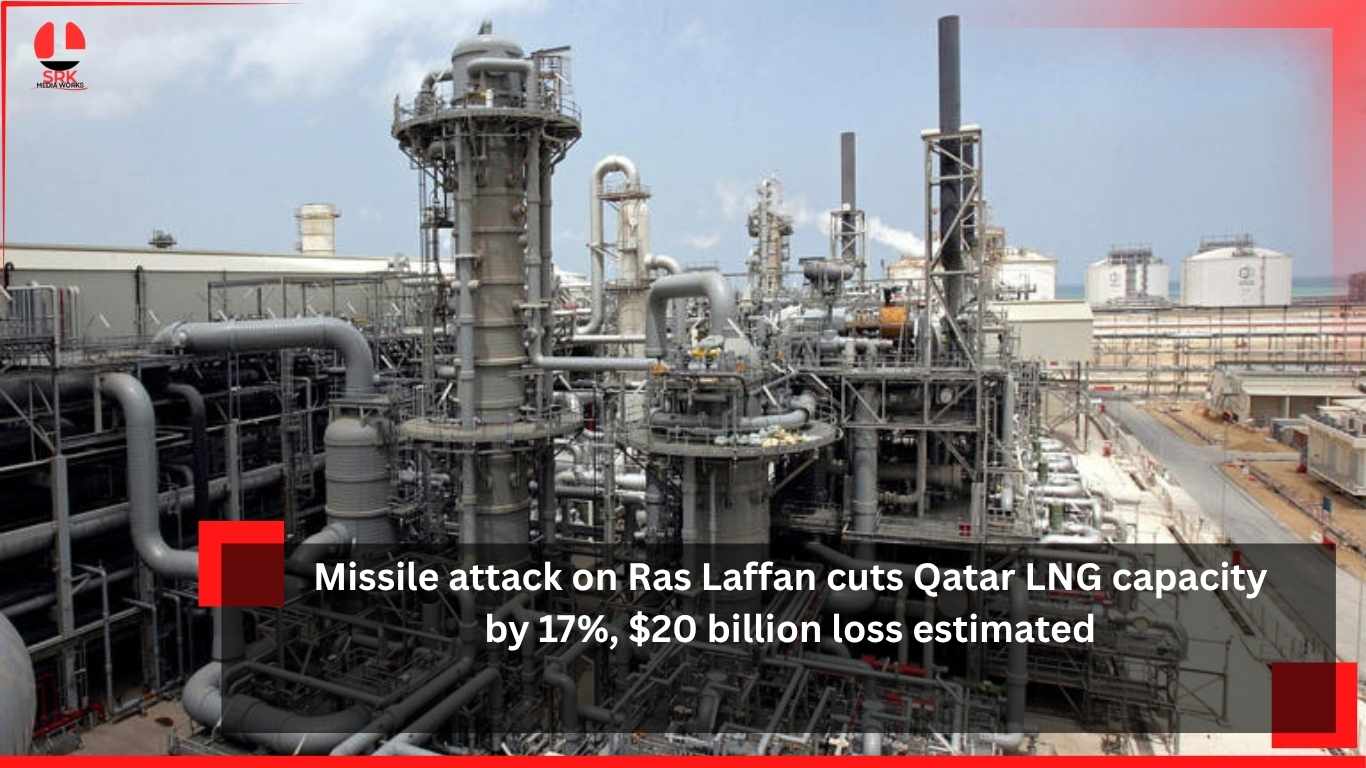
A missile strike on Qatar’s Ras Laffan Industrial City, the world’s largest liquefied natural gas (LNG) hub, has disrupted operations and reduced the country’s LNG output capacity by 17%. The attack, which occurred earlier this week, has sent shockwaves across global energy markets, with losses estimated at nearly $20 billion.
Strategic Importance of Ras Laffan
Ras Laffan is the cornerstone of Qatar’s energy economy, handling the majority of its LNG exports. The facility supplies natural gas to Asia, Europe, and other regions, making it a critical node in global energy security.
- Capacity Before Attack: 77 million tonnes per annum (MTPA)
- Capacity After Attack: Approx. 64 MTPA (17% reduction)
- Global Share: Qatar accounts for nearly 20% of global LNG supply
Immediate Market Impact
The attack has triggered a surge in global LNG prices, with Asian and European buyers scrambling to secure alternative supplies. Spot LNG prices rose by nearly 12% within 48 hours, while oil prices also saw upward pressure due to fears of extended disruptions.
| Region | LNG Price Change | Market Reaction |
|---|---|---|
| Asia-Pacific | +12% | Panic buying |
| Europe | +10% | Supply concerns |
| Middle East | +8% | Regional tension |
Comparative Analysis of Global LNG Producers
| Country | Pre-Attack Capacity | Current Status | Market Outlook |
|---|---|---|---|
| Qatar | 77 MTPA | 64 MTPA | Recovery uncertain |
| Australia | 80 MTPA | Stable | Benefiting from demand |
| US | 90 MTPA | Stable | Increased exports |
| Russia | 30 MTPA | Sanctions impact | Limited growth |
This comparison shows how Qatar’s disruption has created opportunities for other LNG exporters, particularly the US and Australia.
Pivot Analysis of the Attack
| Factor | Impact on Qatar | Impact on Global Market |
|---|---|---|
| Production Capacity | Severe decline | Supply shortage |
| Revenue Loss | $20 billion | Price surge |
| Energy Security | High risk | Increased volatility |
| Geopolitical Stability | Threatened | Rising tensions |
Broader Implications
- Energy Security: Countries dependent on Qatari LNG, such as Japan, South Korea, and several European nations, face immediate supply risks.
- Geopolitical Tensions: The attack raises concerns about the vulnerability of critical energy infrastructure in the Middle East.
- Economic Fallout: Qatar’s economy, heavily reliant on LNG exports, could face significant fiscal challenges.
- Global Trade: Shipping routes and insurance premiums for LNG carriers are expected to rise, adding further costs to buyers.
Government and Industry Response
Qatar has deployed emergency teams to restore operations and safeguard remaining infrastructure. International energy companies with stakes in Ras Laffan are coordinating with Qatari authorities to assess damage and resume production. Meanwhile, governments in Europe and Asia are exploring alternative supply contracts with the US and Australia.
Investor Outlook
Energy sector investors are closely monitoring the situation. While short-term volatility is expected, long-term contracts may provide stability once repairs are completed. Analysts suggest that LNG prices will remain elevated until Qatar restores full capacity.
Conclusion
The missile attack on Ras Laffan has cut Qatar’s LNG capacity by 17%, resulting in an estimated $20 billion loss and sparking global energy market turmoil. The incident underscores the vulnerability of critical energy infrastructure and highlights the need for diversified supply chains. As Qatar works to restore operations, the world will continue to feel the ripple effects of this disruption.
Disclaimer: This article is for informational purposes only and should not be considered investment or policy advice. Energy markets are subject to geopolitical risks, supply disruptions, and price volatility. Readers are advised to follow official updates and consult experts before making financial or strategic decisions.