




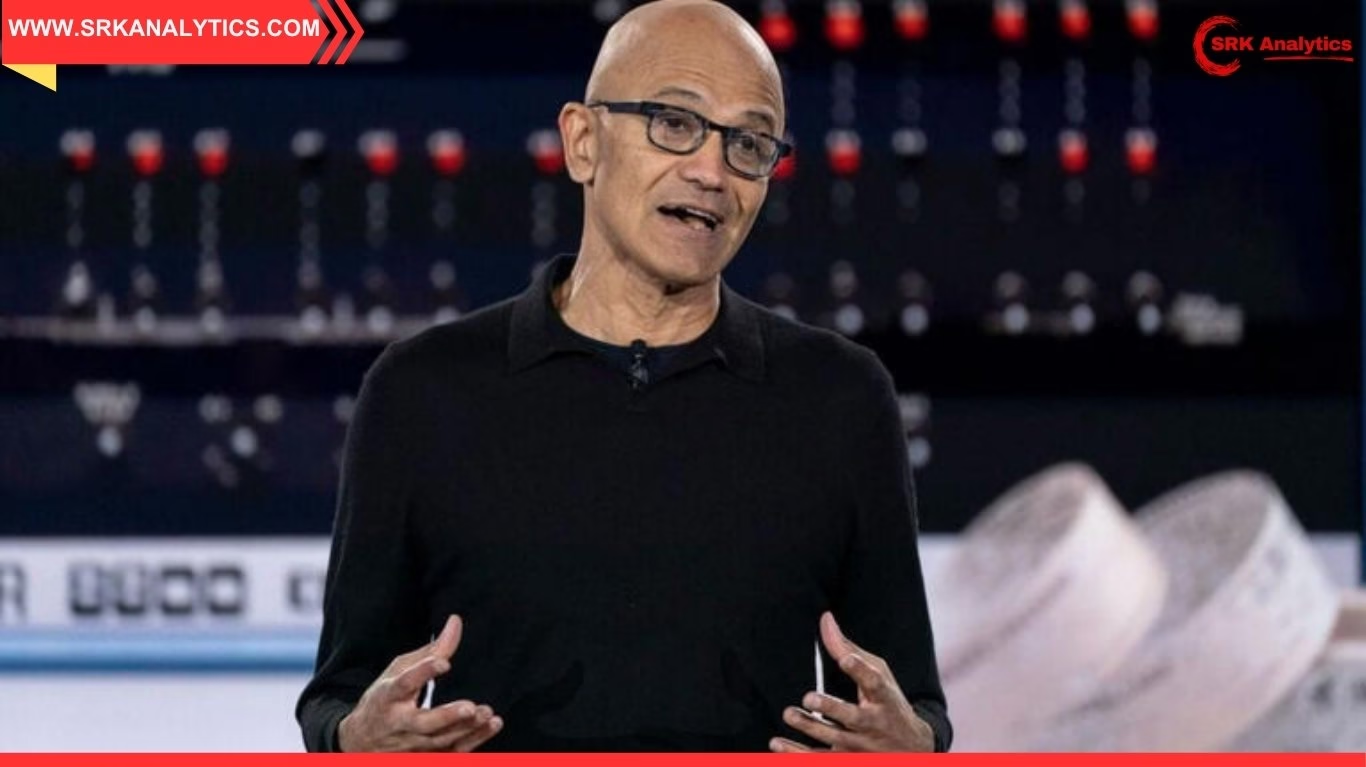
Microsoft is poised to expand its workforce again following a year of significant layoffs, but CEO Satya Nadella has made it clear that future hiring will be guided by a new paradigm—one shaped by artificial intelligence, productivity leverage, and role transformation. Speaking on the BG2 podcast with investor Brad Gerstner, Nadella said, “We will grow our headcount, but the way I look at it is, that headcount will grow with a lot more leverage than what we had pre-AI.”
This statement comes after Microsoft cut over 15,000 jobs in 2025, including 6,000 in the fiscal year ending June and another 9,000 in the following quarter. The layoffs were part of a broader restructuring strategy aimed at optimizing operations and investing heavily in AI infrastructure. Nadella’s comments suggest that while hiring will resume, it will be selective, strategic, and focused on roles that align with the company’s AI-first vision.
📊 Microsoft Workforce Trends: Layoffs and Future Hiring Outlook
| Year | Total Employees | Layoffs Announced | Hiring Strategy Post-Layoffs |
|---|---|---|---|
| 2022 | 221,000 | — | Traditional expansion |
| 2023 | 232,000 | 5,000 | AI investments begin |
| 2024 | 228,000 | 6,000 | Shift to AI leverage |
| 2025 | 219,000 (est.) | 15,000+ | Strategic hiring planned |
Microsoft’s headcount dipped in 2025, but Nadella’s roadmap indicates a rebound—driven by AI-enhanced productivity.
🧠 Key Takeaways from Nadella’s Statement
| Insight | Implication for Microsoft’s Future Workforce |
|---|---|
| “Smarter, more leveraged hiring” | Focus on roles that amplify output via AI |
| “Unlearn and relearn” | Employees expected to adapt to new workflows |
| “Post-AI leverage” | Hiring will prioritize efficiency over volume |
| “Jobs will be reshaped” | Traditional roles may evolve or be redefined |
The emphasis is on transformation, not just expansion.
🏢 Microsoft’s AI Strategy and Its Impact on Hiring
| AI Investment Area | Workforce Impact |
|---|---|
| Copilot Integration | Enhances productivity across Office and Azure |
| Azure AI Infrastructure | New roles in cloud engineering and data science |
| GitHub Copilot Expansion | Developer tools reshape coding workflows |
| AI Ethics and Governance | Hiring in policy, compliance, and responsible AI |
AI is not replacing jobs—it’s redefining them.
📈 Sector-Wise Hiring Projections at Microsoft
| Department | Expected Hiring Focus |
|---|---|
| Cloud and Azure | AI engineers, data architects |
| Office Productivity | Product managers, AI trainers |
| Security and Compliance | Cybersecurity analysts, AI policy experts |
| Developer Tools | Software engineers, prompt engineers |
| Research and Innovation | ML scientists, quantum computing specialists |
Hiring will be concentrated in high-impact, innovation-driven domains.
🗣️ Industry Reactions to Nadella’s Hiring Strategy
| Stakeholder | Commentary Summary |
|---|---|
| Tech Analysts | “Microsoft is setting the tone for AI-era hiring.” |
| HR Experts | “Reskilling will be critical for future applicants.” |
| Investors | “Strategic hiring aligns with long-term growth.” |
| Employees | “Uncertainty remains, but AI offers new pathways.” |
The shift has sparked conversations about the future of work across the tech sector.
🧭 Comparison with Other Tech Giants Post-Layoffs
| Company | Layoffs in 2025 | Hiring Strategy Post-Layoffs |
|---|---|---|
| Microsoft | 15,000+ | AI-leveraged, strategic hiring |
| Meta | 11,000+ | Focus on metaverse and AI infrastructure |
| Amazon | 9,000+ | Logistics and cloud expansion |
| Alphabet | 12,000+ | AI-first hiring, especially in DeepMind |
Microsoft’s approach is seen as more structured and productivity-focused.
📌 Conclusion
Satya Nadella’s announcement that Microsoft will increase headcount following major layoffs signals a pivotal shift in how tech companies approach workforce expansion in the AI era. Rather than returning to pre-AI hiring norms, Microsoft is embracing a smarter, more leveraged model—one that prioritizes efficiency, adaptability, and innovation. As roles evolve and AI becomes central to every function, the company’s hiring strategy could serve as a blueprint for the future of work.
Disclaimer: This article is based on publicly available statements, financial reports, and industry commentary. It is intended for informational and editorial purposes only and does not constitute investment or employment advice.