



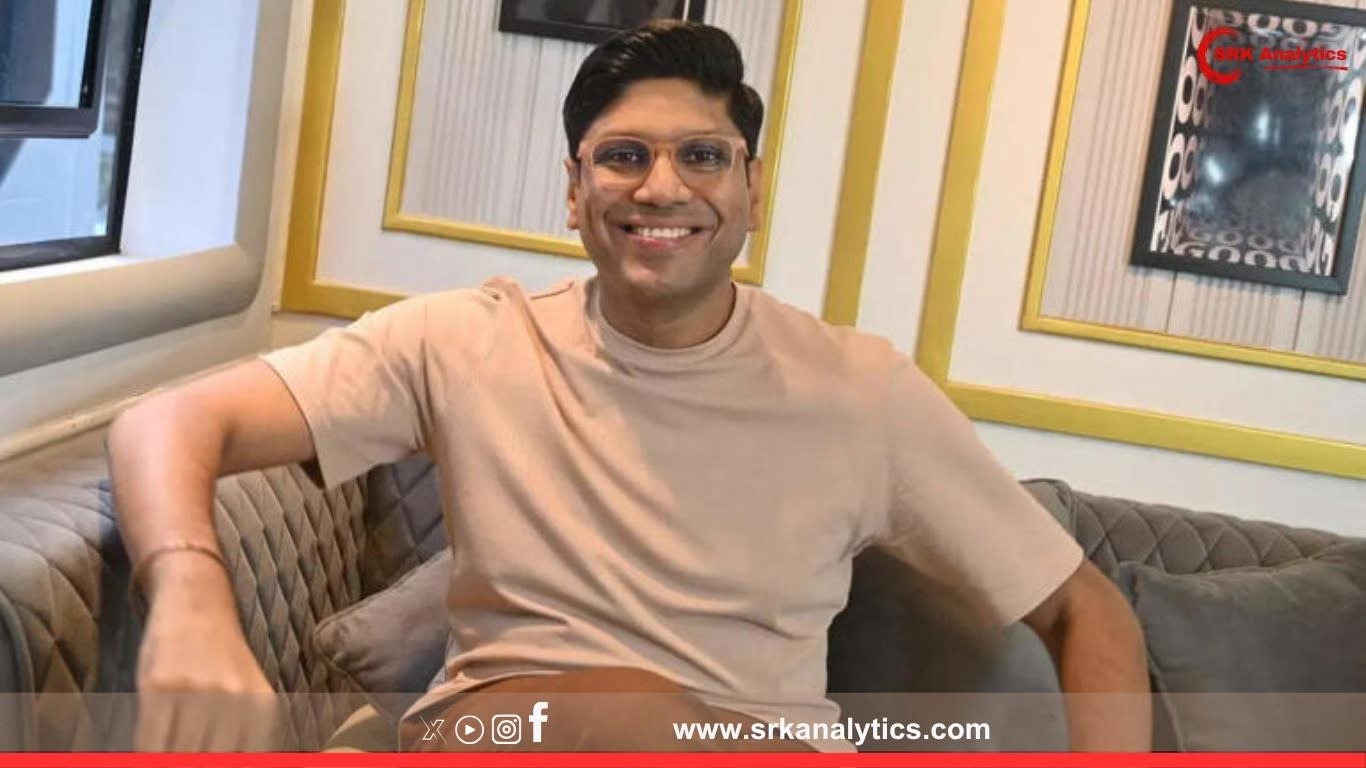
In a bold and strategic move ahead of Lenskart’s much-anticipated Initial Public Offering (IPO), founder and CEO Peyush Bansal has reportedly repurchased a significant portion of company shares at a steep discount. The share buyback has garnered widespread attention not only due to its timing but also because of the potential implications it may have on investor confidence and valuation metrics as the omnichannel eyewear retailer prepares to go public.
The buyback, which insiders say was executed discreetly in the run-up to the company’s IPO filings, is being interpreted as a high-stakes play by Bansal to consolidate equity control while possibly signaling deep confidence in Lenskart’s long-term valuation. However, the steep discount at which the shares were acquired has also raised some eyebrows within the Indian startup and venture capital community, where transparency and corporate governance are being increasingly scrutinized.
Lenskart Share Buyback: What We Know So Far
While the company has not officially disclosed the exact quantum of the buyback or the precise discount percentage, market watchers estimate that Peyush Bansal repurchased shares from certain early-stage employees and angel investors at a markdown ranging from 30% to 50% compared to the company’s last valuation round.
| Particulars | Details |
|---|---|
| Nature of Transaction | Share buyback by Founder Peyush Bansal |
| Estimated Discount Range | 30% – 50% |
| Counterparties | Early employees, angels, and small institutional investors |
| Pre-IPO Valuation (estimated) | ~$5 billion |
| Post-buyback Implications | Higher promoter equity, possible cap table reshuffle |
| IPO Timeline | Expected by late FY26 |
Sources close to the development suggest that the buybacks were part of a broader effort to simplify the capitalization table and strengthen promoter holding ahead of the upcoming IPO.
Strategic Objectives Behind the Buyback
There appear to be multiple motivations behind Bansal’s decision:
- Consolidation of Control: By acquiring a greater shareholding, Bansal ensures tighter control of the company, reducing dependence on external investor votes post-IPO.
- Cap Table Optimization: The buyback helps in cleaning up the shareholder register, especially from fragmented or inactive stakeholders who entered in Lenskart’s early days.
- Market Signaling: A bold personal financial bet signals Bansal’s confidence in Lenskart’s long-term growth prospects and may be aimed at boosting investor sentiment ahead of the IPO.
- Liquidity to Early Shareholders: With some early employees and angel investors having waited nearly a decade for an exit, this move gives them a partial liquidity window.
However, the steep discount has sparked some discontent among those who sold. While some insiders viewed it as a fair exit, others believe the buyback undervalues the company’s true worth ahead of the IPO.
Financial Trajectory of Lenskart
Lenskart has evolved from an online eyewear marketplace to a vertically integrated omnichannel eyewear brand. With over 2,500 retail outlets and a growing international footprint across Southeast Asia, Middle East, and the US, the company has demonstrated impressive scalability.
| Financial Metric (FY25E) | Value | YoY Growth |
|---|---|---|
| Revenue | Rs 3,200 crore | +26% |
| EBITDA | Rs 540 crore | +44% |
| Net Profit | Rs 180 crore | Turned profitable |
| Gross Margin | 68% | – |
| Online Channel Contribution | 38% | – |
| Retail Expansion (YoY) | +450 outlets | – |
Lenskart’s capital efficiency, data-driven product innovation, and proprietary tech stack have positioned it uniquely in the Indian D2C space. Its recent acquisitions—such as Japan’s Owndays—have helped accelerate global growth and operational synergies.
IPO Outlook: Anticipated Size and Timeline
Lenskart’s IPO, slated for late FY26, is expected to be one of India’s largest consumer tech listings. Analysts estimate the public issue could raise between $600 million to $800 million, with a combination of primary and secondary share sales.
| IPO Detail | Expected Estimate |
|---|---|
| IPO Size | $600M – $800M |
| Primary Issue | $300M – $400M |
| Secondary Sale (incl. PE exits) | $300M – $400M |
| Use of Proceeds | Capex, R&D, Retail Expansion, Debt Reduction |
| Listing Exchanges | BSE & NSE |
| Anchor Investors (Expected) | Global pension and sovereign funds |
Private equity majors like TPG Growth, Temasek, and SoftBank, who cumulatively hold around 40% stake, are expected to partially offload their holdings in the IPO. It remains to be seen if Peyush Bansal’s buyback affects the pricing expectations of these marquee investors.
Reactions from the Startup and Investor Community
The move has drawn mixed reactions:
- Founders and Entrepreneurs: Many praised Bansal’s conviction and bold leadership, especially in a time when several Indian unicorns are struggling with valuation markdowns and exits.
- Investor Community: Some venture capitalists, however, were cautious. The discounted share buyback just ahead of IPO could set a problematic precedent if not transparently managed, especially in a maturing ecosystem that’s pushing for improved governance standards.
- ESOP Holders and Employees: While many early employees saw this as a long-awaited opportunity for partial liquidity, a few expressed concerns about the deep discount and the timing—arguing that a more transparent mechanism closer to IPO would have served better.
Possible Risks and Implications
- Perception Risk: Potential investors in the IPO might question why shares were repurchased at a discount if company fundamentals are as strong as projected.
- Regulatory Scrutiny: If the buyback involved any regulatory loopholes or insider timing advantage, it may attract attention from SEBI or stock exchanges during the IPO filing process.
- Benchmarking IPO Pricing: If the IPO is priced significantly above the buyback valuation, this could create friction among recent sellers and raise valuation consistency concerns.
Future Strategy and Vision
Peyush Bansal has remained vocal about his mission to “make vision correction affordable to every Indian”, and the company has invested heavily in AI-powered optical tech, lens personalization, and rural outreach. The IPO is expected to further accelerate:
- Offline and tier-2 expansion
- Tech innovation in vision screening
- Globalization of the Lenskart brand
- Strategic acquisitions in healthcare eyewear
The company is also testing smart wearable eyewear prototypes, which could unlock a new vertical in the coming 2-3 years, riding on the convergence of healthtech and fashion.
Conclusion
As Lenskart gears up for its IPO, Peyush Bansal’s share buyback maneuver adds an intriguing twist to the narrative. While seen by many as a vote of confidence and long-term commitment, it also opens up broader conversations around governance, investor relations, and valuation ethics in India’s maturing startup ecosystem.
Whether this calculated bet pays off will largely depend on how the IPO is priced, how transparent the company remains through the listing process, and how effectively it navigates the delicate balance between founders and stakeholders in a public setting.
Disclaimer:
This article is for informational purposes only. It does not constitute investment advice or a recommendation to buy, sell, or hold any security. Readers should consult professional advisors before making financial decisions.