




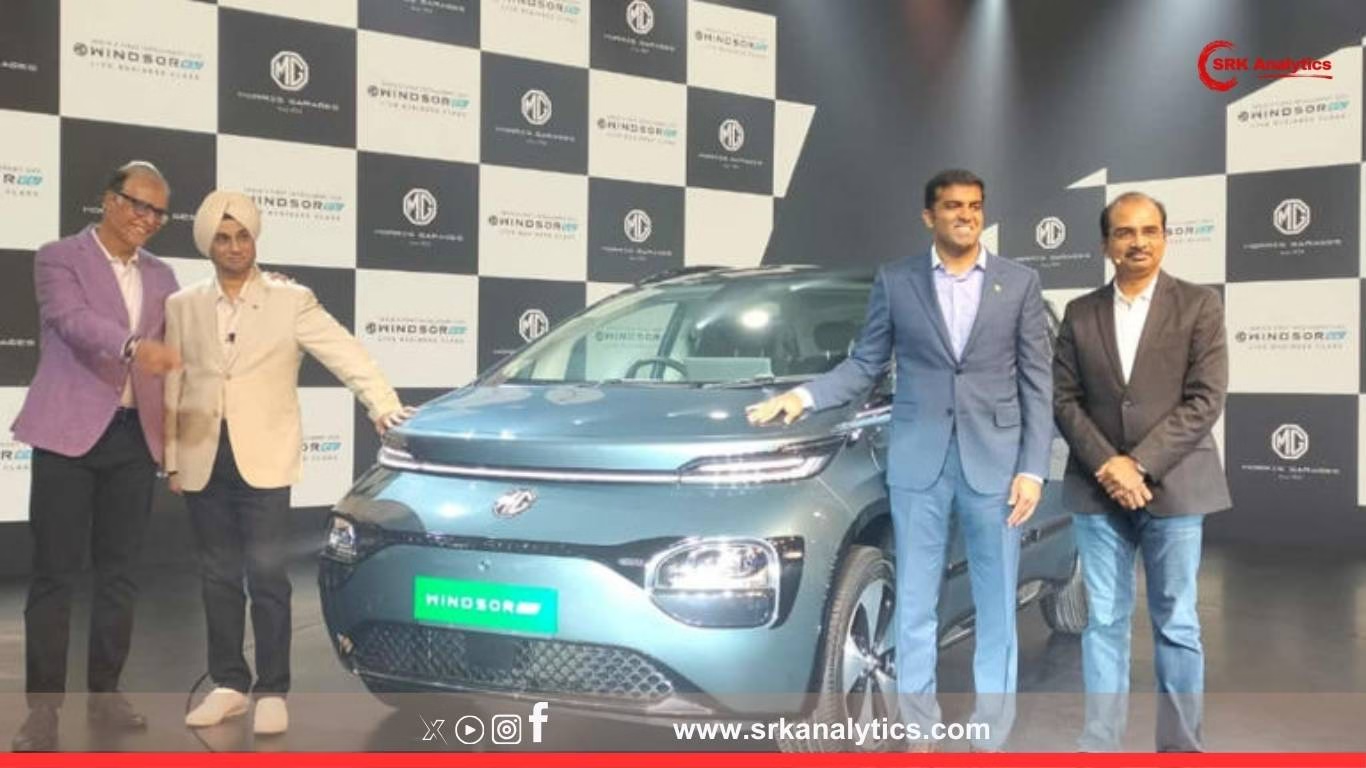
The JSW Group, one of India’s largest conglomerates with interests in steel, energy, cement, and infrastructure, is preparing to strengthen its electric vehicle (EV) business by venturing into auto parts manufacturing, according to industry reports. This move is seen as part of JSW’s larger strategy to establish itself as a strong player in India’s evolving EV ecosystem, while reducing dependency on external suppliers and achieving greater integration in its automotive ambitions.
JSW’s Growing Interest in the Electric Vehicle Industry
JSW Group has long signaled its ambition to enter the EV space, recognizing the sector as a critical component of India’s future industrial growth. With the government aggressively pushing for EV adoption through subsidies, incentives, and infrastructure development, major industrial groups like Tata, Mahindra, Reliance, and Adani have been vying for a share of the market.
Now, by venturing into auto components manufacturing, JSW aims to secure a robust supply chain for EVs, focusing on critical areas such as batteries, electric drivetrains, lightweight materials, and high-performance electronics. This approach could provide JSW with an edge in both cost efficiency and technology ownership.
Strategic Rationale Behind Auto Parts Foray
The global automotive industry is undergoing a transformation, shifting from internal combustion engines (ICEs) to electric drivetrains. A significant portion of value in EVs lies not in traditional engines but in batteries, motors, electronic control units, and software-driven components.
By entering into auto parts manufacturing, JSW Group seeks to:
- Enhance Vertical Integration – Reduce dependence on external suppliers and increase control over quality and costs.
- Leverage Steel Expertise – Use its strong position in steel production to manufacture lightweight, high-strength auto-grade steel for EV bodies and parts.
- Create Synergies Across Businesses – Integrate operations between its steel, energy, and automotive divisions for maximum efficiency.
- Capture EV Supply Chain Value – Build capabilities in advanced components that will be in high demand as EV adoption grows.
- Position for Global Markets – Export Indian-made EV components to international markets, tapping into the global EV supply chain.
India’s EV Market Outlook
The Indian EV market is expected to grow rapidly in the next decade, driven by government policies, rising fuel costs, and growing environmental awareness.
| Year | EV Sales in India (Units) | EV Penetration (Share of Total Vehicle Sales) |
|---|---|---|
| 2021 | 3,20,000 | 1.3% |
| 2023 | 12,00,000+ | 6% |
| 2025 (Projected) | 30,00,000+ | 12% |
| 2030 (Projected) | 1 crore+ | 30% |
This growth represents a massive opportunity for EV component manufacturers, as demand for batteries, motors, and advanced parts will rise exponentially.
Focus Areas for JSW in Auto Parts Manufacturing
Industry insiders suggest that JSW may target specific high-value areas in the EV component chain.
| Component | Market Significance | JSW’s Advantage |
|---|---|---|
| Batteries & Cells | Core of EV cost structure, ~40% of cost | Energy expertise, potential tie-ups |
| Electric Motors | Critical for performance, efficiency | Steel manufacturing strength for motor laminations |
| Power Electronics | Inverters, controllers, chargers | Possible diversification into electronics manufacturing |
| Lightweight Materials | Reduce EV weight, extend range | Auto-grade steel and aluminum expertise |
| Charging Infrastructure Parts | Growth area with EV adoption | Energy and infrastructure experience |
This diversification indicates that JSW will not just be a carmaker but also a key contributor to India’s EV ecosystem.
Competitive Landscape
JSW is entering a highly competitive market where major Indian and global players are already active.
| Company | EV Business Strategy | Strengths |
|---|---|---|
| Tata Motors | Leading EV manufacturer in India | Strong product lineup, early mover |
| Mahindra & Mahindra | Focused on SUVs and 3-wheelers | Domestic expertise, niche focus |
| Reliance Industries | Focus on EV batteries & charging infra | Capital strength, global tie-ups |
| Adani Group | Exploring EV infra & batteries | Energy verticals, infra projects |
| JSW Group | Entering EV & auto parts manufacturing | Steel, energy integration |
This table highlights how JSW’s differentiation lies in its industrial synergies, particularly steel and energy, which are vital in EV manufacturing.
Industry Experts on JSW’s Strategy
Analysts believe JSW’s move is both timely and strategically sound.
- Automotive Analysts: “By entering auto parts, JSW can capture a large portion of EV value creation without depending solely on vehicle sales.”
- EV Market Experts: “The next decade will belong to integrated players who control both vehicles and components. JSW’s steel-to-auto synergy gives it a unique edge.”
- Energy Sector Experts: “JSW’s renewable energy portfolio can directly feed into EV battery production and charging networks, making it a full-spectrum EV solutions provider.”
Global Opportunities for JSW
The EV auto parts market is not limited to India. Globally, the EV supply chain is expanding, with countries seeking alternative suppliers to reduce dependence on China.
- US & Europe: Demand for non-China auto components is rising due to trade restrictions.
- Southeast Asia: Emerging EV hubs looking for affordable supply chain partners.
- Middle East & Africa: Gradual adoption of EVs presents export opportunities.
JSW could potentially become a global supplier of EV parts, especially steel-based and energy-linked components.
Challenges Facing JSW
While the opportunities are vast, JSW’s success will depend on overcoming certain challenges:
- High Capital Investment – Setting up advanced manufacturing facilities requires significant funding.
- Technology Gaps – EV component technology, particularly in batteries and electronics, is dominated by global giants.
- Policy Risks – EV adoption depends on sustained government incentives and infrastructure development.
- Competition – Established automakers and new-age startups are all vying for dominance in EV parts.
Road Ahead for JSW
JSW Group is likely to adopt a phased approach to its EV auto parts venture:
- Phase 1 (2024–2026): Establish manufacturing facilities for steel-based EV components.
- Phase 2 (2026–2028): Expand into batteries, motors, and electronics through partnerships and R&D.
- Phase 3 (2028 onwards): Scale globally with exports and possible tie-ups with international automakers.
If executed well, this strategy could position JSW as a top-tier EV supply chain player within the decade.
Conclusion
The report of JSW Group seeking to strengthen its EV business with a foray into auto parts manufacturing signals a major transformation in India’s industrial landscape. By leveraging its strengths in steel, energy, and infrastructure, JSW is uniquely placed to capture value across the EV ecosystem.
As India accelerates its EV journey, JSW’s entry into auto parts manufacturing could play a pivotal role not just in strengthening its own business but also in boosting India’s position in the global EV supply chain.
Disclaimer: This article is intended for informational purposes only. It does not constitute investment advice or an official statement from JSW Group. Readers are encouraged to verify details independently before making financial or business decisions.