



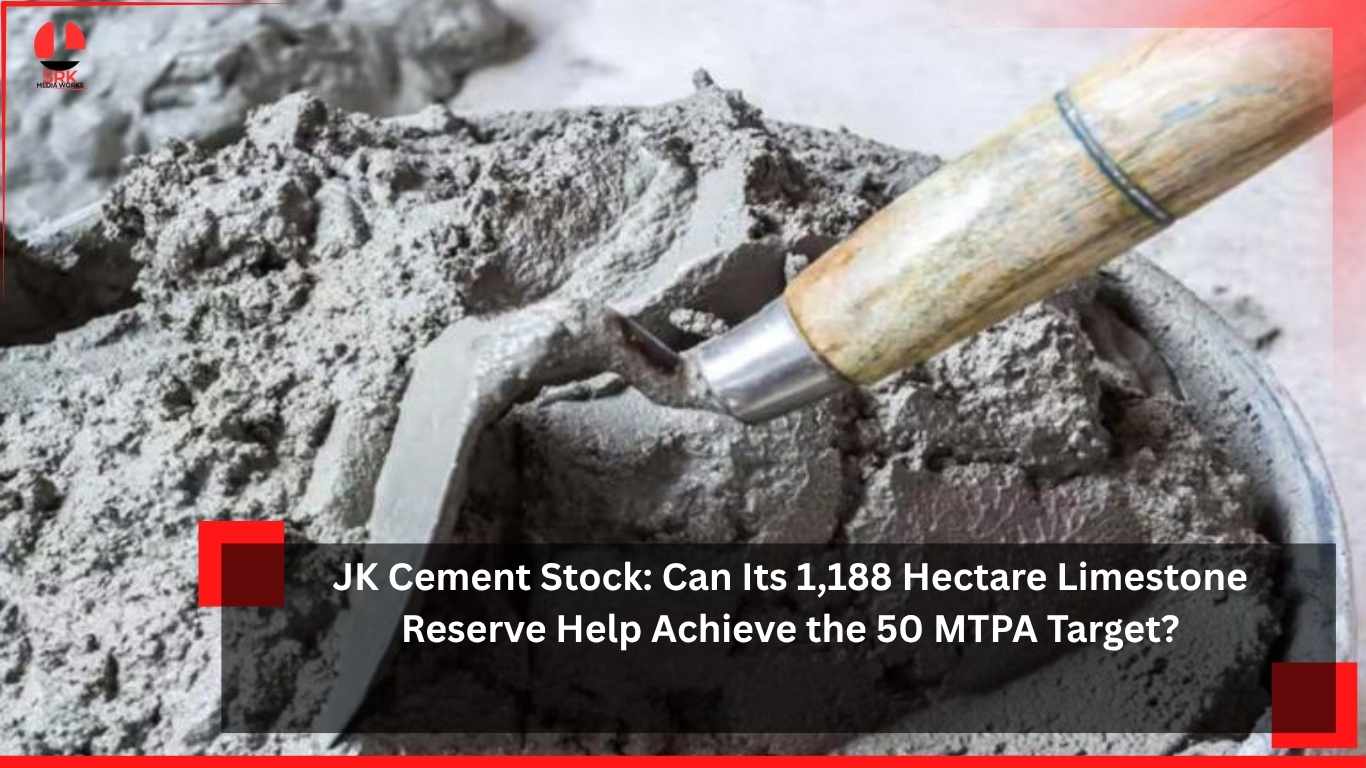
JK Cement, one of India’s leading cement manufacturers, has announced the acquisition of a massive 1,188-hectare limestone reserve. This strategic move is being viewed as a critical step toward achieving its ambitious target of 50 million tonnes per annum (MTPA) production capacity by 2030. While the reserve strengthens raw material security, questions remain about execution, market demand, and geopolitical risks that could influence the company’s trajectory.
Background of JK Cement’s Expansion
JK Cement has steadily expanded its production footprint across India and overseas. With strong demand for cement driven by infrastructure projects, housing, and industrial growth, the company has set a bold target of reaching 50 MTPA capacity. The newly acquired limestone reserve is expected to provide raw material security for decades, ensuring uninterrupted supply for its plants.
Key Highlights
- Reserve Size: 1,188 hectares of limestone, ensuring long-term raw material availability.
- Production Target: 50 MTPA by 2030, nearly doubling current capacity.
- Strategic Importance: Limestone is the backbone of cement production.
- Stock Market Reaction: Shares saw volatility amid broader concerns over West Asia tensions and input costs.
- Industry Outlook: Cement demand expected to grow with infrastructure push in India.
Comparative Analysis of JK Cement’s Position
| Factor | Positive Outlook | Negative Pressure | Net Impact |
|---|---|---|---|
| Limestone Reserve | Secures raw material for decades | Requires heavy investment in mining | Long-term stability |
| Production Target | Ambitious 50 MTPA by 2030 | Execution risks, capital expenditure | Growth potential with challenges |
| Market Demand | Strong infrastructure push in India | Global volatility, cost inflation | Balanced but cautious optimism |
| Stock Performance | Supported by fundamentals | Volatile due to external risks | Short-term uncertainty |
Pivot Analysis: Reserve Security vs Market Risks
| Reserve Factor | Market Risk Impact | Expected Outcome |
|---|---|---|
| Limestone availability | Ensures production continuity | Positive for long-term growth |
| Capital expenditure | High investment required | Short-term pressure on margins |
| Demand growth | Infrastructure-led expansion | Supports capacity utilization |
| Global volatility | Rising energy and input costs | Could affect profitability |
Implications for JK Cement
- Raw Material Security: The reserve ensures uninterrupted limestone supply, a critical advantage.
- Capacity Expansion: Provides the foundation for achieving the 50 MTPA target.
- Investor Confidence: Long-term growth prospects remain strong, though short-term volatility persists.
- Industry Leadership: Positions JK Cement as a dominant player in India’s cement sector.
Reactions
- Market Analysts: Welcomed the reserve acquisition but cautioned about execution risks.
- Investors: Expressed optimism about long-term growth but remained wary of near-term volatility.
- Industry Experts: Highlighted the importance of raw material security in achieving ambitious targets.
- Public Sentiment: Mixed, with confidence in JK Cement’s fundamentals but concern about global risks.
Historical Context
JK Cement has consistently expanded capacity through acquisitions and new plants. The company’s ability to secure large reserves has been a hallmark of its growth strategy. The current acquisition mirrors past moves that strengthened its long-term sustainability, though execution and market conditions remain critical.
Challenges Ahead
- Execution Risks: Achieving 50 MTPA requires significant investment and operational efficiency.
- Global Volatility: Rising energy costs and geopolitical tensions could affect margins.
- Market Demand: Sustained demand growth is essential to utilize expanded capacity.
- Environmental Concerns: Mining operations must balance sustainability with growth.
Conclusion
JK Cement’s acquisition of a 1,188-hectare limestone reserve is a strategic milestone that strengthens its path toward achieving the 50 MTPA target. While the reserve ensures raw material security for decades, execution risks, capital expenditure, and global volatility remain challenges. For investors, the company’s fundamentals remain strong, but short-term stock performance may continue to reflect external uncertainties.
Disclaimer
This article is based on publicly available reports and expert commentary. It does not represent official company statements or insider accounts. Readers should interpret the content as journalistic analysis, recognizing that financial markets are subject to volatility and global developments can rapidly change outlooks.