




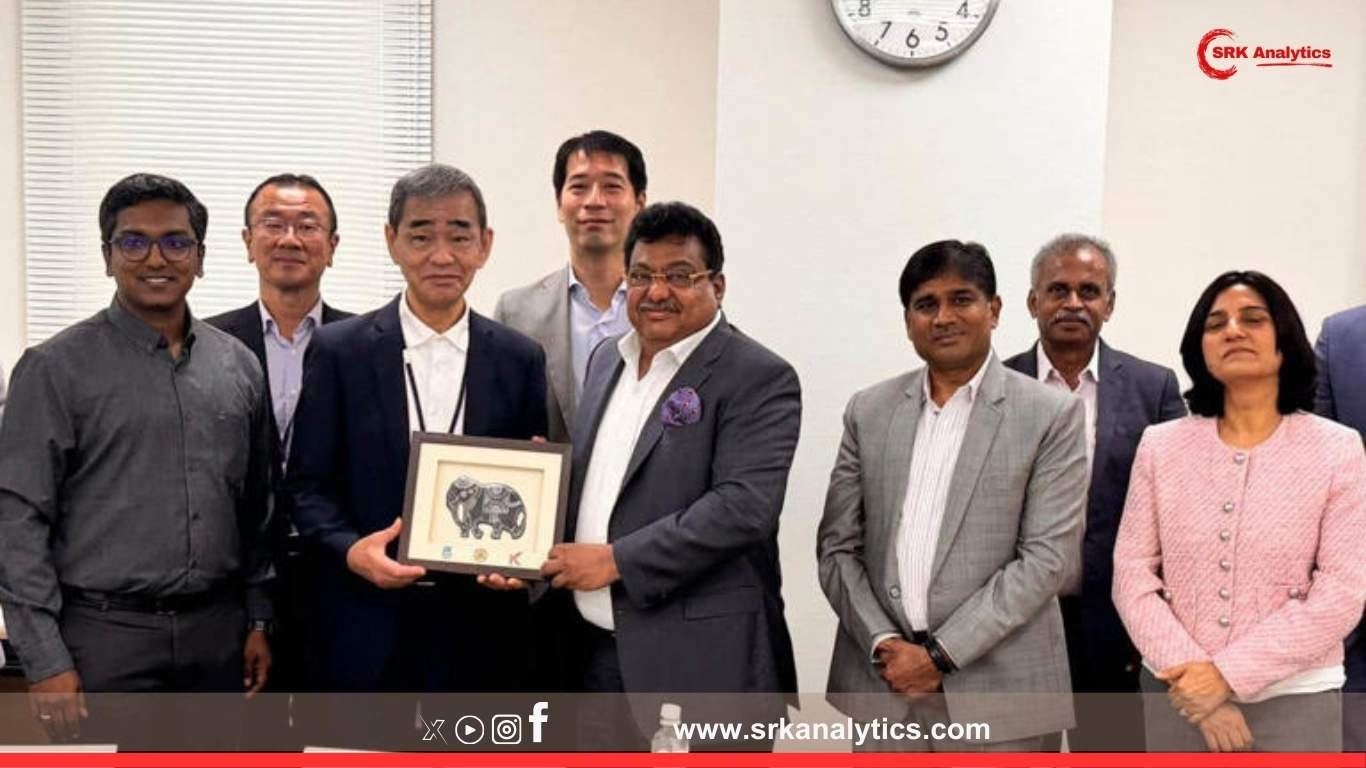
In a major boost to Karnataka’s renewable energy ambitions, Japan’s Hosoda Holdings has announced an investment of ₹882 crore to establish a solar cell manufacturing unit in the state. The announcement was made by Karnataka’s Minister for Large and Medium Industries and Infrastructure Development, M.B. Patil, following a high-level meeting with Hosoda Chairman Nakamura San in Japan.
The project will be implemented in collaboration with Tong Thar Energy Solutions (TTES), marking a significant expansion from TTES’s initial investment plan of ₹490 crore. The upgraded investment reflects growing confidence in Karnataka’s industrial ecosystem and aligns with the state government’s strategic focus on clean energy and sustainable manufacturing.
Strategic Investment in Solar Manufacturing
The solar cell manufacturing unit is expected to be a cornerstone of Karnataka’s push toward becoming a renewable energy hub. The facility will be set up with advanced Japanese technology and is projected to generate employment for at least 500 people. The partnership between Hosoda Holdings and TTES was formalized during the Global Investors Meet held earlier this year, and the revised investment figure signals a deepening of bilateral industrial ties.
| Company Name | Investment Amount (₹ crore) | Project Type | Employment Generation |
|---|---|---|---|
| Hosoda Holdings | 882 | Solar Cell Manufacturing | 500 |
| Tong Thar Energy Solutions | 490 (initial) | Technology & Collaboration | — |
Minister Patil welcomed the decision, stating, “This investment aligns perfectly with our government’s vision to promote solar power generation and position Karnataka as a leader in green manufacturing. We are committed to providing all necessary support, including land acquisition and regulatory clearances.”
Renewable Energy Focus and Policy Support
Karnataka has been aggressively promoting renewable energy investments, with a particular emphasis on solar and wind power. The state’s industrial policy offers incentives such as capital subsidies, tax exemptions, and fast-track approvals for clean energy projects. The Hosoda-TTES venture is expected to benefit from these provisions, making it a model for future foreign direct investments in the sector.
| Renewable Energy Segment | Installed Capacity (GW) | Target by 2030 (GW) | Key Incentives Offered |
|---|---|---|---|
| Solar | 7.2 | 20 | Capital subsidy, land support |
| Wind | 4.5 | 10 | Grid connectivity, tax relief |
| Hybrid & Storage | 1.1 | 5 | PLI scheme, R&D grants |
The new solar cell unit will also contribute to India’s broader goal of achieving 500 GW of non-fossil fuel capacity by 2030, as outlined in the National Electricity Plan.
Japanese Investment Momentum in Karnataka
Hosoda Holdings is not the only Japanese company eyeing Karnataka for expansion. During the same delegation visit, Japanese sports equipment manufacturer Inabata & Co assured the Karnataka government that it would begin operations in the state by 2027. Additionally, Tsujikawa India, a specialist in engraving and die-cutting technology, revealed plans to expand its manufacturing footprint in Karnataka.
| Japanese Company | Sector | Investment Timeline | Proposed Activity |
|---|---|---|---|
| Hosoda Holdings | Renewable Energy | 2025–2026 | Solar Cell Manufacturing Unit |
| Inabata & Co | Sports Equipment | By 2027 | New Manufacturing Facility |
| Tsujikawa India | Industrial Technology | Ongoing | Expansion of Die-Cutting Operations |
These developments underscore Karnataka’s growing appeal as a preferred destination for Japanese investors, driven by its skilled workforce, robust infrastructure, and proactive governance.
Employment and Skill Development Impact
The Hosoda-TTES project is expected to create direct employment for 500 individuals, with additional indirect opportunities in logistics, maintenance, and ancillary services. The Karnataka government has pledged to facilitate skill development programs in collaboration with Japanese partners to ensure workforce readiness.
| Employment Category | Estimated Jobs | Skill Development Initiative |
|---|---|---|
| Direct Manufacturing | 500 | Technical Training via Skill India |
| Indirect Support Roles | 300+ | Industry-Academia Partnerships |
| R&D and Engineering | 100+ | Joint Certification Programs |
Minister Patil emphasized that the government will work closely with educational institutions and industry bodies to create a talent pipeline tailored to the needs of advanced solar manufacturing.
Infrastructure and Land Allocation
The Karnataka Industrial Areas Development Board (KIADB) has been tasked with identifying suitable land parcels for the Hosoda-TTES facility. The state has assured that land acquisition and environmental clearances will be expedited to ensure timely project execution.
| Infrastructure Component | Status | Timeline for Completion |
|---|---|---|
| Land Allocation | In Progress | Q4 2025 |
| Power Connectivity | Approved | Q1 2026 |
| Water & Waste Management | Under Planning | Q2 2026 |
| Road Access | Existing Network | Immediate |
The facility is likely to be located in one of Karnataka’s designated industrial corridors, offering proximity to ports, highways, and skilled labor pools.
Bilateral Cooperation and Strategic Vision
The investment announcement is part of a broader effort to strengthen India-Japan economic ties. The Karnataka delegation, which included Principal Secretary S. Selvakumar and Industries Commissioner Gunjan Krishna, held multiple meetings with Japanese corporations to attract fresh investments and explore joint ventures.
Minister Patil noted, “Our engagement with Japan is not just transactional—it’s strategic. We are building long-term partnerships that will drive innovation, sustainability, and inclusive growth.”
Japan is already one of India’s top foreign investors, and Karnataka’s proactive outreach is expected to further deepen this relationship, especially in high-tech and clean energy sectors.
Conclusion: A New Chapter in Indo-Japanese Industrial Collaboration
The ₹882 crore investment by Hosoda Holdings marks a significant milestone in Karnataka’s journey toward becoming a renewable energy manufacturing powerhouse. With strong policy backing, infrastructure readiness, and skilled talent, the state is well-positioned to attract more global players in the clean tech space.
As the Hosoda-TTES solar cell unit takes shape, it will not only contribute to India’s energy transition goals but also serve as a beacon for international collaboration, innovation, and sustainable development.
Disclaimer: This article is based on publicly available government statements, industry reports, and verified news sources. It is intended for informational purposes only and does not constitute investment advice. All projections and timelines are subject to change based on regulatory approvals and market conditions.