



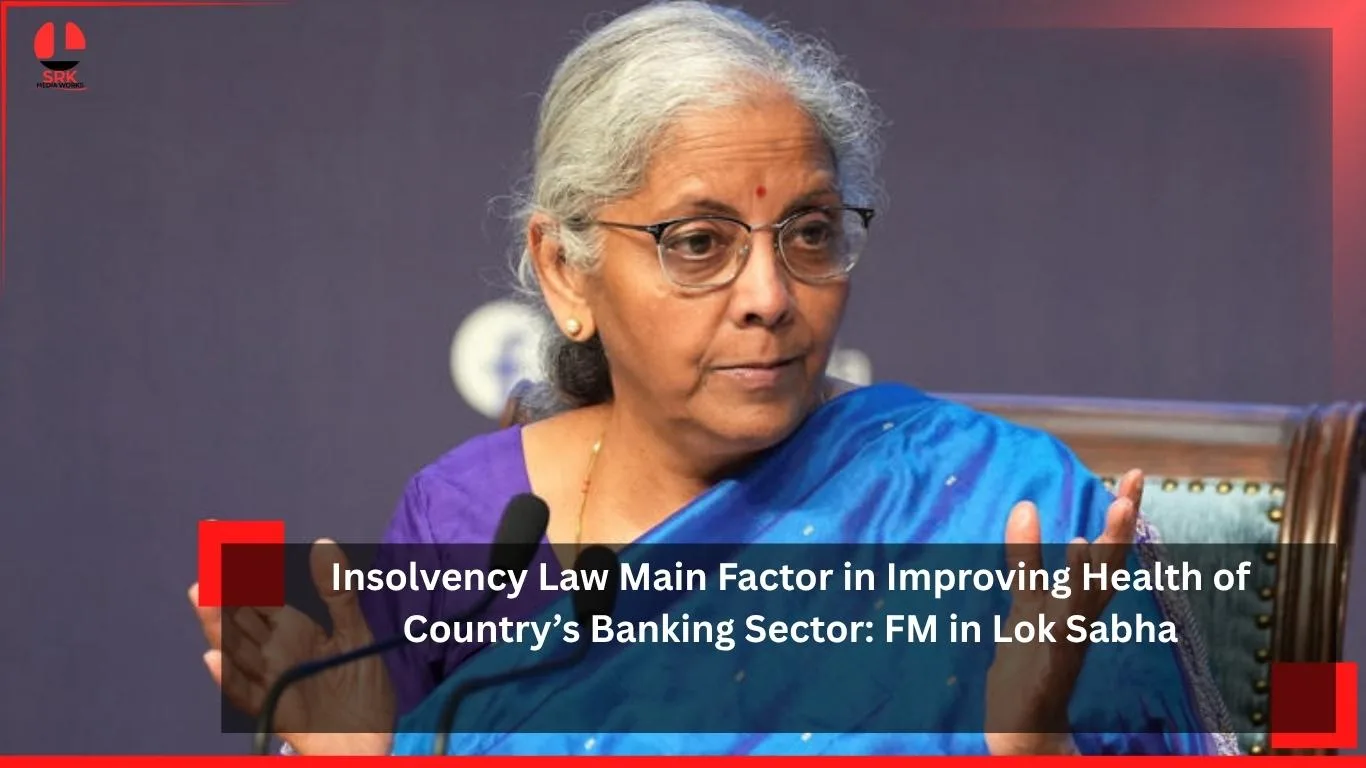
India’s Finance Minister, speaking in the Lok Sabha, highlighted the Insolvency and Bankruptcy Code (IBC) as the single most important factor in strengthening the health of the country’s banking sector. The minister emphasized that the law has transformed the way banks deal with stressed assets, reduced non-performing assets (NPAs), and restored confidence in the financial system.
Background: The Banking Sector’s Challenges
For years, India’s banking sector struggled with mounting NPAs, weak recovery mechanisms, and limited accountability in corporate defaults. Traditional debt recovery processes were slow, often taking years to resolve, which eroded banks’ balance sheets and investor confidence.
The introduction of the Insolvency and Bankruptcy Code in 2016 marked a turning point. It provided a time-bound framework for resolving insolvency, empowered creditors, and created a more disciplined corporate borrowing environment.
FM’s Statement in Lok Sabha
The Finance Minister stressed that:
- IBC has reduced NPAs significantly by enabling faster resolution of bad loans.
- Banking sector health has improved, with stronger balance sheets and better capital adequacy.
- Investor confidence has risen, as the law ensures accountability and transparency.
- Credit discipline has been enforced, discouraging willful defaults.
Timeline of Banking Sector Reforms
| Year | Reform | Impact |
|---|---|---|
| 2016 | Introduction of IBC | Time-bound insolvency resolution |
| 2018 | Strengthening of NCLT framework | Faster case disposal |
| 2020 | Suspension of IBC during pandemic | Relief for stressed companies |
| 2023 | Amendments to improve creditor rights | Enhanced recovery rates |
| 2026 | FM highlights IBC success | Banking sector stability |
Comparative Analysis: Pre-IBC vs Post-IBC
| Factor | Pre-IBC | Post-IBC |
|---|---|---|
| NPA Levels | High, rising | Declining steadily |
| Recovery Time | 4-10 years | 1-2 years average |
| Creditor Rights | Weak | Strong, legally enforceable |
| Investor Confidence | Low | Improved significantly |
| Banking Sector Health | Fragile | Strengthened balance sheets |
Broader Implications
The success of the IBC has implications beyond banking:
- Corporate governance: Companies are more cautious in borrowing and repayment.
- Economic growth: Stronger banks can lend more, fueling investment.
- Global recognition: India’s insolvency framework is now seen as a model for emerging economies.
Challenges Ahead
Despite its success, the IBC faces challenges:
- Delays in NCLT proceedings due to case backlogs.
- Need for skilled professionals to manage insolvency processes.
- Balancing creditor and debtor interests to ensure fairness.
Conclusion
The Finance Minister’s remarks in the Lok Sabha underscore the transformative impact of the Insolvency and Bankruptcy Code on India’s banking sector. By reducing NPAs, strengthening creditor rights, and restoring confidence, the law has become a cornerstone of financial stability. While challenges remain, the IBC continues to be the main factor driving the health and resilience of India’s banking system.
Disclaimer
This article is based on reported parliamentary statements and independent financial analysis. It does not confirm or deny specific government policy decisions or banking data. Readers should treat the content as interpretative reporting rather than definitive financial documentation.