




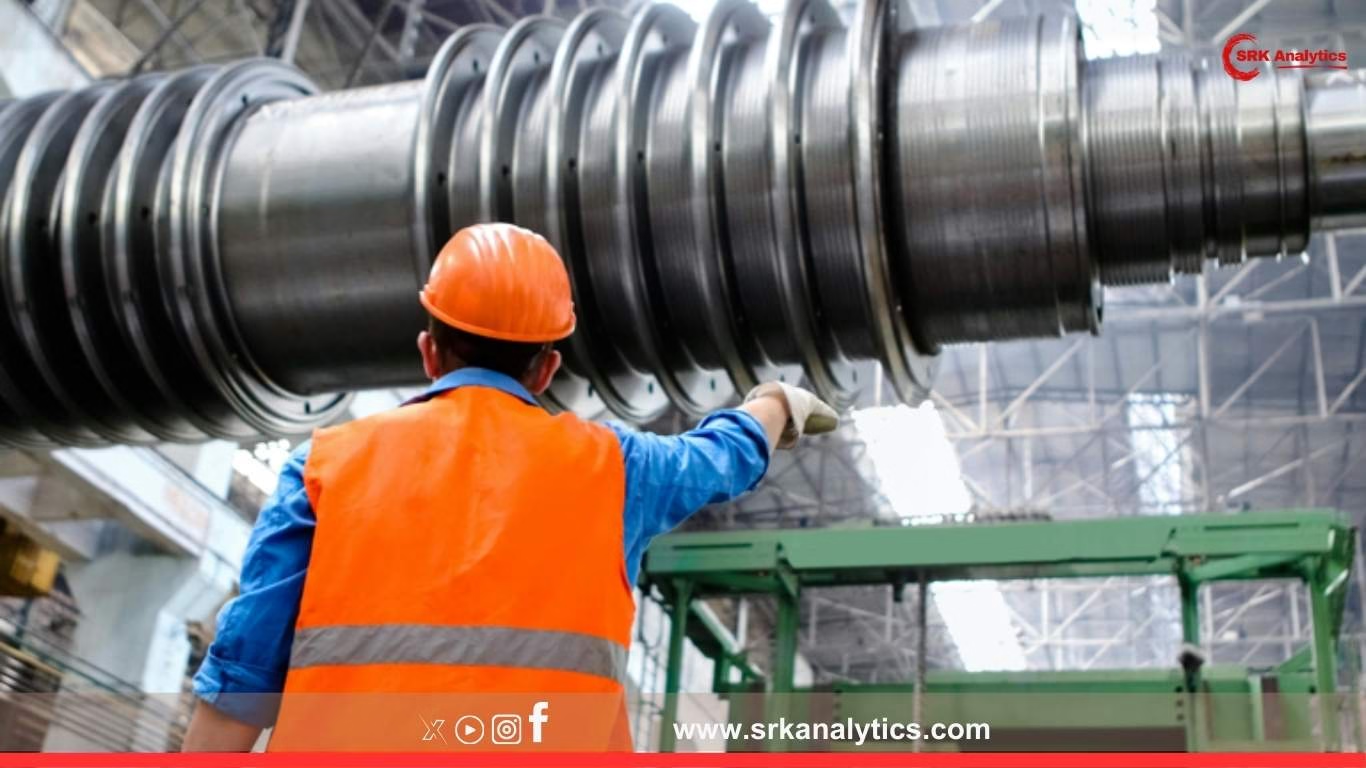
India’s manufacturing sector delivered a record-breaking performance in August 2025, with the HSBC India Manufacturing Purchasing Managers’ Index (PMI) climbing to 59.3—its highest level in 17-and-a-half years. The PMI reading, compiled by S&P Global, signals the fastest improvement in operating conditions since February 2008, driven by robust domestic demand, production efficiency, and renewed business confidence.
A PMI above 50 indicates expansion, while below 50 denotes contraction. The August figure marks the 50th consecutive month of expansion, underscoring sustained momentum in India’s industrial landscape. Despite global trade uncertainties and tariff pressures from the United States, India’s manufacturing resilience continues to shine, with intermediate goods leading the growth chart, followed by capital and consumer goods.
🧭 Key Highlights of India’s Manufacturing PMI Surge
| Indicator | August 2025 Value | July 2025 Value | Trend / Commentary |
|---|---|---|---|
| HSBC India Manufacturing PMI | 59.3 | 59.1 | Highest since Feb 2008, 17.5-year peak |
| New Orders | Strong | Strong | Domestic orders offset export softness |
| Production Volume | Quickest in 5 years | Rising | Driven by intermediate goods |
| Employment | 18th month of rise | Slight slowdown | Historically solid job creation |
| Finished Goods Inventory | Increased | Declined | First rise in 9 months |
| Input Purchases | Accelerated | Moderate | Reflects optimism for future output |
The PMI surge reflects a broad-based recovery, with manufacturers ramping up material purchases and hiring in anticipation of sustained growth over the next 12 months.
🔍 Which Sectors Are Driving the Manufacturing Boom
India’s manufacturing revival is being powered by three key segments—intermediate goods, capital goods, and consumer goods. Among these, intermediate goods have emerged as the strongest performer, benefiting from supply chain realignment, domestic substitution, and increased industrial activity.
| Sector | Performance in August 2025 | Growth Drivers |
|---|---|---|
| Intermediate Goods | Strongest | Supply chain efficiency, domestic sourcing |
| Capital Goods | Robust | Infrastructure push, private capex revival |
| Consumer Goods | Moderate | Festive demand, advertising success |
Survey participants linked growth to effective marketing campaigns and strong consumer sentiment, especially in Tier 2 and Tier 3 cities.
📉 Domestic vs Export Orders: A Tale of Two Trends
While domestic orders surged, export orders saw a softer increase, partly due to the imposition of steep US tariffs on Indian goods. The rise in international orders was the weakest in five months, though still sharp by historical standards.
| Order Type | August 2025 Trend | Commentary |
|---|---|---|
| Domestic Orders | Strong | Advertising success, consumer confidence |
| Export Orders | Slower Growth | US tariff uncertainty, cautious buyers |
| New Clients | Asia, Europe, Middle East, US | Diversified demand base |
Chief India Economist at HSBC, Pranjul Bhandari, noted that domestic orders helped cushion the tariff-related drag on exports.
🔥 Employment and Inventory Trends
India’s manufacturing sector added jobs for the 18th consecutive month in August, reflecting confidence in future output. Although the pace of job creation slowed to its weakest since November 2024, it remained historically solid.
| Indicator | August 2025 Status | Commentary |
|---|---|---|
| Employment | Increased | 18-month streak, optimism for future output |
| Input Stocks | Built up | Reflects anticipation of demand |
| Finished Goods | Inventory expanded | First rise in 9 months |
Manufacturers also increased input purchases, signaling bullish sentiment and readiness to meet rising demand.
🧠 Expert Commentary and Economic Outlook
| Expert Name | Role | Comment |
|---|---|---|
| Pranjul Bhandari | Chief India Economist, HSBC | “Domestic orders remained robust, cushioning tariff drag.” |
| Aditi Nayar | Chief Economist, ICRA | “Growth may moderate in Q2 due to US tariffs, but GST cuts offer relief.” |
| V Anantha Nageswaran | Chief Economic Adviser, Govt. of India | “Tariff impact will be contained to Q2 and part of Q3.” |
India’s GDP growth for April–June stood at 7.8%, the fastest in five quarters, but analysts expect moderation in Q2 due to external trade pressures.
📦 Manufacturing PMI in Historical Context
| Year / Month | PMI Value | Commentary |
|---|---|---|
| August 2025 | 59.3 | 17.5-year high, fastest since Feb 2008 |
| July 2025 | 59.1 | Strong, but slightly lower than August |
| April 2020 (COVID) | 27.4 | Record low due to lockdowns |
| Average (2012–2025) | 53.28 | Long-term expansion trend |
The PMI has now remained in expansion territory for 50 consecutive months, signaling sustained industrial momentum.
📌 Conclusion
India’s manufacturing sector is firing on all cylinders, with the HSBC PMI hitting a 17-year high in August 2025. Intermediate goods are leading the charge, supported by strong domestic demand, effective advertising, and resilient supply chains. While export orders face headwinds from US tariffs, the overall outlook remains optimistic, with manufacturers ramping up hiring, inventory, and input purchases. As India continues its climb toward becoming a global manufacturing powerhouse, the latest PMI data offers a compelling snapshot of industrial strength and economic resilience.
—
Disclaimer: This article is based on publicly available economic reports and media coverage as of September 2, 2025. It is intended for informational purposes only and does not constitute financial, policy, or investment advice.
traffio.click – Found practical insights today; sharing this article with colleagues later.