




Despite mounting global trade tensions and aggressive tariff regimes, India’s economic growth remains robust, according to a recent report by SBI Capital Markets. Titled “Tariffs Are Made in the USA, But Resilience Is Made in India,” the report highlights how domestic consumption, government spending, and strategic alliances are helping India weather the storm of global uncertainty.
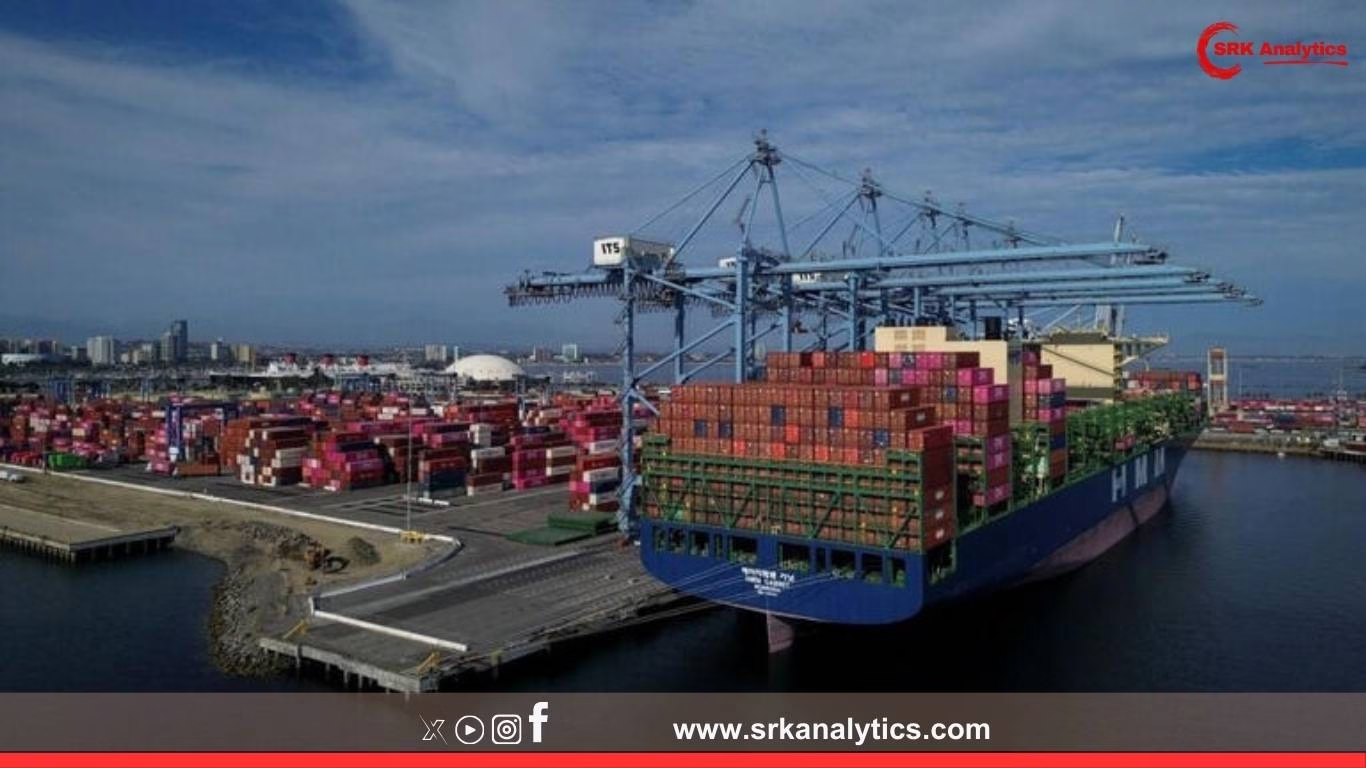
The report comes at a time when the United States has imposed reciprocal tariffs of up to 50% on key Indian exports, including automobiles, agricultural products, and textiles. These levies—some linked to crude oil imports from Russia—have disrupted trade flows and raised concerns about margin pressures for Indian exporters. Yet, India’s internal economic drivers continue to support expansion, with Purchasing Managers’ Index (PMI) readings at multi-month highs and fiscal policy remaining accommodative.
🧭 Timeline of Key Developments Impacting India’s Trade and Growth Outlook
| Date | Event Description | Impact on India’s Economy |
|---|---|---|
| Aug 2025 | US imposes 50% reciprocal tariffs on Indian exports | Export margins shrink, trade flows disrupted |
| Sept 2025 | SBI Capital Markets releases growth outlook report | Highlights resilience in domestic economy |
| Sept 2025 | SCO Summit in Tianjin attended by PM Modi | Strengthens alternative trade alliances |
| Oct 2025 | RBI policy review expected | Rate cut anticipated amid global slowdown |
India’s strategic pivot toward regional alliances and domestic demand is cushioning external shocks.
🔍 Sectoral Impact of US Tariffs on Indian Exports
| Sector | Tariff Imposed | Export Share to US (%) | Impact Severity | Mitigation Strategy |
|---|---|---|---|---|
| Automobiles | 50% | 18% | High | Diversify to ASEAN, Africa |
| Textiles | 35% | 23% | Moderate | Shift to EU, Middle East |
| Agri Products | 25% | 12% | High | Leverage FTAs with UAE, Australia |
| Electronics | 40% | 15% | High | Local value addition |
Exporters are reassessing supply chains and pricing strategies to offset rising costs.
📉 Domestic Growth Drivers Keeping India Afloat
| Growth Driver | Description | Contribution to GDP Growth |
|---|---|---|
| Private Consumption | Strong rural demand, festive season boost | 55% of GDP |
| Government Spending | Infrastructure push, welfare schemes | 12% of GDP |
| Manufacturing | PLI schemes, Make in India expansion | 17% of GDP |
| Services | IT, fintech, tourism rebound | 16% of GDP |
India’s internal demand continues to outperform global averages, even as trade slows.
🔥 SBI Capital’s Key Insights from the Report
- Tariff Volatility: The legal status of US tariffs remains unsettled, with a Supreme Court review pending. This uncertainty is creating ripple effects across global supply chains.
- Resilience Through Alliances: India’s participation in the Shanghai Cooperation Organization (SCO) and bilateral meetings with China and Russia signal a strategic shift in trade diplomacy.
- Fiscal Divergence: While the US and UK face steepening bond yield curves due to rising debt burdens, India’s fiscal stance remains stable, supported by state-level borrowing and RBI interventions.
- Commodity Support: China’s anti-involution policies are stabilizing commodity markets, indirectly benefiting India’s industrial sectors.
The report underscores India’s ability to navigate external shocks through internal strength and diplomatic recalibration.
🧠 Expert Commentary on India’s Trade and Growth Outlook
| Expert Name | Role | Comment |
|---|---|---|
| Meera Iyer | Trade Economist | “India’s export vulnerability is real, but its domestic buffers are strong.” |
| Rajiv Bansal | Global Markets Strategist | “The SCO pivot is a smart move to counter Western protectionism.” |
| Dr. Rakesh Sinha | Historian of Indian Economy | “India’s resilience is rooted in its consumption-led growth model.” |
Experts agree that India’s policy agility and economic diversity are key to its sustained performance.
📦 India’s Strategic Trade Realignment Snapshot
| Initiative / Alliance | Description | Strategic Benefit |
|---|---|---|
| SCO Membership | Regional bloc with China, Russia, Central Asia | Alternative trade routes, security ties |
| FTAs with UAE, Australia | Bilateral trade agreements | Market access, tariff relief |
| GST 2.0 Reform | Three-slab structure (5%, 18%, 40%) | Simplified compliance, consumption boost |
| PLI Schemes | Incentives for manufacturing | Export diversification, job creation |
India is actively redrawing its global trade map to reduce dependency on Western markets.
📅 Upcoming Economic Milestones
| Event | Date | Strategic Importance |
|---|---|---|
| RBI Policy Review | Sept 20, 2025 | Rate cut expected to support growth |
| SCO Trade Ministers Meet | Oct 2025 | Finalize regional trade framework |
| Union Budget 2026 | Feb 2026 | Focus on export incentives, infrastructure |
| G20 Summit in Delhi | March 2026 | Showcase India’s global economic leadership |
These events will shape India’s trade and fiscal trajectory over the next 12 months.
📌 Conclusion
SBI Capital Markets’ latest report paints a nuanced picture of India’s economic resilience amid global trade turbulence. While aggressive US tariffs have clouded the outlook for Indian exports, the country’s domestic consumption, government spending, and strategic trade realignments are keeping growth on track. As India deepens its engagement with regional alliances and recalibrates its export strategy, it is poised to emerge stronger in a world grappling with protectionism and fiscal stress.
—
Disclaimer: This article is based on publicly available economic reports, expert commentary, and media coverage as of September 10, 2025. It is intended for informational purposes only and does not constitute financial or investment advice.