


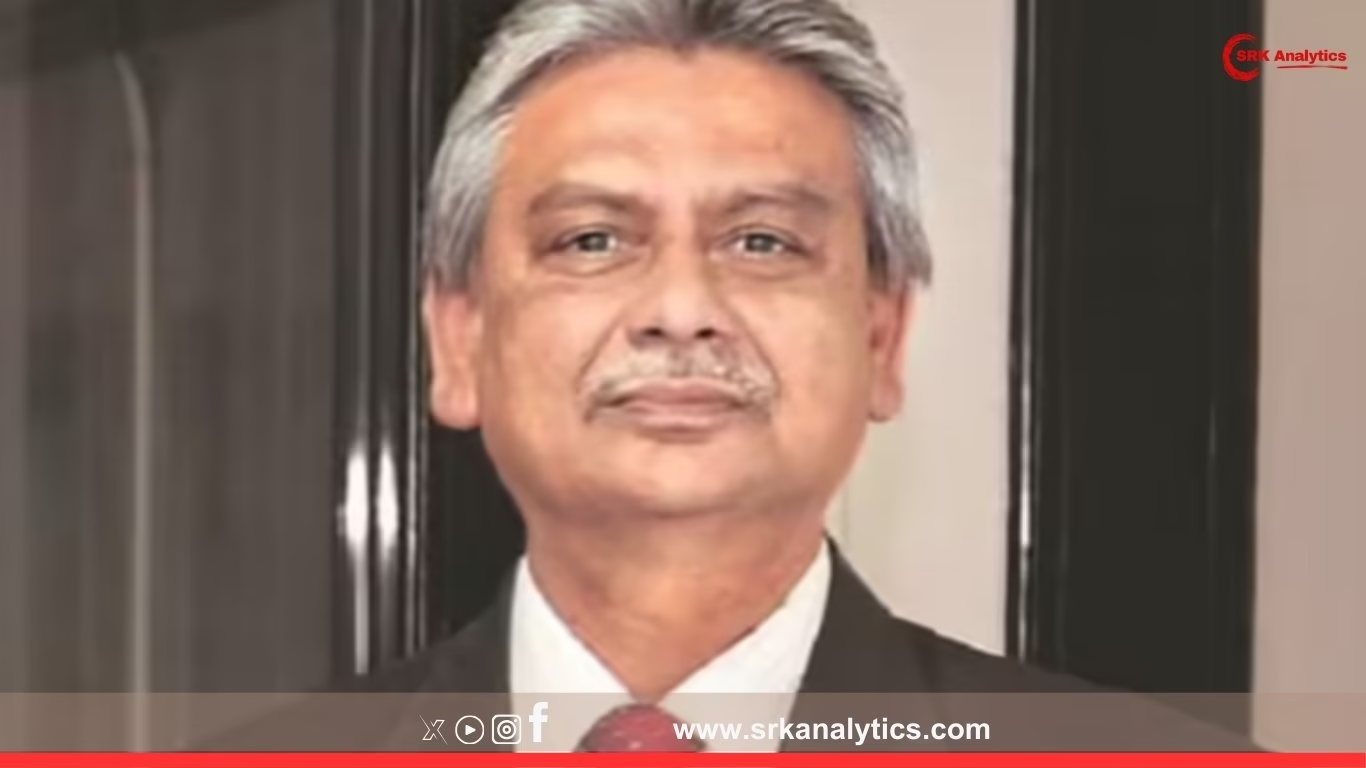
India’s economic growth is increasingly being sustained by domestic resources rather than foreign capital, according to former Reserve Bank of India (RBI) Deputy Governor Michael Patra. Speaking at the Elara India Dialogue 2025 in Mumbai, Patra emphasized that India’s ability to self-finance its development is a strategic advantage, especially amid rising global economic uncertainty and protectionist trade policies.
Patra’s remarks come at a time when India posted a robust 7.8% GDP growth in the April–June quarter of FY26, the highest in five quarters. He attributed this resilience to India’s internal resource mobilization, low reliance on external debt, and a strong reserve position. Patra also highlighted the need to boost corporate investments, improve labor force participation, and align infrastructure development with climate imperatives to sustain long-term growth.
🧭 Key Highlights from Michael Patra’s Address
| Theme / Focus Area | Statement / Insight |
|---|---|
| Domestic Resource Mobilization | “India self-finances its growth and doesn’t depend on foreign capital.” |
| Current Account Deficit | “Just 1% of GDP—manageable and stable.” |
| Corporate Investment | “Missing link in India’s growth story.” |
| Infrastructure Spending | “Needs to rise from 3.5% to 6% of GDP.” |
| Labor Force Participation | “Only 54% employable; women’s participation among lowest globally.” |
| Climate Challenge | “Green infrastructure must be central to investment strategy.” |
Patra’s comments underscore the importance of internal economic strength in navigating external headwinds such as tariffs, geopolitical tensions, and global slowdown.
📉 India’s Growth Composition: Domestic vs External Drivers
India’s growth trajectory has increasingly leaned on domestic consumption, public investment, and financial inclusion. Patra noted that while foreign direct investment (FDI) plays a supplementary role, the bulk of India’s capital formation is internally sourced.
| Growth Driver | Contribution to GDP (%) | Source Type | Strategic Value |
|---|---|---|---|
| Private Consumption | 58% | Domestic | Stable and resilient |
| Government Expenditure | 11% | Domestic | Infrastructure and welfare push |
| Gross Fixed Capital Formation | 30% | Mixed | Needs corporate revival |
| Net Exports | -1% | External | Drag due to global slowdown |
| FDI Inflows | ~2% | External | Supplementary, not core |
India’s ability to maintain a low current account deficit and stable foreign exchange reserves has further strengthened its macroeconomic position.
🔍 Infrastructure and Investment Imperatives
Patra emphasized that India’s per capita infrastructure spending remains among the lowest globally—just $90 per year. To sustain 8% GDP growth, he called for a doubling of investment in roads, ports, airports, water, and logistics.
| Sector | Current Investment (% of GDP) | Recommended Level | Strategic Priority |
|---|---|---|---|
| Roads and Highways | 1.2% | 2.5% | High |
| Ports and Shipping | 0.5% | 1.2% | Medium |
| Airports and Aviation | 0.3% | 0.8% | Medium |
| Water and Sanitation | 0.7% | 1.5% | High |
| Logistics and Warehousing | 0.8% | 1.5% | High |
He also stressed the need for climate-aligned infrastructure, suggesting that green bonds and ESG-linked financing should be scaled up.
🔥 Labor Market and Education Challenges
Patra flagged structural weaknesses in India’s labor market, noting that 80% of the workforce remains in the informal sector. He called for reforms in education and workplace safety to improve employability and female participation.
| Indicator | Current Level | Global Benchmark | Strategic Gap |
|---|---|---|---|
| Employable Labor Force | 54% | 70–75% | Moderate |
| Female Labor Participation | 21% | 45–50% | High |
| Informal Sector Share | 80% | <40% | High |
| Primary Education Quality | Low | OECD standards | High |
| Digital Literacy | Moderate | Global average | Moderate |
Patra recommended creating dignified and safe workplaces, especially for women, and overhauling primary and secondary education to unlock India’s demographic dividend.
🧠 Expert Reactions and Policy Implications
| Expert Name | Role | Comment |
|---|---|---|
| Meera Iyer | Development Economist | “India’s domestic resource strength is a strategic buffer.” |
| Rajiv Bansal | Infrastructure Consultant | “Investment in civic amenities is overdue.” |
| Dr. Rakesh Sinha | Labor Policy Analyst | “Female workforce inclusion must be prioritized.” |
Experts agree that India’s internal economic resilience offers a unique advantage, but structural reforms are essential to sustain high growth.
📦 India’s Strategic Growth Outlook
Patra concluded that India could surpass the US in purchasing power parity terms within two decades if it addresses key challenges like climate change, labor utilization, and export competitiveness.
| Strategic Goal | Current Status | Target by 2045 | Key Enablers |
|---|---|---|---|
| GDP Growth Rate | 7.8% (Q1 FY26) | 8–8.5% sustained | Infrastructure, private investment |
| Export Share (Global) | 1% | 5% | Manufacturing, trade facilitation |
| Manufacturing Growth Rate | 5% | 8.5% | Value-added production |
| Climate Resilience Index | Low | Medium–High | Green infrastructure, ESG financing |
| Labor Force Utilization | 54% | 70% | Education, workplace reforms |
India’s growth story, Patra emphasized, is not just about numbers—it’s about inclusive, sustainable, and self-reliant development.
📌 Conclusion
Former RBI Deputy Governor Michael Patra’s assertion that India’s growth is sustained by domestic resources offers a powerful counter-narrative to global pessimism. With macro stability, internal capital formation, and rising consumption, India is charting a path of self-reliant progress. However, to maintain momentum, the country must address structural gaps in investment, labor, and infrastructure. As Patra aptly put it, “India generates its own resources for growth—and that is our biggest strength.”
—
Disclaimer: This article is based on publicly available speeches and economic commentary as of September 2, 2025. It is intended for informational purposes only and does not constitute financial, policy, or investment advice.