




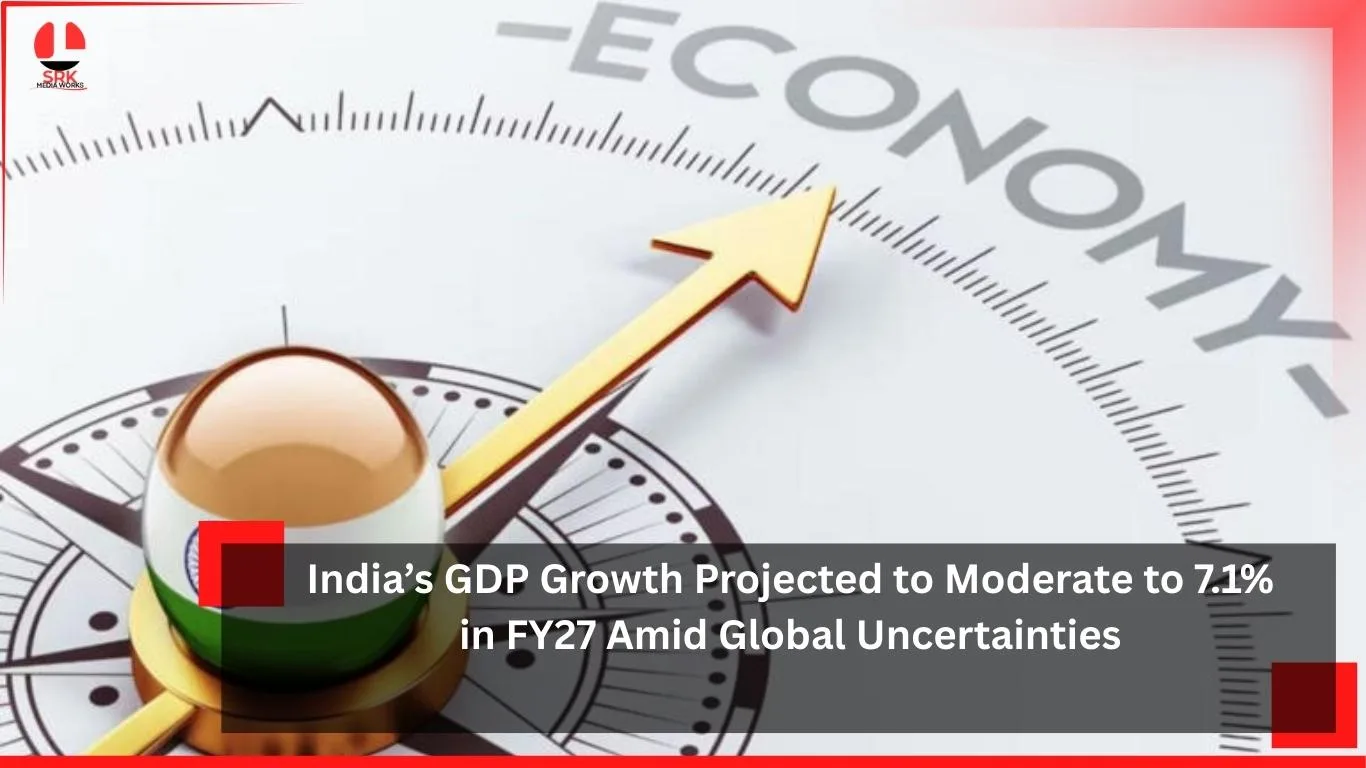
India’s economic trajectory continues to attract global attention, with Crisil Intelligence projecting that the country’s GDP growth will moderate to 7.1% in FY27. This comes after a period of robust expansion, driven by strong domestic demand, infrastructure investments, and government-led reforms. However, global uncertainties, including geopolitical tensions, supply chain disruptions, and monetary tightening across advanced economies, are expected to weigh on India’s growth momentum.
India’s Growth Story: A Contextual Overview
India has been one of the fastest-growing major economies in recent years. With GDP growth averaging above 7% in the past decade, the country has positioned itself as a global growth engine. The government’s focus on infrastructure, digital transformation, and manufacturing under initiatives like “Make in India” and “Digital India” has played a pivotal role in sustaining momentum.
Yet, as FY27 approaches, analysts caution that external headwinds could temper growth. Crisil Intelligence’s forecast of 7.1% GDP growth reflects both optimism about India’s resilience and realism about challenges ahead.
Key Drivers of Moderation
1. Global Economic Slowdown
- Advanced economies are experiencing slower growth due to high interest rates and inflationary pressures.
- Export demand for Indian goods and services may weaken, impacting sectors like IT, textiles, and manufacturing.
2. Geopolitical Uncertainties
- Ongoing conflicts and trade disruptions are reshaping global supply chains.
- India’s reliance on imported energy and raw materials makes it vulnerable to price volatility.
3. Domestic Inflationary Pressures
- Food and fuel inflation remain concerns.
- Rising input costs could affect consumer spending and corporate profitability.
4. Investment Cycle Adjustments
- While infrastructure spending remains strong, private sector investments may slow due to global risk aversion.
Sectoral Outlook
| Sector | FY26 Growth (%) | FY27 Projected Growth (%) | Key Notes |
|---|---|---|---|
| Agriculture | 3.5 | 3.2 | Weather dependency, rural demand |
| Manufacturing | 6.8 | 6.5 | Global demand slowdown |
| Services (IT, BFSI) | 8.9 | 8.2 | Strong domestic demand, weaker exports |
| Infrastructure | 9.5 | 9.0 | Government-led investments |
| Retail & FMCG | 7.2 | 6.8 | Inflationary pressures |
Comparative Growth Outlook
| Country | FY27 Projected GDP Growth (%) |
|---|---|
| India | 7.1 |
| China | 4.8 |
| USA | 2.1 |
| Eurozone | 1.7 |
| Brazil | 2.5 |
This comparative analysis highlights India’s relative strength despite moderation. Even at 7.1%, India remains the fastest-growing major economy.
Policy Measures to Sustain Growth
To counter global uncertainties, India is expected to focus on:
- Strengthening domestic demand through rural development and consumption-driven policies.
- Boosting manufacturing exports by diversifying trade partners and reducing reliance on a few markets.
- Accelerating infrastructure projects in transport, energy, and digital connectivity.
- Encouraging private investment via tax incentives and regulatory reforms.
- Enhancing energy security by investing in renewables and reducing dependence on imported fossil fuels.
Crisil Intelligence’s Perspective
Crisil Intelligence emphasizes that India’s growth moderation is not a sign of weakness but a reflection of global realities. The forecast suggests that India’s economy is resilient enough to withstand external shocks while maintaining strong fundamentals.
Long-Term Outlook
Despite short-term moderation, India’s long-term growth prospects remain robust. Key factors include:
- Demographic dividend with a young workforce.
- Digital transformation driving productivity.
- Green energy transition aligning with sustainability goals.
- Global supply chain diversification positioning India as an alternative hub.
Analytical Pivot: Growth Trends
| Fiscal Year | GDP Growth (%) | Key Influences |
|---|---|---|
| FY24 | 7.6 | Post-pandemic recovery, strong demand |
| FY25 | 7.4 | Inflationary pressures, global slowdown |
| FY26 | 7.3 | Infrastructure push, resilient services |
| FY27 | 7.1 | Global uncertainties, moderated exports |
This pivot highlights a gradual moderation but consistent resilience in India’s growth trajectory.
Conclusion
India’s GDP growth moderating to 7.1% in FY27 underscores the balance between domestic resilience and global challenges. While uncertainties loom large, India’s structural strengths, policy initiatives, and demographic advantages ensure that it remains a global growth leader. The moderation is not a setback but a recalibration in response to evolving global dynamics.
Disclaimer
This article is based on economic projections and analytical insights. The figures and interpretations are intended for informational purposes only and should not be considered financial or investment advice. Readers are encouraged to consult professional experts before making economic or financial decisions.