




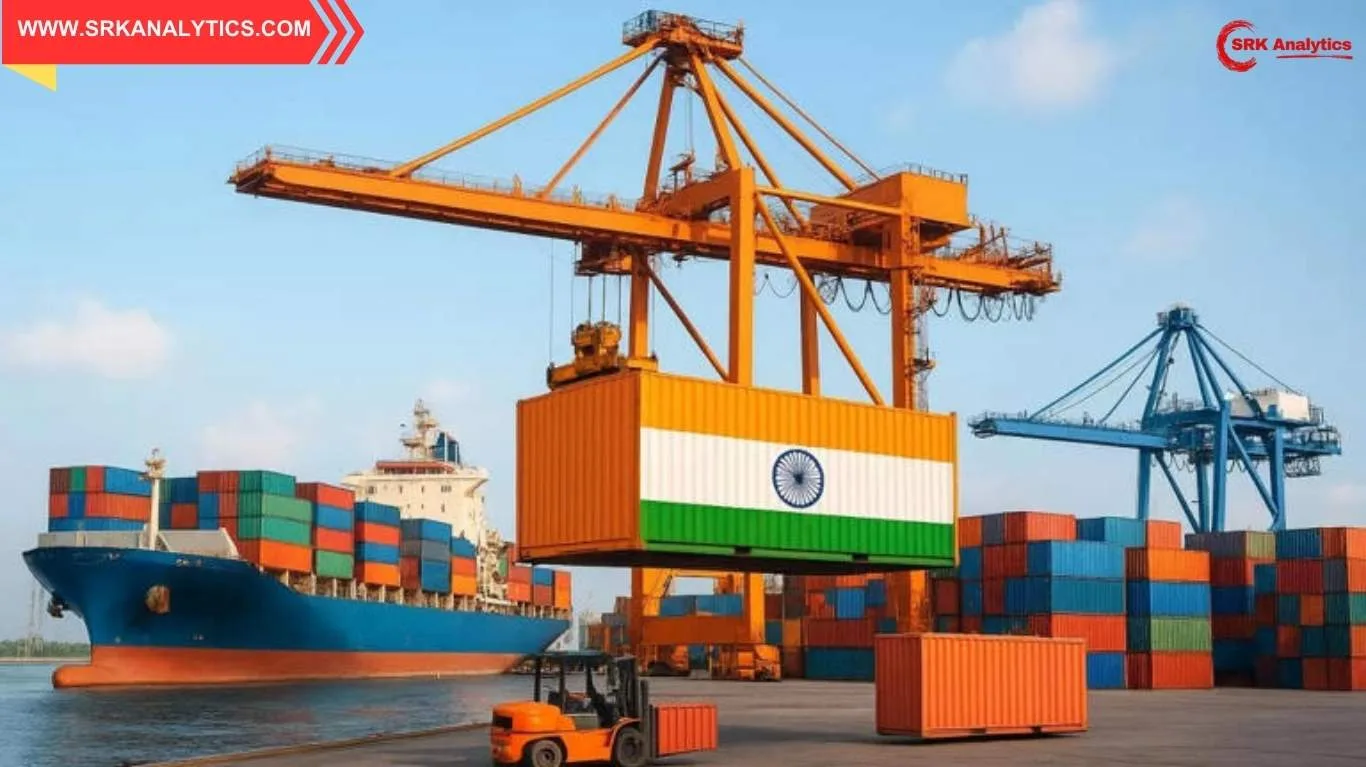
India’s trade relationship with the United States has come under strain as exports to the US fell by 22% in January, following the imposition of 50% tariffs by President Donald Trump’s administration. While the sharp decline in shipments to America has raised concerns, broader trade data indicates that India is successfully diversifying its export markets, cushioning the impact of the tariff shock.
Background
The US has traditionally been one of India’s largest export destinations, accounting for a significant share of goods ranging from textiles and pharmaceuticals to IT services and engineering products. However, the recent tariff hike has disrupted this flow, forcing Indian exporters to recalibrate strategies.
- Tariff Impact: The 50% duty imposed on select categories of Indian exports has made them less competitive in the US market.
- Export Decline: Sectors such as textiles, gems and jewelry, and auto components have been hit hardest.
- Diversification Strategy: India has increased exports to Europe, Southeast Asia, and Africa to offset losses.
Key Drivers of Export Decline
- High Tariffs: The sudden increase in duties raised costs for US buyers.
- Supply Chain Disruption: Uncertainty in trade policies discouraged long-term contracts.
- Currency Volatility: Rupee fluctuations added to pricing challenges.
- Sectoral Vulnerability: Labor-intensive industries like textiles and gems faced immediate setbacks.
Comparative Analysis of India’s Export Markets
| Region | Export Growth/Decline | Key Products | Impact |
|---|---|---|---|
| United States | -22% | Textiles, gems, auto components | Major decline due to tariffs |
| European Union | +8% | Pharmaceuticals, machinery | Strong demand, diversification |
| Southeast Asia | +12% | Electronics, chemicals | Rising regional trade |
| Africa | +10% | Agricultural goods, engineering | Expanding footprint |
| Middle East | +6% | Petroleum products, construction materials | Stable growth |
US Tariffs vs India’s Diversification
| Category | US Market Impact | Diversification Outcome | Strategic Outlook |
|---|---|---|---|
| Export Volume | Sharp decline | Growth in EU, Asia, Africa | Balanced trade portfolio |
| Sectoral Impact | Textiles, gems hit | Pharma, engineering gain | Sectoral rebalancing |
| Currency Pressure | Rupee volatility | Stabilized by diversified inflows | Reduced vulnerability |
| Policy Response | Tariff challenge | Government incentives for new markets | Long-term resilience |
Reactions from Stakeholders
- Exporters: Expressed concern over losing competitiveness in the US market.
- Government Officials: Emphasized diversification as a strategy to reduce dependence on any single market.
- Economists: Warned of short-term pain but highlighted long-term resilience.
- Global Analysts: Viewed India’s diversification as a pragmatic response to protectionist policies.
Broader Implications
The decline in exports to the US has implications beyond trade numbers:
- Geopolitical Tensions: Tariffs reflect rising protectionism in global trade.
- Economic Strategy: India must accelerate efforts to tap new markets.
- Industrial Policy: Sectors reliant on US demand may need restructuring.
- Global Positioning: India’s ability to diversify strengthens its role in global supply chains.
Future Outlook
Analysts predict several possible scenarios:
- Continued Diversification: India will expand trade with EU, ASEAN, and Africa.
- Policy Support: Government may introduce incentives for exporters to explore new markets.
- Negotiations with US: Diplomatic efforts could aim to reduce tariff barriers.
- Sectoral Transformation: Industries may shift focus to products with global demand resilience.
Conclusion
India’s exports to the US dropping by 22% due to Trump’s 50% tariffs highlights the vulnerability of relying heavily on a single market. Yet, the broader trade data reveals encouraging signs of resilience, with diversification into Europe, Southeast Asia, and Africa helping to stabilize overall performance. While short-term challenges remain, India’s ability to adapt and expand its global footprint underscores its long-term strength in international trade.
Disclaimer
This article is based on trade data, public reports, and analytical interpretations. It is intended for informational purposes only and does not represent official positions of government institutions or companies mentioned. Trade dynamics are subject to change, and interpretations may vary as new information emerges.