






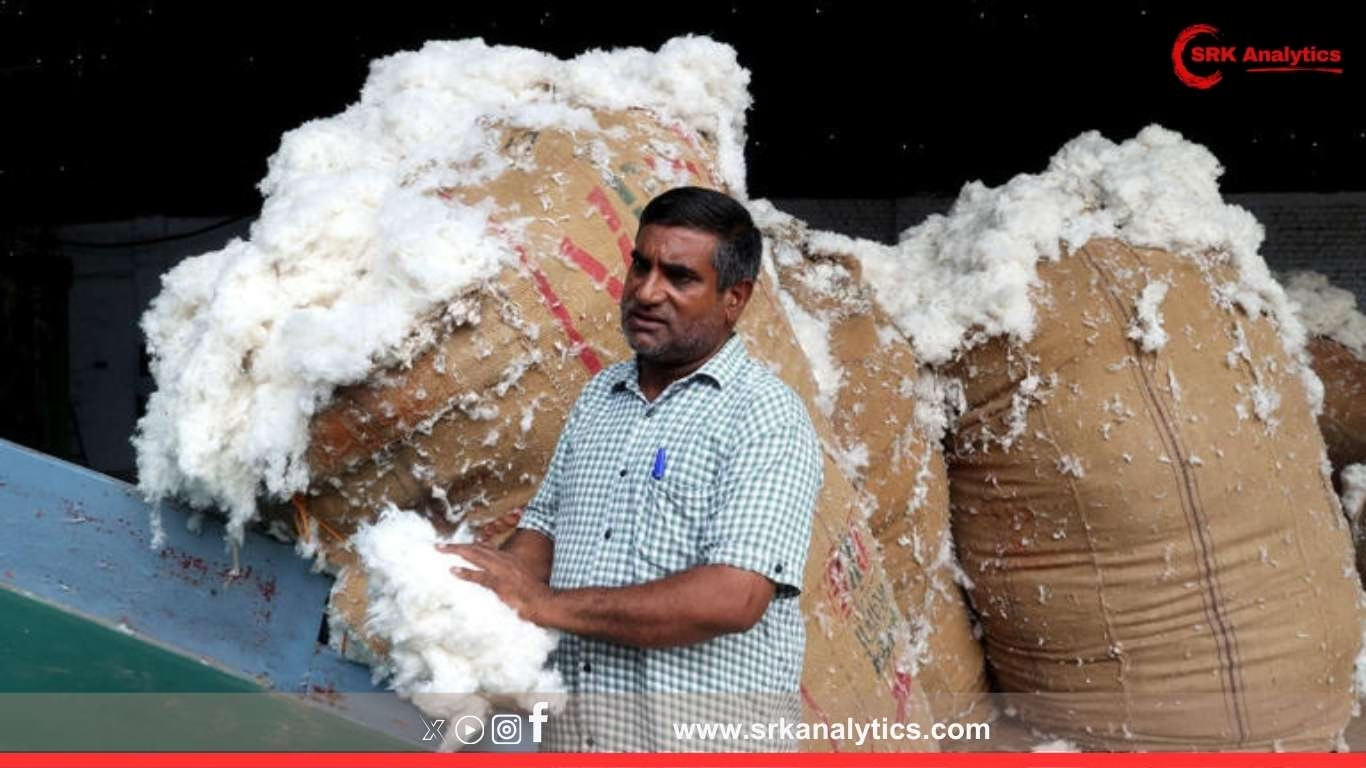
In a move that blends economic pragmatism with geopolitical messaging, the Indian government has suspended the 11% import duty on raw cotton until September 30, 2025. The decision, announced late Monday, eliminates both the 5% basic customs duty and the 5% agriculture infrastructure and development cess, offering immediate relief to India’s textile and garment industry while signaling a willingness to engage with the United States on trade negotiations.
The timing of the announcement is critical. It comes just days before the US is set to impose a steep 50% tariff on Indian goods, a retaliatory measure linked to New Delhi’s continued purchases of Russian oil. With the US being India’s second-largest cotton supplier and its largest apparel export market, the duty cut is being interpreted as both a lifeline for domestic manufacturers and a diplomatic olive branch.
🧵 Why the Duty Cut Matters for India’s Textile Sector
India’s textile industry, which employs over 45 million people and contributes nearly 2% to the country’s GDP, has been under pressure from rising cotton prices, global competition, and tariff headwinds. The removal of import duties is expected to lower input costs, stabilize fabric prices, and improve export competitiveness.
| Impact Area | Before Duty Cut | After Duty Cut (Until Sept 30) |
|---|---|---|
| Cotton Import Cost | +11% duty | 0% duty |
| Fabric Prices | Elevated due to raw cost | Expected to cool |
| SME Profit Margins | Compressed | Likely to improve |
| Export Competitiveness | Lagging behind Vietnam, Bangladesh | Potential recovery |
Industry bodies such as the Confederation of Indian Textile Industry (CITI) and Apparel Export Promotion Council (AEPC) had long lobbied for this relief, arguing that high cotton costs were eroding India’s edge in global markets.
📉 US Tariffs and India’s Strategic Response
The duty cut is also a calculated response to escalating trade tensions with the United States. President Donald Trump’s administration recently announced an additional 25% tariff on Indian goods, doubling the total levy to 50% from August 27, 2025. The move, aimed at penalizing India for its energy ties with Russia, has rattled exporters across sectors.
| Tariff Type | Previous Rate | New Rate (Effective Aug 27) | Affected Sectors |
|---|---|---|---|
| Base Tariff | 25% | 50% | Textiles, footwear, shrimp |
| Apparel-Specific | 9–13% | Up to 60% | Garment exports |
| Competitor Tariffs | 20% (Bangladesh, Vietnam) | Unchanged | Competitive disadvantage |
By removing cotton import duties, India is not only cushioning its domestic industry but also signaling to Washington that it is open to trade adjustments—particularly in sectors where the US has strategic export interests.
🌍 Global Cotton Trade Dynamics
India’s cotton imports surged 107% in FY2024–25 to $1.2 billion, up from $579 million the previous year. The US accounted for $234 million of this, making it the second-largest supplier after Australia. With the duty cut, US cotton exporters stand to gain the most, especially as India shifts sourcing away from China and Brazil.
| Country | Cotton Export to India (FY25) | Share of Total Imports |
|---|---|---|
| Australia | $258 million | 21.5% |
| United States | $234 million | 19.5% |
| Brazil | $181 million | 15.1% |
| Egypt | $116 million | 9.6% |
The Global Trade Research Initiative (GTRI) noted that nearly all of India’s cotton imports are of staple length 28 mm or above, which are eligible for duty-free access under the India-Australia Economic Cooperation and Trade Agreement (ECTA). The new duty-free window now opens the door wider for US cotton.
🧠 Industry Reaction and Export Outlook
Exporters have welcomed the move but cautioned that the short duration of the relief—just over a month—limits its impact on fresh orders. Most believe the duty cut will benefit in-transit shipments and help retain buyers in markets like the UK and EU, though not significantly in the US due to the tariff escalation.
| Stakeholder | Reaction Summary |
|---|---|
| Textile Exporters | Relief welcomed, seek extension |
| Apparel Councils | Urge broader trade negotiations |
| Cotton Traders | Expect price stabilization |
| US Cotton Lobby | Likely to push for long-term access |
CITI’s analysis shows that while India’s textile exports to the US grew by only 3.3% in June 2025 (YoY), Vietnam and Bangladesh saw surges of 26.2% and 44.6% respectively. China’s exports to the US, meanwhile, declined by 41%, reflecting a broader shift in sourcing patterns.
🧵 Domestic Farmers and Seasonal Timing
The government’s decision to announce the duty cut during the off-peak season—when cotton plucking begins in October and supply peaks by March—is seen as a protective measure for Indian farmers. By limiting the duty-free window to September 30, authorities aim to avoid market distortion and price suppression for domestic produce.
| Season Phase | Cotton Activity | Policy Impact |
|---|---|---|
| April–August | Low supply, high imports | Duty cut benefits mills |
| October–March | Peak domestic harvest | Duty reinstatement expected |
Officials have indicated that the duty cut is a temporary measure and will be reviewed based on market conditions and trade negotiations.
🧭 Diplomatic Messaging and Trade Talks
The timing of the duty cut coincides with a now-cancelled visit by US trade negotiators to New Delhi, originally scheduled for August 25–29. While talks on a bilateral trade agreement have stalled, the cotton duty cut is being interpreted as a signal that India is willing to engage constructively.
Ajay Srivastava, founder of GTRI, stated:
“The largest beneficiary of the duty-free import will be the US, the second-largest supplier to India. This is a calibrated signal to Washington.”
India’s gesture mirrors Bangladesh’s recent concession to the US on cotton imports, which helped unlock trade discussions.
📌 Conclusion
India’s suspension of cotton import duties until September 30 is more than just an economic relief—it’s a strategic maneuver aimed at balancing domestic industry needs with global trade diplomacy. While the textile sector breathes a sigh of relief, the move also opens a window for renewed engagement with the United States amid rising tariff tensions.
As India navigates a complex web of trade relationships, the cotton duty cut stands out as a deft policy stroke—one that could shape the future of its textile exports and its standing in global trade negotiations.
—
Disclaimer: This article is based on publicly available government announcements and trade data as of August 21, 2025. It is intended for informational purposes only and does not constitute financial or policy advice.




marketingninja.click – Found practical insights today; sharing this article with colleagues later.
convertcraft.click – Found practical insights today; sharing this article with colleagues later.
ranksignal.click – Bookmarked this immediately, planning to revisit for updates and inspiration.
boostsignals.click – Navigation felt smooth, found everything quickly without any confusing steps.
clickrly.click – Color palette felt calming, nothing distracting, just focused, thoughtful design.
funnely.click – Bookmarked this immediately, planning to revisit for updates and inspiration.