

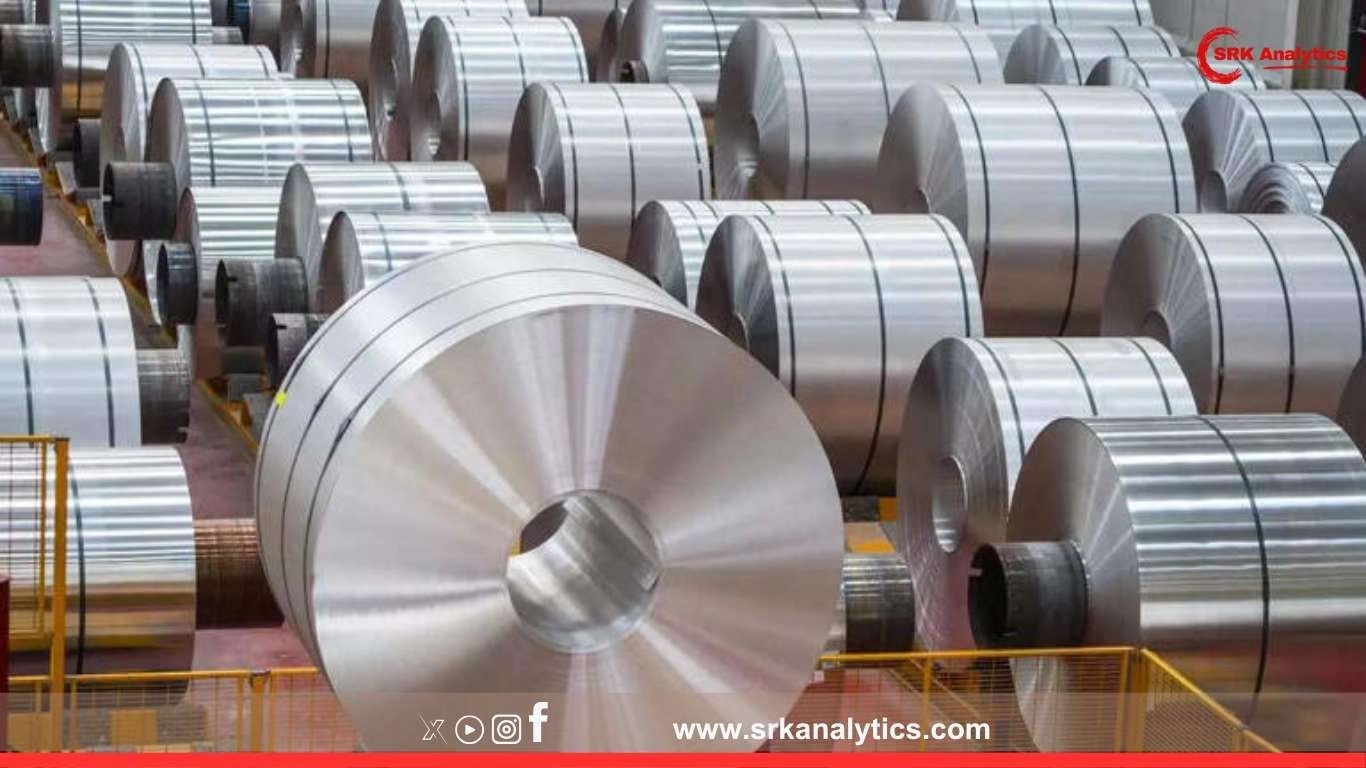
India’s finished steel imports for the April–June quarter of FY25 witnessed a significant contraction of nearly 30% year-on-year, primarily driven by a sharp fall in shipments from top suppliers including China and Japan. According to preliminary industry data, this decline marks one of the sharpest drops in quarterly steel imports in recent years, reflecting both slowing demand for foreign-origin steel and improved domestic supply chain efficiencies.
The reduction in imports has emerged as a crucial data point for the Indian steel sector, which is currently navigating the dual challenges of global trade protectionism and domestic oversupply in select product segments. With India ramping up its domestic production capacity and infrastructure investments, the shift toward local sourcing is becoming more apparent.
Key Highlights from April–June FY25 Steel Trade Data
- Total Finished Steel Imports: Fell to approximately 1.13 million tonnes, compared to 1.6 million tonnes in the same quarter last year.
- YoY Decline: Nearly 29.4% reduction.
- Imports from China: Dropped by over 35%.
- Imports from Japan: Fell by 28%, continuing the declining trend from FY24 end.
- Domestic Steel Output: Grew by nearly 7.5%, indicating stronger internal supply.
- Major Imported Categories: Hot-rolled coils, cold-rolled products, galvanised steel, and alloyed plates.
Country-wise Import Decline Analysis (April–June FY25 vs FY24 Q1)
| Country | FY24 Q1 Imports (MT) | FY25 Q1 Imports (MT) | Change (%) |
|---|---|---|---|
| China | 550,000 | 355,000 | -35.4% |
| Japan | 320,000 | 230,000 | -28.1% |
| South Korea | 410,000 | 375,000 | -8.5% |
| Russia | 105,000 | 95,000 | -9.5% |
| Others | 215,000 | 75,000 | -65.1% |
| Total | 1,600,000 | 1,130,000 | -29.4% |
Domestic Factors Behind Declining Imports
- Government Push for Atmanirbhar Bharat (Self-Reliant India)
The Indian government’s consistent focus on import substitution, coupled with a protective tariff structure and anti-dumping duties, has discouraged reliance on imported steel. - Rise in Domestic Production
India’s major steel producers — including Tata Steel, JSW Steel, and Steel Authority of India Ltd. (SAIL) — have expanded capacities. The 7.5% growth in domestic production has cushioned the demand supply gap, particularly in the infrastructure and automotive sectors. - Price Parity with Global Markets
With global steel prices stabilising and India achieving near-parity, the cost advantage of importing steel has eroded. This has made domestic sourcing more viable and predictable for end-users. - Decline in Indian Rupee Value
Currency fluctuations have made steel imports costlier, discouraging buyers from sourcing internationally unless there’s a product specificity not met locally.
Export Performance Offers Silver Lining
While imports declined, India’s finished steel exports grew by nearly 14% YoY during the same period, rising to 1.55 million tonnes in Q1 FY25. This shift in trade balance has helped cushion domestic producers from inventory pile-up and softening prices in the local market.
| Steel Trade Balance: Q1 FY25 | Value (in MT) |
|---|---|
| Finished Steel Imports | 1.13 million |
| Finished Steel Exports | 1.55 million |
| Net Trade Balance (Exports – Imports) | +0.42 million |
This positive trade balance is significant, given that India was a net importer of steel for several quarters in FY24.
Impact on Domestic Players
The decline in imports is viewed positively by domestic steelmakers, especially those focusing on long steel and flat steel products. With less competitive pressure from global imports, companies like JSPL, AM/NS India, and SAIL are likely to retain pricing power in Q2 and Q3.
However, the segment may also face headwinds in the form of:
- Rising input costs (coking coal and iron ore)
- Global recessionary signals
- Potential inventory overhang due to monsoon-led construction slowdowns
Sector Outlook for FY25
Industry analysts expect India’s steel demand to grow 7–9% in FY25, led by:
- PM Gati Shakti projects
- Railway modernisation
- Urban infrastructure (metro, smart cities)
- EV and automotive sector recovery
However, the ongoing geopolitical risks and sluggish recovery in global demand, especially from China and the EU, could limit the upside potential for exports in the next two quarters.
Policy Measures in Play
The Indian government has taken multiple steps to support the domestic steel ecosystem:
- PLI Scheme for Specialty Steel: Aimed at reducing dependency on high-grade alloy imports.
- Increased Anti-Dumping Duties: Particularly on Chinese and Vietnamese steel.
- Steel Scrap Recycling Policy: To boost domestic availability of raw materials.
- Custom Duty Adjustments: Ensuring level playing field between domestic producers and importers.
Global Context: Why Chinese and Japanese Imports Fell
- China’s Domestic Overcapacity Crisis: With the country struggling to manage oversupply and softer housing demand, Chinese mills have reduced their outbound shipments selectively.
- Environmental Controls in Japan: Tokyo’s push for green steel and ESG norms has led to capacity optimization in older plants.
- Rising Freight Rates: Shipping costs from East Asia to India have surged over the past six months, hurting cost competitiveness.
- Trade Tensions & Safeguard Measures: India has tightened port scrutiny and customs for Chinese-origin steel amid strategic concerns.
Market Sentiment and Stock Performance
The NSE Metal Index has remained range-bound in Q1 FY25 but shows signs of breakout potential, especially with easing input costs and demand clarity post-monsoon.
| Company | YTD Stock Change (%) | Commentary |
|---|---|---|
| Tata Steel | +6.2% | Strong international presence |
| JSW Steel | +3.8% | Steady domestic performance |
| SAIL | +9.4% | Government projects driving demand |
| Jindal Steel & Power | +11.6% | Higher export contribution |
| Hindustan Zinc | -2.3% | Input price volatility |
Investors are now closely watching Q2 production guidance and volume off-take across core consuming sectors like real estate, auto, and infra.
Conclusion
India’s nearly 30% drop in finished steel imports during April–June FY25 marks a pivotal moment for the sector. As domestic production rises, global suppliers recalibrate their trade focus, and protectionist policies become more assertive, India appears poised to redefine its position in the global steel supply chain — shifting from a demand-driven importer to a net exporter.
The road ahead will depend on how efficiently Indian steelmakers adapt to changing demand trends, pricing dynamics, and ESG compliance expectations. But for now, the declining import trajectory underscores the growing strength and self-sufficiency of India’s steel sector.
Disclaimer:
This article is for informational purposes only and is not intended to provide financial, investment, or industry advice. Readers are encouraged to conduct their own research or consult professionals before making decisions based on this content.