




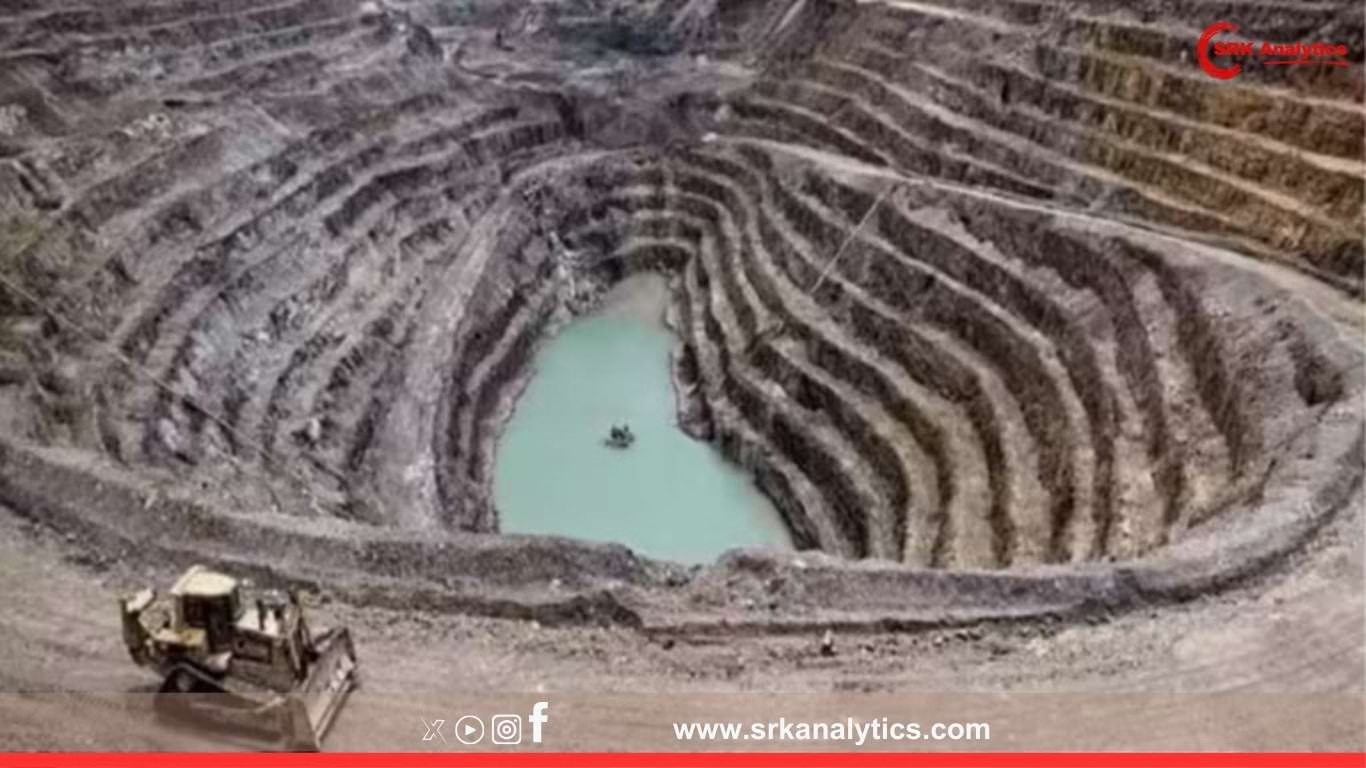
In a strategic move aimed at reshaping the global rare earth supply chain, India is reportedly exploring a rare earth mineral partnership with Myanmar to counter China’s near-total dominance in the sector. According to recent reports, the Indian government has initiated efforts to secure rare earth samples from mines in northeastern Myanmar, particularly those under the control of the Kachin Independence Army (KIA)—a powerful rebel group that holds sway over key mining regions.
This initiative marks a rare instance of India engaging with a non-state actor to access critical resources, underscoring the urgency of diversifying its supply of strategic minerals essential for high-tech industries, electric vehicles, and defense applications.
India’s Strategic Shift in Rare Earth Sourcing
Rare earth elements (REEs) are indispensable in the manufacturing of magnets, batteries, semiconductors, and other advanced technologies. Despite their abundance in nature, the processing and refining of these minerals are largely monopolized by China, which controls over 85% of the global supply chain. Beijing’s recent export restrictions and geopolitical maneuvering have prompted India to seek alternative sources to ensure national security and industrial resilience.
India’s Ministry of Mines has reportedly instructed both state-owned and private entities—including Indian Rare Earths Limited (IREL) and Midwest Advanced Materials—to collect and transport mineral samples from KIA-controlled mines for testing in Indian laboratories. These samples will be evaluated for their suitability in producing rare earth magnets, which are vital for electric mobility and defense-grade electronics.
Timeline of India’s Rare Earth Engagement with Myanmar
| Date | Event Description |
|---|---|
| July 2025 | Virtual meeting held between Indian firms and KIA representatives |
| August 2025 | KIA begins collecting rare earth samples for India |
| September 2025 | Reports emerge of India’s strategic engagement with Myanmar rebels |
Why Myanmar Matters
Myanmar’s Kachin region is rich in heavy rare earths such as dysprosium and terbium—elements that are crucial for high-temperature magnets used in electric vehicles and military hardware. The KIA, established in 1961 to represent the interests of the Kachin ethnic group, has long controlled these mineral-rich territories. While China has historically sourced rare earths from KIA-controlled mines, India’s outreach signals a shift in regional alliances and resource diplomacy.
Despite the logistical challenges posed by rugged terrain and political instability, India is reportedly considering a long-term supply agreement with the KIA. However, experts caution that transporting minerals from conflict zones and scaling up domestic processing capabilities will require substantial investment and coordination.
Comparative Analysis of Rare Earth Supply Chains
| Country | Control Over Rare Earths | Processing Capability | Strategic Risk Level |
|---|---|---|---|
| China | High | Advanced | Low |
| India | Low | Developing | High |
| Myanmar (KIA) | Moderate (Heavy REEs) | Limited | Medium |
| Japan | Low | Advanced | Low |
| USA | Moderate | Developing | Medium |
India’s Domestic Challenges
While India possesses rare earth reserves, its processing infrastructure remains underdeveloped. The country lacks the advanced separation technologies required to refine heavy rare earths at scale. To address this, India is actively seeking partnerships with Japanese and South Korean firms to build commercial processing units and reduce technological dependence on China.
Moreover, India’s engagement with the KIA introduces a complex geopolitical dynamic. The KIA is currently in conflict with Myanmar’s military junta, which enjoys backing from Beijing. This triangle of interests—India, KIA, and China—could complicate diplomatic relations and border stability, especially in India’s northeastern states.
Strategic Benefits of the Myanmar Partnership
| Benefit | Description |
|---|---|
| Diversification of Supply | Reduces dependence on Chinese rare earths |
| Access to Heavy REEs | Secures critical minerals like dysprosium and terbium |
| Strengthening Regional Ties | Enhances India’s influence in Southeast Asia |
| Boost to Domestic Manufacturing | Supports Make in India and EV production goals |
Industry Reaction and Expert Opinions
Industry analysts have welcomed India’s proactive approach, calling it a “necessary disruption” in the global rare earth monopoly. Amit Kumar, a China analyst at The Takshashila Institution, noted that “even though ties between India and China have warmed recently, relying on Chinese assurances for rare earth supply is a short-term fix. India needs a robust, long-term strategy.”
Others have pointed out the risks of engaging with a rebel group. “The KIA-Junta-China dynamic is volatile. India must tread carefully to avoid diplomatic fallout,” said a senior geopolitical expert.
The Road Ahead
India’s rare earth ambitions are part of a broader push to secure critical minerals and reduce strategic vulnerabilities. The government’s recent funding of private firms like Midwest Advanced Materials to produce rare earth magnets signals a shift toward self-reliance. However, scaling up processing capabilities and ensuring consistent supply from Myanmar will require sustained effort.
India is also exploring rare earth partnerships with countries like Australia and Brazil, further expanding its resource diplomacy. These efforts align with Prime Minister Narendra Modi’s vision of a resilient and self-sufficient India, capable of competing in high-tech global markets.
Global Rare Earth Market Outlook
| Region | Market Share (%) | Key Players | Future Trends |
|---|---|---|---|
| China | 85 | Baotou Steel, China Northern | Export restrictions, tech dominance |
| USA | 10 | MP Materials | Investment in domestic processing |
| India | 2 | IREL, Midwest Advanced Materials | Strategic partnerships, tech upgrade |
| Australia | 3 | Lynas Corporation | Expansion of mining operations |
| Myanmar | <1 | KIA (non-state actor) | Potential new supply corridor |
Conclusion
India’s decision to engage with Myanmar’s Kachin rebels for rare earth minerals represents a bold and unconventional strategy to challenge China’s dominance in the sector. While fraught with geopolitical and logistical hurdles, the move could pave the way for a more diversified and resilient supply chain. As India continues to invest in domestic processing and forge international partnerships, its rare earth roadmap will be critical to shaping the future of its high-tech industries and strategic autonomy.
Disclaimer: This article is based on publicly available reports and expert commentary. All geopolitical and economic assessments are subject to change based on evolving circumstances. The engagement with non-state actors mentioned herein does not imply endorsement or formal recognition. Readers are advised to consult official government releases for verified information.
A cozy hotel Bjanka Kolasin for mountain lovers. Ski slopes, trekking trails, and local cuisine are nearby. Rooms are equipped with amenities, Wi-Fi, parking, and friendly staff are available to help you plan your vacation.