




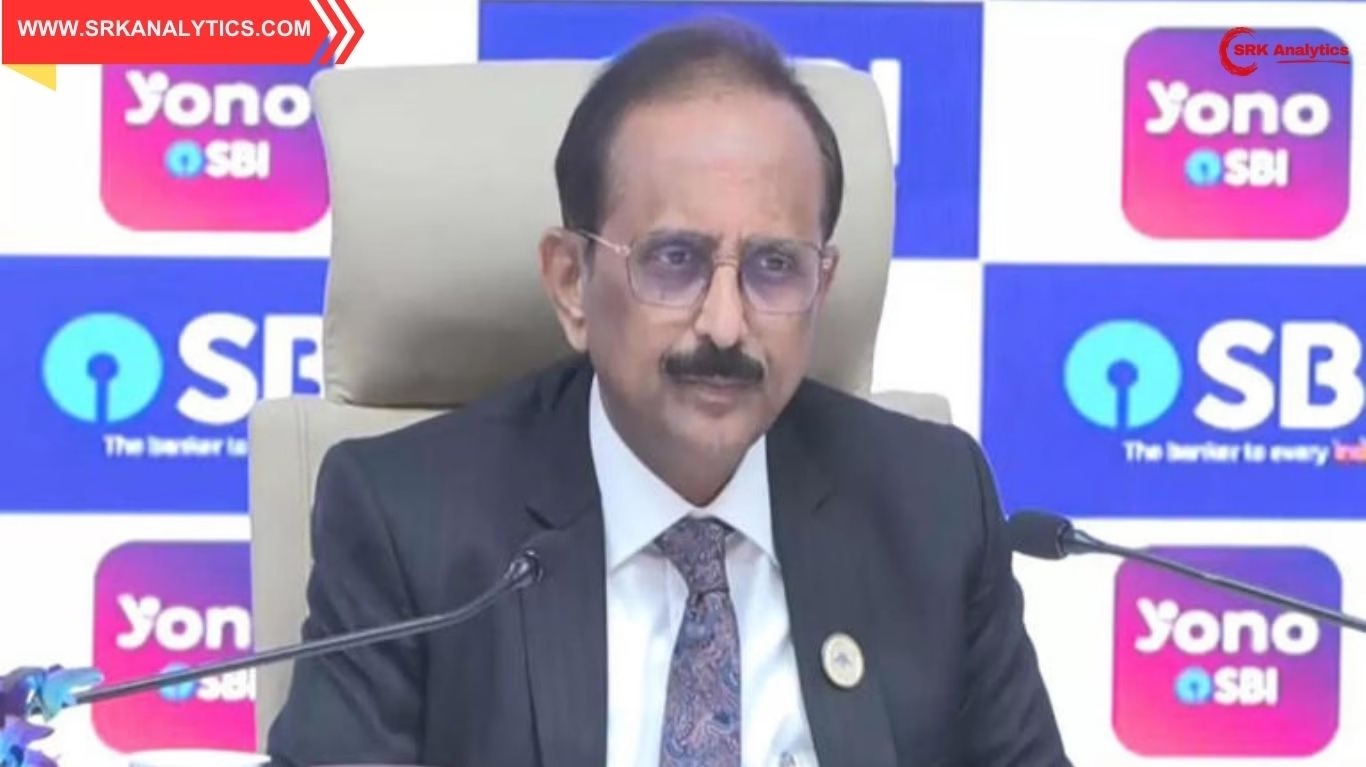
State Bank of India (SBI) Chairman CS Setty has hailed the recently concluded India-US trade agreement and other Free Trade Agreements (FTAs) as “extremely positive for the Indian economy.” He emphasized that the removal of tariff overhang and expansion of trade partnerships will open new opportunities for Indian exporters, strengthen supply chains, and enhance India’s global competitiveness.
Key Highlights
- India-US Trade Deal: Seen as a major step in reducing tariff barriers and boosting bilateral trade.
- Other FTAs: Agreements with the EU, UK, and ASEAN nations complement the US deal.
- Economic Impact: Greater clarity for exporters, stronger manufacturing base, and improved services sector outlook.
- SBI’s View: The deals provide long-term stability and confidence for businesses.
- RBI Policy Context: The Reserve Bank of India’s decision to maintain repo rates aligns with the positive trade outlook.
Analysis of Trade Agreements
| Factor | Traditional Challenge | Current Scenario (2026) | Outcome Observed |
|---|---|---|---|
| Tariff Barriers | High tariffs restricted trade | Tariff overhang removed | Export boost |
| Market Access | Limited opportunities | Expanded access to US, EU, UK | Greater competitiveness |
| Supply Chains | Vulnerable to disruptions | Strengthened through FTAs | Stability |
| Investor Confidence | Uncertainty in trade policy | Clarity through agreements | Positive sentiment |
| Economic Growth | Dependent on domestic demand | Boost from global trade | Accelerated growth |
Comparative Analysis of FTAs
| Agreement | Key Features | Impact on India |
|---|---|---|
| India-US Trade Deal | Tariff reduction, services access | Boost to IT, pharma, agriculture |
| India-EU FTA | Market access, regulatory alignment | Strengthens exports, compliance standards |
| India-UK FTA | Tariff cuts, investment flows | Enhances textile and auto sectors |
| India-ASEAN FTA | Regional integration | Expands trade in electronics and machinery |
SBI Chairman’s Perspective
CS Setty highlighted that the trade agreements:
- Provide greater clarity for exporters, reducing uncertainty.
- Strengthen manufacturing and services sectors.
- Enhance India’s role in global supply chains.
- Offer long-term benefits for economic stability and growth.
He also noted that the RBI’s decision to maintain repo rates complements the positive trade outlook, ensuring monetary stability while trade flows expand.
Impact on Key Sectors
- Pharmaceuticals: Expanded access to US and EU markets.
- IT Services: Greater opportunities in digital trade and outsourcing.
- Agriculture: Boost from reduced tariffs on exports.
- Textiles and Apparel: Gains from UK and EU markets.
- Automobiles and Machinery: Stronger integration with ASEAN supply chains.
Future Outlook
India’s trade agreements are expected to:
- Increase export competitiveness.
- Strengthen domestic industries through global integration.
- Attract foreign investment.
- Support long-term GDP growth.
Challenges include:
- Ensuring compliance with international standards.
- Managing competition for domestic producers.
- Sustaining momentum amid global economic uncertainties.
Conclusion
The India-US trade agreement, along with other FTAs, represents a transformative moment for India’s economy. SBI Chairman CS Setty’s endorsement underscores the importance of these deals in removing tariff barriers, boosting exports, and strengthening India’s global economic position. With strong government support and industry readiness, India is poised to leverage these agreements for sustained growth and competitiveness in the global marketplace.
Disclaimer
This article is intended for informational and analytical purposes only. It summarizes publicly available statements and economic updates. It does not constitute investment advice, financial recommendations, or professional consultation. Readers are encouraged to verify facts independently and consult experts before making economic or trade-related decisions.