




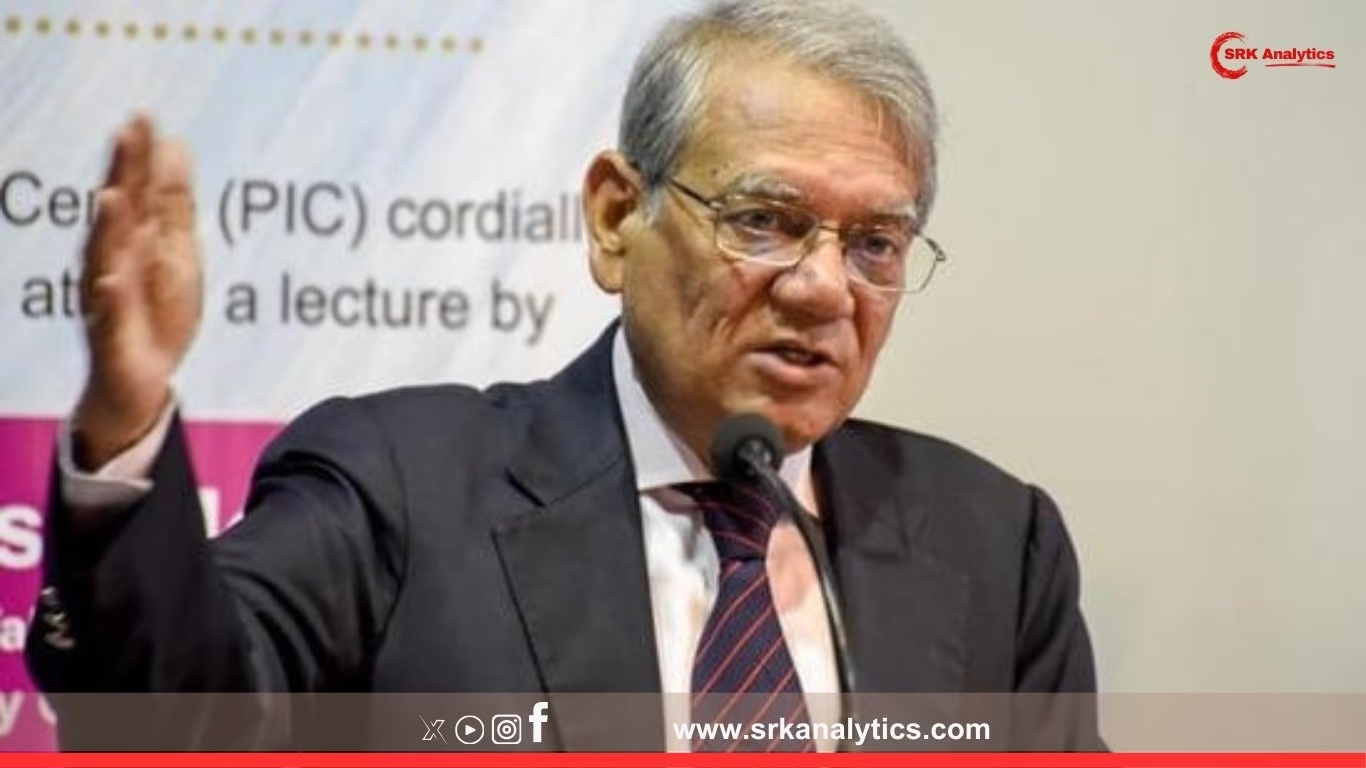
India must urgently reduce its import tariffs to match ASEAN levels and reconsider joining major regional trade blocs like the Regional Comprehensive Economic Partnership (RCEP) and the Comprehensive and Progressive Agreement for Trans-Pacific Partnership (CPTPP), according to Rakesh Mohan, a key member of the Economic Advisory Council to the Prime Minister (EAC-PM). In a wide-ranging interview on September 4, 2025, Mohan warned that India risks being locked out of global trade flows unless it embraces deeper integration with emerging trade alliances.
Mohan emphasized that the global trading system is increasingly governed by large regional blocs such as the European Union, USMCA, RCEP, and CPTPP. With the World Trade Organization (WTO) losing influence, India must recalibrate its trade strategy to remain competitive and relevant.
🧭 Rakesh Mohan’s Trade Reform Recommendations
| Reform Area | Recommendation | Strategic Objective |
|---|---|---|
| Import Tariffs | Reduce to ASEAN average levels | Boost competitiveness and global integration |
| Exchange Rate Policy | Adjust to offset tariff cuts | Support exporters and manufacturing |
| Trade Bloc Membership | Join RCEP and CPTPP | Avoid isolation and expand market access |
| Chinese Investment | Welcome FDI in labor-intensive sectors | Enhance job creation and export capacity |
| Export Strategy | Explore China’s import market | Diversify destinations and reduce dependency |
Mohan stated, “I do believe there is room for reducing a lot of our tariffs and bringing them down at least to the ASEAN levels. That will be very good for us”.
🔍 Why India’s Tariff Structure Needs Reform
India’s average applied tariff rate remains significantly higher than ASEAN economies, making Indian exports less competitive and imports more expensive. Mohan noted that from the early 1990s until 2012, India consistently reduced tariffs, facilitating economic reforms and global integration. However, since 2017, tariffs have increased on average, reversing that trend.
| Country / Region | Average Applied Tariff (%) | Trade Bloc Membership |
|---|---|---|
| India | ~13.5% | None |
| ASEAN (avg) | ~5.5% | RCEP |
| China | ~7.5% | RCEP |
| Vietnam | ~6.0% | RCEP, CPTPP |
| Mexico | ~4.0% | USMCA, CPTPP |
Mohan argued that high tariffs discourage foreign investment, reduce consumer choice, and limit India’s participation in global supply chains.
📉 RCEP and CPTPP: Strategic Trade Blocs India Must Join
The RCEP, signed by 15 Asia-Pacific nations including China, Japan, and ASEAN members, is the world’s largest free trade agreement. CPTPP, meanwhile, includes 11 countries across Asia and the Pacific, offering deep market access and regulatory alignment.
| Trade Bloc | Member Countries | India’s Status | Strategic Benefit |
|---|---|---|---|
| RCEP | China, Japan, South Korea, ASEAN, Australia | Opted out in 2020 | Access to 30% of global GDP |
| CPTPP | Japan, Vietnam, Malaysia, Mexico, Canada | Not a member | High-standard trade and investment |
| EU | 27 European nations | FTA negotiations ongoing | Technology and services exports |
| USMCA | US, Mexico, Canada | Not eligible | Benchmark for trade liberalization |
Mohan urged India to reconsider its RCEP exit and apply for CPTPP membership with appropriate safeguards for domestic interests.
🔥 Exchange Rate Adjustments to Support Trade Reform
One of Mohan’s key insights was the need for exchange rate flexibility to compensate for tariff reductions. He cited the 1990s reforms, where ex-ante rupee devaluation helped protect domestic industries even as tariffs were slashed.
| Policy Tool | Role in Trade Reform | Historical Precedent |
|---|---|---|
| Exchange Rate Flexibility | Makes exports more competitive | 1991–1995 liberalization |
| Fiscal Incentives | Offset short-term revenue loss | GST compensation model |
| Trade Facilitation | Reduce logistics and compliance costs | National Logistics Policy |
Mohan noted, “As we reduce tariffs to make ourselves more competitive and become much more part of the global supply chain, it does mean that the real exchange rate would need to move enough in favour of exporters”.
🧠 Expert Commentary and Industry Sentiment
| Expert Name | Role | Comment |
|---|---|---|
| Meera Iyer | Trade Economist | “India’s tariff reform is overdue—ASEAN benchmarks are realistic.” |
| Rajiv Bansal | FTA Negotiation Advisor | “Joining RCEP and CPTPP would unlock new export markets.” |
| Dr. Rakesh Sinha | Currency Strategist | “Exchange rate flexibility is essential to avoid trade shocks.” |
Industry leaders have echoed Mohan’s call for bold reforms, especially as global trade becomes more regionalized and competitive.
📦 Potential Gains from Tariff Reform and Bloc Membership
- Export Growth: Lower tariffs and bloc membership could boost exports by 15–20% annually.
- FDI Inflows: Easier market access and regulatory alignment would attract foreign investors.
- Job Creation: Labor-intensive sectors like textiles, electronics, and food processing would benefit.
- Consumer Benefits: Lower import duties would reduce prices and improve product quality.
| Sector Benefiting | Reform Impact | Estimated Growth Potential |
|---|---|---|
| Textiles & Apparel | Lower input costs, better market access | +18% exports |
| Electronics | FDI from China, ASEAN | +22% production capacity |
| Agriculture | Access to East Asian markets | +15% export volume |
| Pharmaceuticals | Regulatory harmonization | +12% global share |
Mohan also recommended exploring China’s import market to enhance India’s export diversification.
📌 Conclusion
Rakesh Mohan’s call for India to cut tariffs to ASEAN levels and join RCEP and CPTPP reflects a strategic shift in thinking about global trade. As regional blocs reshape the world economy, India must act decisively to avoid marginalization and unlock its full export potential. With exchange rate adjustments, targeted safeguards, and bold policy reforms, India can position itself as a competitive, integrated player in the global supply chain. The time to act, Mohan suggests, is now.
—
Disclaimer: This article is based on publicly available interviews and media reports as of September 4, 2025. It is intended for informational purposes only and does not constitute financial, legal, or trade policy advice.