



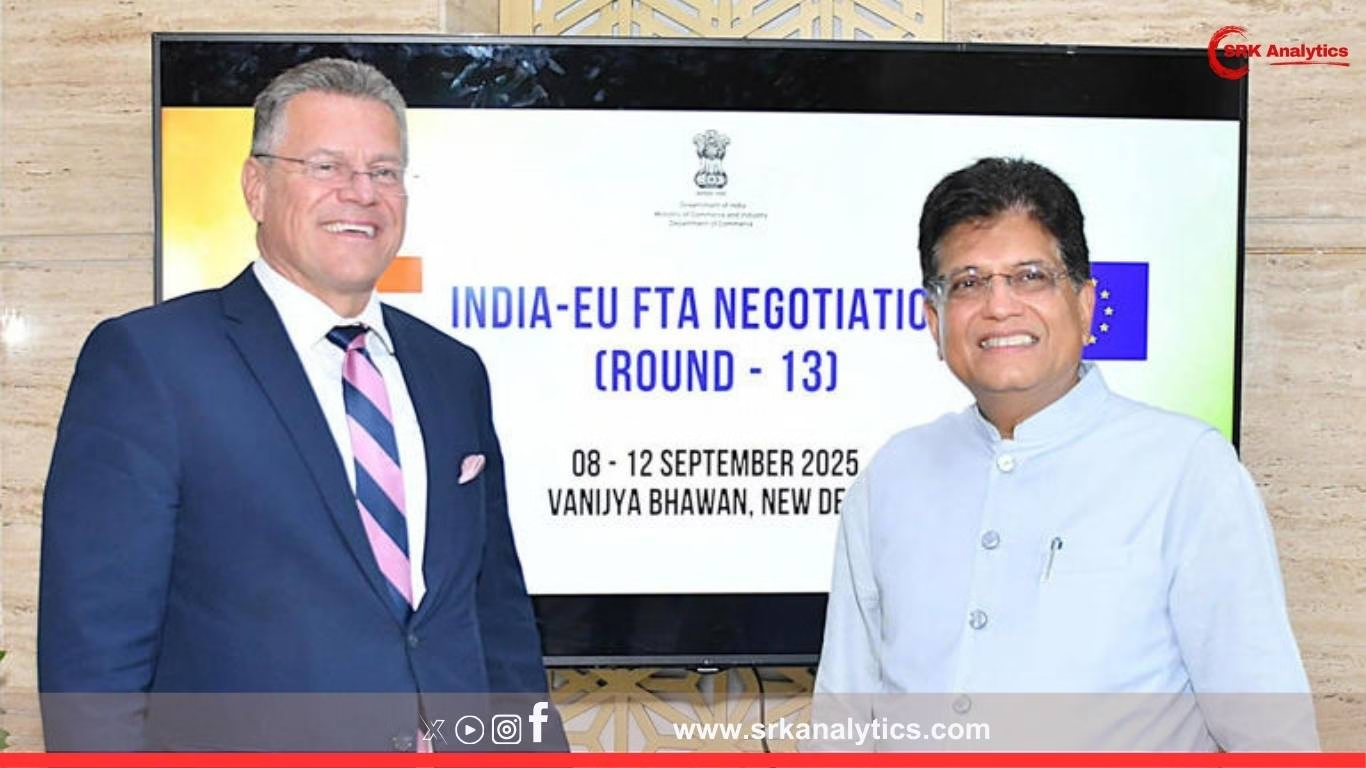
India is intensifying its push for tariff reductions on key labour-intensive sectors—textiles, leather goods, and gems & jewellery—as part of the ongoing negotiations for a free trade agreement (FTA) with the European Union. The 13th round of talks, held from September 8–12 in New Delhi, saw significant convergence on multiple issues, with both sides aiming to conclude the deal by the end of 2025.
Commerce Minister Piyush Goyal and EU Trade Commissioner Maroš Šefčovič led the discussions, which focused on reciprocal market access, tariff harmonisation, and regulatory alignment. India’s primary objective is to secure lower duties on its traditional export strengths, while the EU is seeking concessions on automobiles, wines, and spirits.
India’s Tariff Reduction Demands: Sectoral Breakdown
India’s push for tariff cuts is centered around sectors that employ millions and contribute significantly to export earnings. These sectors currently face steep EU tariffs, limiting their competitiveness in European markets.
| Sector | Current EU Tariff Range | India’s Export Value (FY2024) | Employment Impact |
|---|---|---|---|
| Textiles | 10–12% | $15.2 billion | 45 million jobs |
| Leather Products | Up to 17% | $5.6 billion | 4.5 million jobs |
| Gems & Jewellery | 15–25% | $39.7 billion | 2.5 million jobs |
Lowering these tariffs could unlock substantial growth for Indian exporters, especially SMEs and rural artisans who rely on EU demand.
EU’s Counter Demands: Automobiles, Wines, and Spirits
While India is pushing for relief on labour-intensive exports, the EU is seeking reduced tariffs on its flagship exports. These include high-end automobiles, wines, and spirits—products that currently face some of the highest import duties in India.
| EU Export Category | Current Indian Tariff | EU Export Value to India (FY2024) |
|---|---|---|
| Wines | 150% | $416 million |
| CBU Passenger Cars | 70–110% | $416 million |
| Auto Components | 15% | $1.4 billion |
India has expressed willingness to consider phased reductions, especially for completely knocked-down (CKD) vehicles, which attract lower tariffs due to local assembly.
Trade Balance and Strategic Importance
The EU is India’s largest trading partner in goods, with bilateral trade reaching $137.5 billion in FY2024—a 90% increase over the past decade. The FTA aims to deepen this relationship by reducing tariff barriers, enhancing supply chain resilience, and promoting sustainable trade.
| Trade Metric | FY2024 Value |
|---|---|
| India-EU Trade Volume | $137.5 billion |
| India’s Exports to EU | $78.2 billion |
| India’s Imports from EU | $59.3 billion |
| Trade Surplus | $18.9 billion |
India’s trade surplus with the EU underscores its export strength, particularly in sectors like textiles, pharmaceuticals, and engineering goods.
Negotiation Timeline and Next Steps
The next round of negotiations is scheduled to take place in Brussels from October 6–10, 2025. Both sides are working toward a year-end deadline to finalise the agreement, which has been in the making since 2007 and was formally revived in 2022.
| Negotiation Round | Location | Date | Focus Areas |
|---|---|---|---|
| 13th Round | New Delhi | Sept 8–12, 2025 | Tariffs, services, sustainability |
| 14th Round | Brussels | Oct 6–10, 2025 | Final convergence, legal text review |
| Target Signing | Brussels | December 2025 | Full FTA agreement |
The urgency stems from global trade disruptions and the EU’s need to diversify away from China, while India seeks to expand preferential access beyond the U.S. market.
Services and Mobility: India’s Hidden Leverage
Beyond goods, India is also pushing for liberalisation in services and professional mobility. The EU’s deep services market presents a major opportunity for Indian IT, ITeS, and consulting firms.
| Services Chapter Focus | India’s Ask |
|---|---|
| IT/ITeS Access | Easier cross-border delivery |
| Professional Mobility | Visa facilitation, mutual recognition |
| Financial Services | Regulatory harmonisation |
| Green Tech & Consulting | Market access and joint ventures |
India’s strength in services could be a key bargaining chip, especially as the EU seeks to anchor supply chain de-risking in pharma, chemicals, and clean energy.
Carbon Border Adjustment Mechanism: A New Challenge
India has also raised concerns over the EU’s Carbon Border Adjustment Mechanism (CBAM), which imposes levies on emissions-intensive imports. Indian negotiators are seeking flexibilities and green-transition support to ensure exporters are not priced out of the EU market.
| CBAM Impact Area | India’s Concern |
|---|---|
| Steel & Aluminium | Cost competitiveness |
| Refined Petroleum | Emissions-linked tariffs |
| Textile Dyeing | Compliance costs |
| Leather Processing | Sustainability standards |
India is advocating for a phased implementation and technical assistance to help exporters meet EU sustainability benchmarks.
Political Sensitivities and Domestic Implications
While tariff cuts on Indian exports are broadly supported, concessions on EU imports—especially wines and luxury cars—are politically sensitive. Domestic industry groups have urged caution, citing concerns over market disruption and loss of revenue.
| Sensitive Sector | Domestic Tariff | Industry Concern |
|---|---|---|
| Wines & Spirits | 150% | Impact on local producers |
| CBU Vehicles | 110% | Threat to domestic auto sector |
| Dairy Products | 60–70% | Farmer protests, price pressure |
The government is expected to adopt a phased approach, balancing trade liberalisation with protection for vulnerable sectors.
Conclusion: India’s Tariff Push Signals Strategic Shift in EU Trade Talks
India’s push for tariff cuts on textiles, leather, and gems in the EU trade talks reflects a strategic pivot toward boosting labour-intensive exports and securing fair market access. As negotiations enter a decisive phase, the outcome of the FTA will shape India’s trade trajectory for years to come.
With both sides aiming to conclude the deal by year-end, the next round of talks in Brussels will be critical. A balanced agreement could unlock new opportunities in goods, services, and sustainability—positioning India and the EU as pillars of a rules-based global trade order.
—
Disclaimer: This article is based on publicly available government statements, verified news reports, and official trade data. It is intended for informational purposes only and does not constitute financial or legal advice. All figures and timelines are subject to change based on final negotiations and policy updates.