



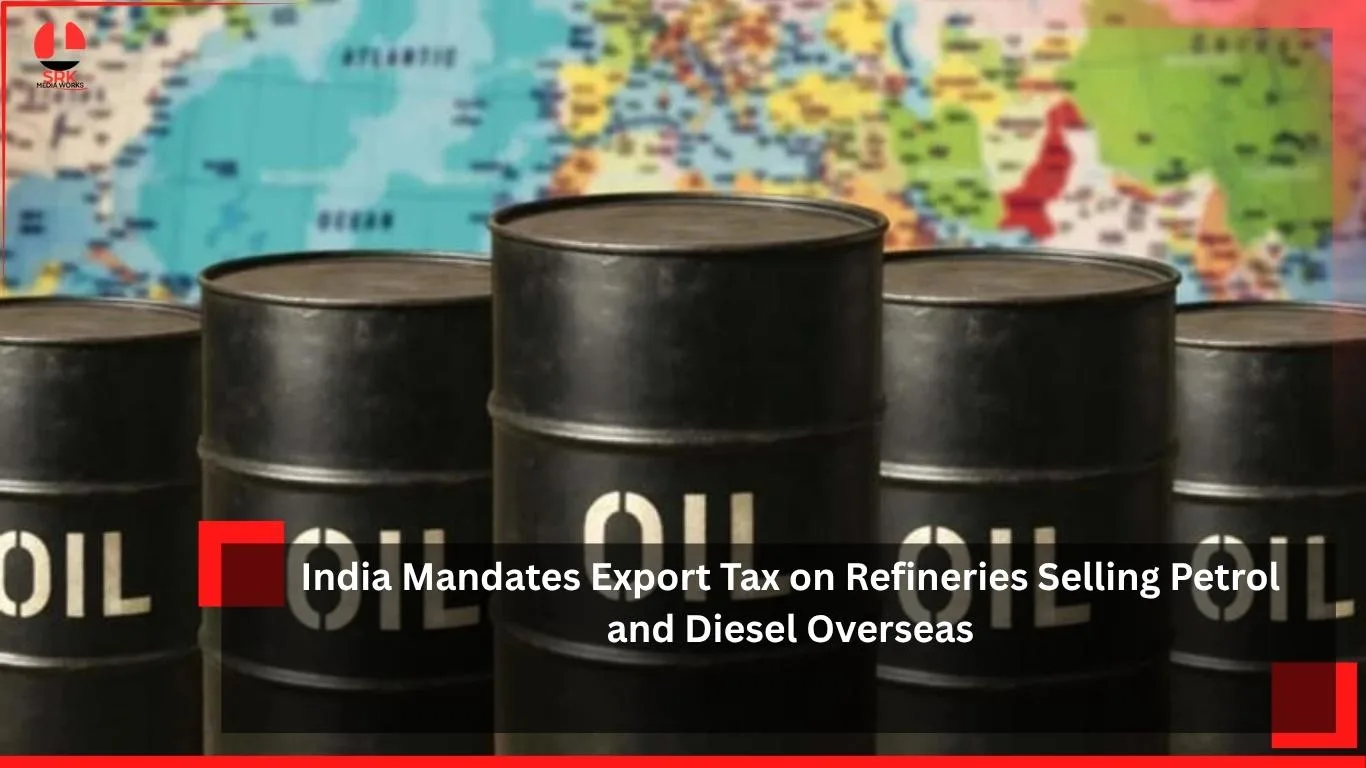
India has imposed an export tax on petrol and diesel to prioritize domestic supply amid surging global crude oil prices. The move, announced on March 27, 2026, comes alongside excise duty cuts for domestic consumers, ensuring affordability at home while discouraging excessive overseas shipments. Refineries exporting fuel will now face new levies, reviewed fortnightly by the government.
Key Highlights of the Policy
- Export Tax Introduced: Refineries selling petrol and diesel overseas must now pay additional duties.
- Excise Duty Cuts: Domestic excise duty on petrol reduced by ₹10 per litre, diesel duty cut to zero.
- Windfall Tax: Export duty on diesel set at ₹21.5 per litre, aviation turbine fuel (ATF) at ₹29.5 per litre.
- Objective: Shield domestic consumers from global price shocks and ensure adequate local supply.
- Review Mechanism: Export taxes will be reviewed every fortnight by the Central Board of Indirect Taxes and Customs (CBIC).
Why the Export Tax Was Imposed
- Global Crude Surge: Prices jumped from $70 to $122 per barrel in one month due to Middle East conflict.
- Domestic Protection: Ensures Indian households and industries are not burdened by rising international costs.
- Revenue Generation: Expected to fetch ₹1,500 crore in two weeks from diesel and ATF levies.
Pivot Analysis: Stakeholder Narratives
| Stakeholder | Narrative | Implication |
|---|---|---|
| Government | Protects consumers, ensures supply | Gains public trust but risks refinery pushback |
| Refineries | Higher export costs | May reduce overseas shipments |
| Consumers | Relief from excise cuts | Stable domestic prices |
| Global Markets | Reduced Indian exports | Tightens supply, raises global prices |
| Analysts | Balanced approach | Long-term sustainability questioned |
Comparative Analysis: Domestic vs Export Policy
| Fuel Type | Domestic Duty | Export Duty | Impact |
|---|---|---|---|
| Petrol | ₹3 per litre | New levy applied | Affordable at home, costly abroad |
| Diesel | Zero | ₹21.5 per litre | Domestic relief, export discouraged |
| ATF | ₹50 excise | ₹29.5 per litre | Aviation sector faces higher costs |
Market Impact
- Domestic Consumers: Benefit from excise duty cuts, shielding them from global volatility.
- Refineries: Must balance profitability between domestic sales and exports.
- Global Oil Market: Reduced Indian exports could tighten supply, pushing prices higher internationally.
Possible Outcomes
| Scenario | Impact |
|---|---|
| Export tax continues | Domestic stability, reduced global supply |
| Tax reduced | Refineries regain export competitiveness |
| Global prices stabilize | Government may ease levies |
| Conflict escalates | Higher duties, stricter controls |
Conclusion
India’s decision to mandate export taxes on petrol and diesel reflects a strategic balance between protecting domestic consumers and managing global market pressures. While excise duty cuts provide immediate relief at home, export levies discourage excessive overseas shipments, ensuring local availability. The fortnightly review mechanism indicates flexibility, allowing adjustments based on global price trends and domestic needs.
Disclaimer
This article is intended for informational and analytical purposes only. It does not represent the official stance of the Government of India, refineries, or any institution mentioned. The content is based on economic analysis, policy updates, and public reports. Readers are encouraged to explore multiple perspectives for a comprehensive understanding of the issue.