




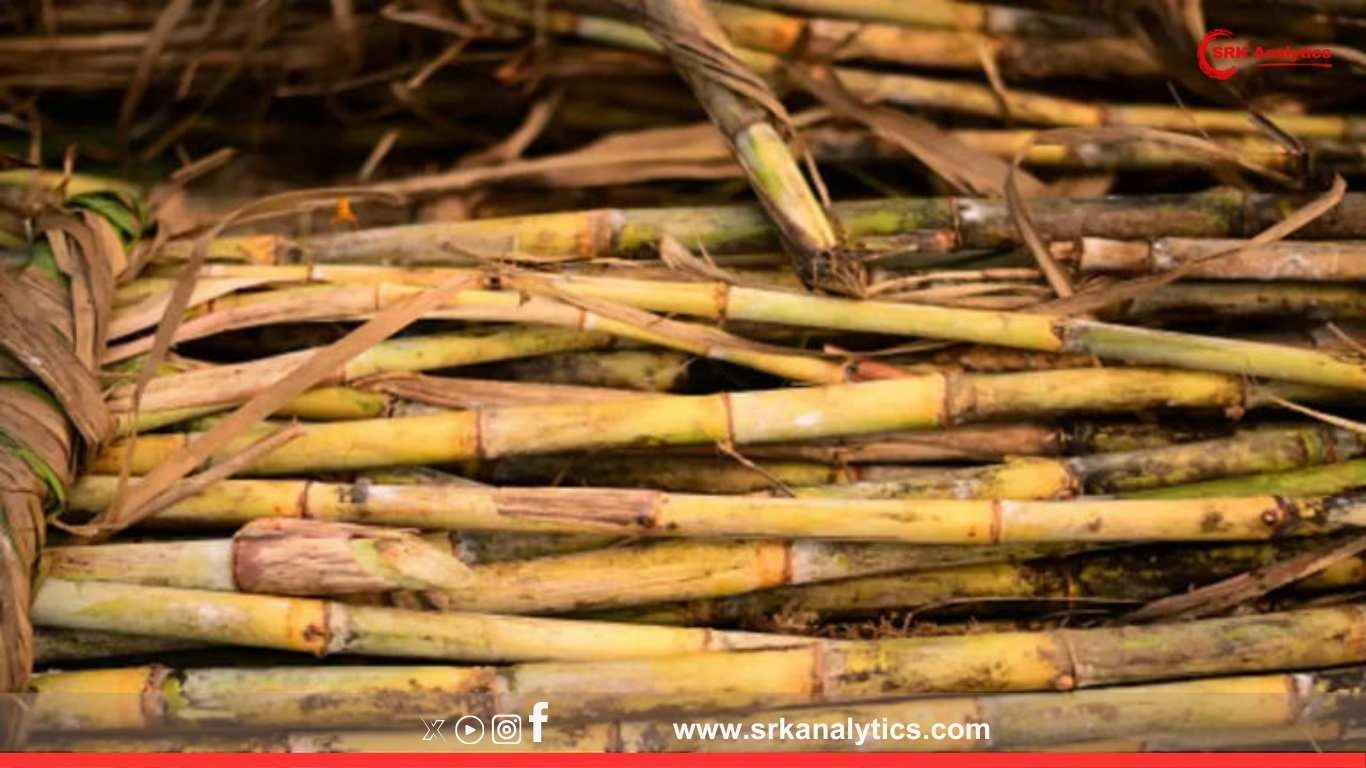
India, the world’s second-largest sugar producer, is poised to resume sugar exports from October 2025, thanks to a robust surge in sugarcane output and an aggressive ethanol blending program. The Indian Sugar and Bio-energy Manufacturers Association (ISMA) has projected an 18% rise in sugar production for the 2025–26 season, creating a surplus that could allow for up to 2 million tonnes of sugar exports.
This development marks a significant shift from the previous season, where exports were tightly regulated due to lower output and increased diversion of sugar for ethanol production. With the new season expected to begin on a strong note, industry stakeholders are optimistic about balancing domestic demand, ethanol blending targets, and export opportunities.
Sugar Production Outlook for 2025–26
According to ISMA’s first estimate, India’s sugar production is expected to reach 34.90 million tonnes in the 2025–26 season, up from 26.10 million tonnes in the current year. This increase is attributed to a 42% jump in sugarcane output, which is projected to hit 13.26 million tonnes, driven by favorable monsoon conditions, improved yields, and expanded acreage.
| Season | Sugar Output (MT) | Sugarcane Output (MT) | Ethanol Diversion (MT) | Export Quota (MT) |
|---|---|---|---|---|
| 2024–25 | 26.10 | 9.33 | 3.4 | 1.0 |
| 2025–26 (Est.) | 34.90 | 13.26 | 5.0 | 2.0 |
The projected increase in sugar output comes despite a higher diversion of sugar for ethanol production, which is expected to rise from 3.4 million tonnes to 5 million tonnes. Even after accounting for this diversion, ISMA estimates that 30 million tonnes of sugar will be available for domestic consumption and exports, supported by an opening stock of 5.2 million tonnes.
Ethanol Blending Program: A Strategic Driver
India’s ethanol push, particularly under the E20 program, is a key factor influencing sugar sector dynamics. The government aims to achieve 20% ethanol blending in petrol by 2025, and sugarcane-based feedstock is central to this strategy. A record 4.8 billion litres of ethanol is expected to be produced in the upcoming season.
This diversion not only supports India’s energy security goals but also helps stabilize sugar prices and ensures timely payments to farmers. By reducing the dependence on raw sugar exports and enhancing domestic value addition, the ethanol program is reshaping the sugar industry’s economic model.
| Ethanol Source | Estimated Output (Billion Litres) | Contribution to Blending (%) |
|---|---|---|
| B-heavy Molasses | 2.1 | 43.8 |
| Cane Juice | 1.5 | 31.3 |
| C-heavy Molasses | 0.7 | 14.6 |
| Grain-based Feedstock | 0.5 | 10.3 |
ISMA has urged the government to revise ethanol procurement prices, especially for variants made from B-heavy molasses and cane juice, to ensure viability for sugar mills.
Domestic Consumption and Stock Position
India’s domestic sugar consumption is projected to rise to 28.5–29 million tonnes in 2025–26, up from 28 million tonnes this year. With an opening stock of 5.2 million tonnes and fresh production of 30 million tonnes (after ethanol diversion), the country is expected to comfortably meet domestic demand while maintaining buffer stocks.
| Metric | 2024–25 (MT) | 2025–26 (Est.) (MT) |
|---|---|---|
| Domestic Consumption | 28.0 | 28.5–29.0 |
| Opening Stock | 8.0 | 5.2 |
| Available Sugar (Post Diversion) | 24.7 | 30.0 |
| Export Potential | 1.0 | 2.0 |
This surplus has prompted industry leaders to call for timely export approvals to avoid market distortions and ensure smooth operations. Delays in policy decisions, they warn, could hurt the sector’s profitability and disrupt supply chains.
State-Wise Production Estimates
Maharashtra, Uttar Pradesh, and Karnataka continue to lead India’s sugar production, collectively contributing over 85% of the national output. ISMA’s projections for 2025–26 show significant growth across these states, particularly in Maharashtra, where sugarcane output is expected to rise sharply due to favorable weather and increased acreage.
| State | Sugar Output 2024–25 (MT) | Sugar Output 2025–26 (Est.) (MT) |
|---|---|---|
| Maharashtra | 9.33 | 13.26 |
| Uttar Pradesh | 9.85 | 10.25 |
| Karnataka | 5.91 | 6.61 |
These figures reflect the resilience of India’s sugar sector and its ability to respond to policy incentives and climatic conditions.
Global Market Implications
India’s return to sugar exports could have a notable impact on global prices. As one of the top producers, India’s export decisions influence supply-demand dynamics in key markets such as Indonesia, Bangladesh, and the Middle East. Analysts expect that the availability of 2 million tonnes for export could exert downward pressure on global prices, especially if Brazil and Thailand also report strong harvests.
However, India’s export strategy is likely to be calibrated, focusing on value-added products and strategic markets. The government is expected to prioritize exports that support domestic price stability and farmer welfare.
Policy Recommendations and Industry Demands
ISMA has called for several policy measures to support the sector’s growth:
- Timely approval of export quotas to avoid market disruptions
- Revision of minimum selling price (MSP) of sugar to reflect cost inflation
- Increase in ethanol procurement prices for B-heavy molasses and cane juice
- Incentives for sustainable farming practices and water-efficient crops
These recommendations aim to create a balanced ecosystem that supports farmers, manufacturers, and consumers while aligning with India’s energy and climate goals.
Conclusion: A Sweet Spot for India’s Sugar Sector
India’s sugar industry is entering a promising phase, driven by strong output, strategic ethanol diversion, and favorable policy momentum. The projected surplus for 2025–26 opens the door for exports, offering a dual benefit of supporting global markets and stabilizing domestic prices.
As the new season begins in October, stakeholders will be watching closely for government decisions on export quotas and ethanol pricing. With the right policy mix, India could consolidate its position as a global sugar powerhouse while advancing its clean energy ambitions.
Disclaimer: This article is based on publicly available industry estimates, government statements, and market analysis. It is intended for informational purposes only and does not constitute investment or policy advice. All projections are subject to change based on weather conditions, regulatory decisions, and market dynamics.