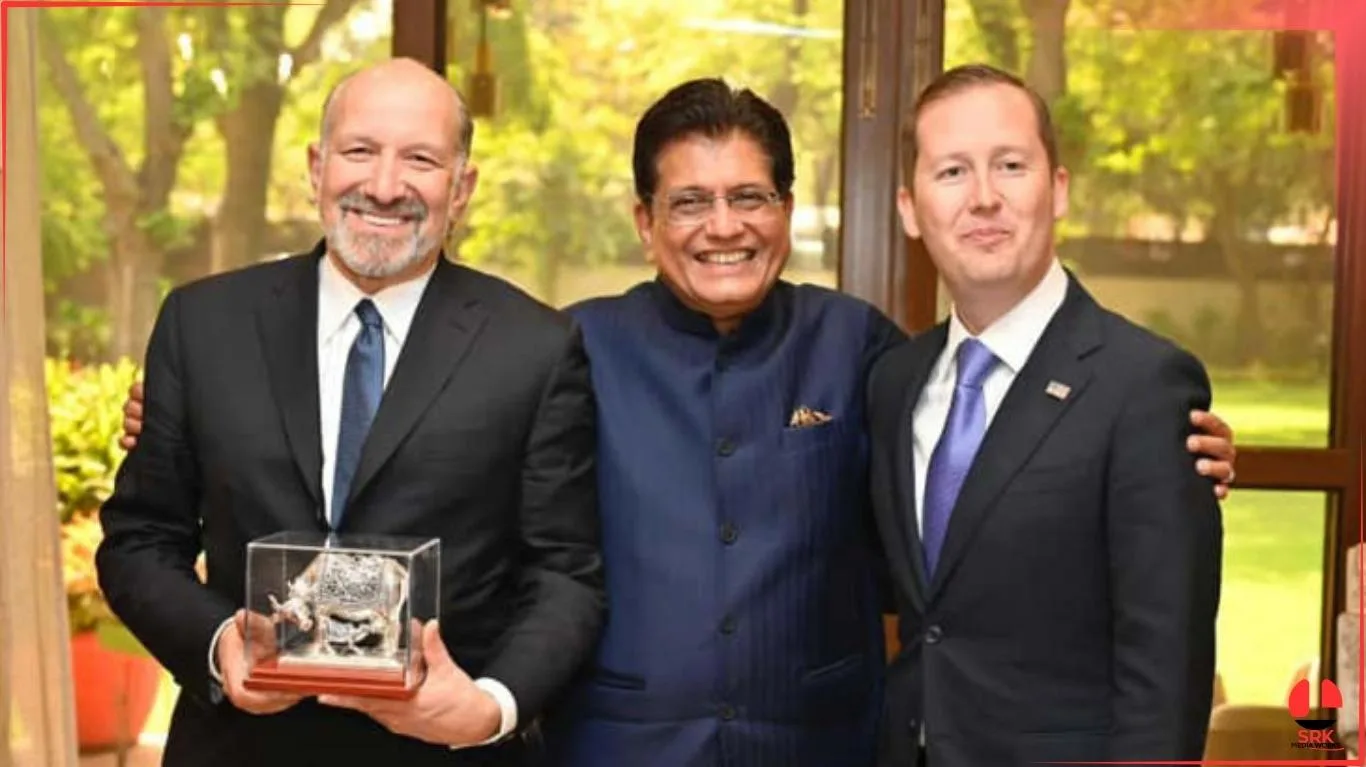






Commerce and Industry Minister Piyush Goyal has confirmed that the Indian government is actively working on a multi-pronged strategy to improve the supply of rare earth minerals, which are critical to sectors such as electronics, defence, renewable energy, and electric vehicles. Speaking at a policy roundtable on October 17, 2025, Goyal outlined steps including bilateral trade negotiations, domestic exploration, and start-up engagement for recycling and processing, aimed at reducing India’s import dependency and building resilient supply chains.
India is currently negotiating free trade agreements (FTAs) with Chile and Peru, two of the world’s largest producers of lithium, copper, and cobalt. These talks follow the successful implementation of the India-Australia Economic Cooperation and Trade Agreement (ECTA), which already facilitates access to Australian rare earths. Goyal emphasized that India must emulate models from Japan and South Korea, which have built robust rare earth ecosystems through import substitution and innovation.
🧠 Key Highlights of India’s Rare Earth Supply Strategy
| Element | Details |
|---|---|
| Announcement Date | October 17, 2025 |
| Minister | Piyush Goyal, Commerce & Industry |
| Strategic Focus | Rare earth minerals supply chain |
| Key Measures | FTAs, domestic exploration, recycling startups |
| Target Countries | Chile, Peru, Australia |
| Domestic Push | Start-up engagement, waste extraction, import substitution |
| Sectoral Impact | Electronics, EVs, defence, clean energy |
India’s rare earth strategy is aligned with its Make in India, PLI schemes, and energy transition goals, aiming to secure raw materials for battery manufacturing, semiconductors, and aerospace components.
📊 Timeline of India’s Rare Earth Policy Evolution
| Year | Milestone Description |
|---|---|
| 2020 | India identifies rare earths as strategic minerals |
| 2022 | ECTA signed with Australia |
| 2023 | Start-up grants for mineral recycling launched |
| October 2025 | Goyal announces Chile-Peru trade pact negotiations |
India’s rare earth imports have grown by 28% CAGR over the last five years, driven by demand from EV and electronics sectors.
🗣️ Reactions from Industry Leaders, Analysts, and Policy Experts
- Mining Expert: “India’s rare earth reserves are underutilized. Exploration incentives are key.”
- Start-up Founder (Recycling): “We need capital and policy clarity to scale rare earth recovery.”
- Policy Analyst: “FTAs with Chile and Peru could be game-changers for India’s mineral security.”
| Stakeholder Group | Reaction Summary |
|---|---|
| Industry Bodies | Calling for faster mining approvals |
| Start-ups | Seeking funding and tech partnerships |
| Analysts | Applauding strategic diversification |
| Government Agencies | Coordinating with MEA and MoEFCC |
India is also exploring deep-sea mining, rare earth mapping, and public-private partnerships to accelerate domestic sourcing.
🧾 Comparative Snapshot: Rare Earth Supply Strategies – India vs Global Leaders
| Country | Strategy Type | Key Partners | Domestic Reserves | Policy Tools |
|---|---|---|---|---|
| India | FTAs + Start-up push | Australia, Chile, Peru | Moderate | PLI, FDI, recycling grants |
| China | State-led mining | Africa, Latin America | High | Export controls, subsidies |
| Japan | Import substitution | Vietnam, India | Low | Tech R&D, strategic stockpiles |
| USA | Strategic stockpiling | Canada, Australia | Moderate | Defense funding, tax credits |
India’s approach is hybrid—balancing global sourcing with domestic innovation and sustainability.
🧭 What to Watch in India’s Rare Earth Roadmap
- FTA Outcomes: Chile and Peru negotiations expected to conclude by Q1 2026
- Start-up Ecosystem: Expansion of mineral recycling and AI-based extraction
- Exploration Incentives: New policy expected under National Mineral Policy 2026
- Strategic Stockpiles: MoD and DRDO may initiate rare earth reserves for defence
Goyal’s announcement signals a shift from reactive sourcing to proactive mineral diplomacy, with rare earths now central to India’s economic and strategic planning.
Disclaimer
This news content is based on verified government statements, trade policy briefings, and industry reports as of October 19, 2025. It is intended for editorial use and public awareness. The information does not constitute investment advice, policy endorsement, or geopolitical analysis and adheres to ethical journalism standards.