




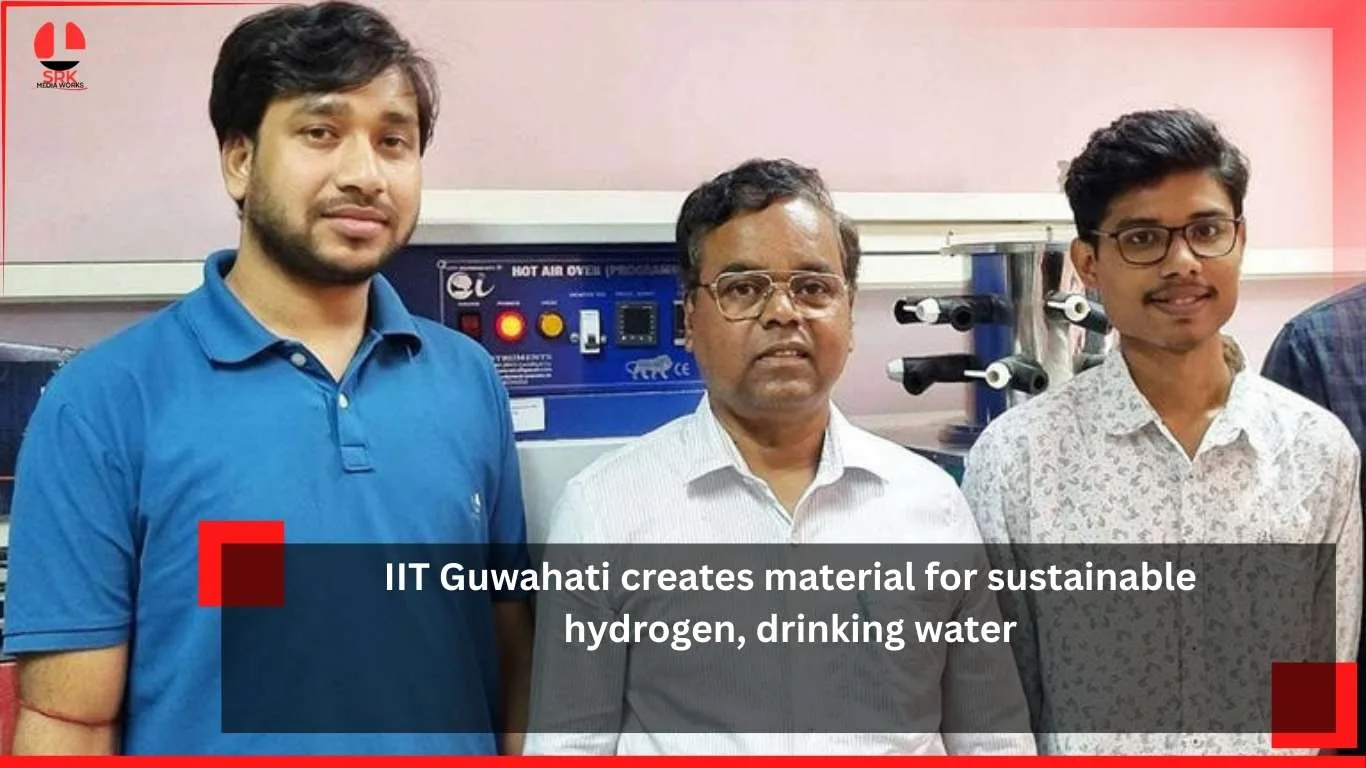
India’s scientific community has achieved a breakthrough as IIT Guwahati researchers have developed a novel material capable of producing sustainable hydrogen while simultaneously purifying drinking water. This innovation addresses two of the most pressing global challenges—clean energy generation and access to safe drinking water—through a single integrated solution.
The Significance of the Innovation
Hydrogen is widely regarded as the fuel of the future due to its high energy density and zero-carbon emissions when used. However, producing hydrogen sustainably has been a challenge, often requiring significant energy input. At the same time, millions of people worldwide still lack access to clean drinking water. IIT Guwahati’s material offers a dual-purpose solution:
- Generating hydrogen using renewable energy sources.
- Purifying contaminated water for safe human consumption.
This breakthrough could revolutionize both the energy and water sectors, making sustainable living more accessible.
How the Material Works
The newly developed material integrates advanced nanotechnology and catalytic properties. Its key features include:
- Photocatalytic Properties: Harnessing solar energy to split water molecules into hydrogen and oxygen.
- Filtration Capability: Removing harmful contaminants, heavy metals, and pathogens from water.
- Scalability: Designed for both small-scale household use and large-scale industrial applications.
- Cost Efficiency: Reducing the overall expense of hydrogen production and water purification.
By combining these functions, the material ensures that hydrogen production does not compromise water resources but instead enhances their usability.
Comparative Analysis of Benefits
| Aspect | Hydrogen Production | Drinking Water Purification |
|---|---|---|
| Primary Function | Sustainable fuel generation | Safe water for consumption |
| Technology Used | Photocatalysis, nanomaterials | Filtration, contaminant removal |
| Environmental Impact | Zero-carbon emissions | Reduced pollution, healthier communities |
| Economic Benefit | Lower energy costs, new industries | Affordable clean water access |
| Social Contribution | Energy independence | Improved public health |
Pivot Analysis: Energy vs. Water Impact
| Dimension | Energy Impact | Water Impact |
|---|---|---|
| Sustainability | Clean hydrogen reduces fossil fuel use | Purified water reduces disease burden |
| Global Relevance | Supports hydrogen economy | Addresses global water scarcity |
| Industrial Application | Power, transport, manufacturing | Municipal water systems, rural supply |
| Long-Term Benefits | Energy independence, climate goals | Improved living standards, rural development |
| Innovation Potential | Integration with renewable grids | Portable water purification devices |
Broader Implications for India
The dual-purpose material developed at IIT Guwahati carries transformative implications:
- Energy Security: India can reduce dependence on imported fossil fuels by scaling hydrogen production.
- Public Health: Access to clean drinking water reduces waterborne diseases, especially in rural areas.
- Economic Growth: New industries around hydrogen and water purification create jobs and attract investment.
- Global Leadership: India positions itself as a leader in sustainable technology innovation.
Challenges Ahead
Despite the promise, several challenges must be addressed:
- Scaling production of the material for commercial use.
- Ensuring affordability for rural and low-income communities.
- Integrating hydrogen production with existing renewable energy infrastructure.
- Navigating regulatory approvals for water purification standards.
Future Outlook
The innovation from IIT Guwahati sets the stage for a new era of sustainable technology. Over the next decade, India could witness:
- Widespread adoption of hydrogen as a clean fuel.
- Deployment of affordable water purification systems in rural and urban areas.
- Integration of hydrogen production with solar and wind energy projects.
- Export of sustainable technology solutions to global markets.
This breakthrough not only strengthens India’s scientific reputation but also contributes to solving global challenges of energy and water scarcity.
Disclaimer
This article is intended for informational purposes only. It highlights recent scientific developments at IIT Guwahati related to sustainable hydrogen production and drinking water purification. The content does not constitute technical advice, investment recommendations, or official institutional statements. Readers should independently verify details before making decisions based on this information.