



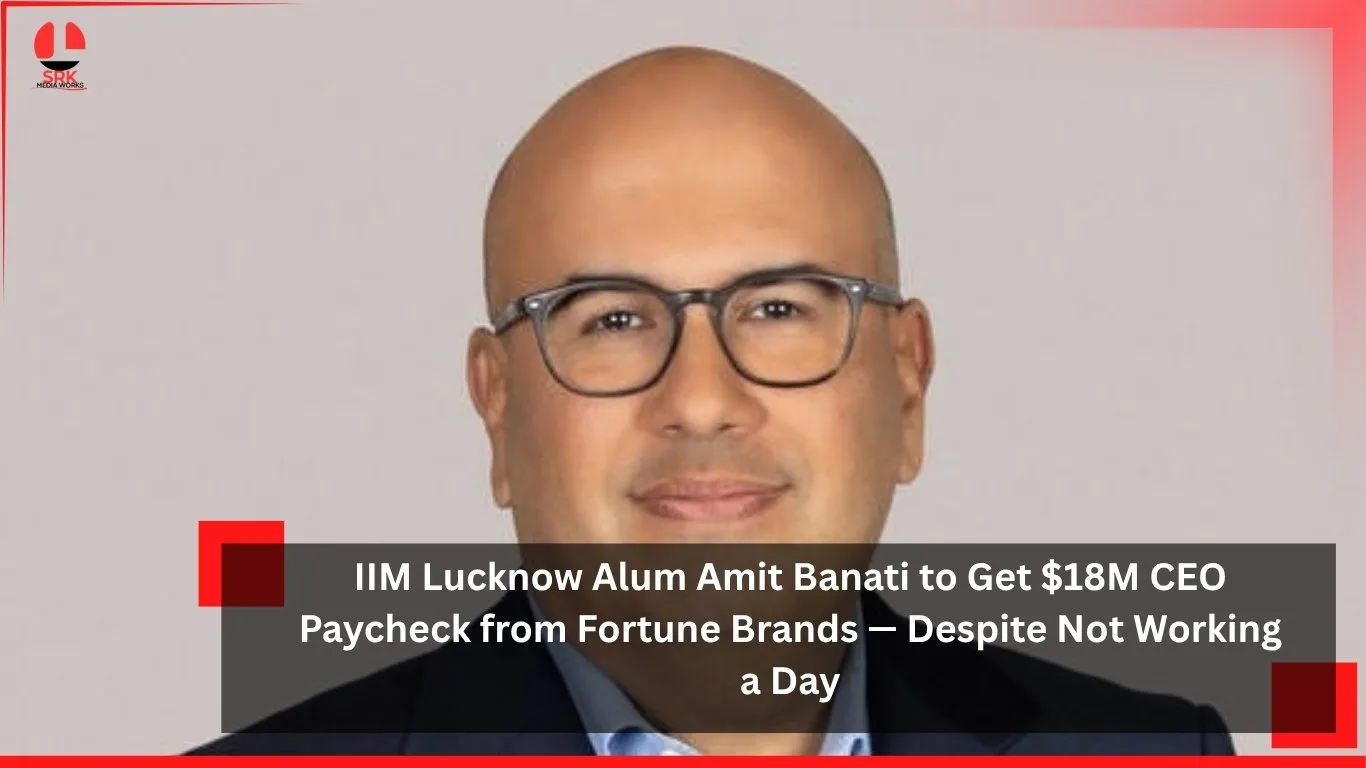
In a development that has stirred corporate governance debates, Amit Banati, an alumnus of IIM Lucknow, is set to receive an $18 million CEO paycheck from Fortune Brands even before officially assuming his role. The news has sparked discussions about executive compensation, shareholder accountability, and the evolving dynamics of leadership contracts in global corporations.
The Paycheck Controversy
Banati, who has built a distinguished career in global consumer goods and finance, was recently appointed as CEO of Fortune Brands. However, reports indicate that his compensation package includes $18 million upfront, despite him not yet working a single day in the position.
This unusual arrangement has raised eyebrows among investors and analysts, who question whether such payouts align with shareholder interests and corporate governance principles.
Why This Matters
- Executive Compensation: Highlights the growing trend of massive pay packages for top executives.
- Shareholder Concerns: Raises questions about fairness and accountability in corporate structures.
- Talent Acquisition: Reflects how companies are willing to pay premium amounts to secure global leaders.
- Public Perception: Sparks debate about income inequality and corporate responsibility.
Comparative Analysis of CEO Pay Packages
| CEO/Company | Pay Package | Timing | Controversy Level |
|---|---|---|---|
| Amit Banati – Fortune Brands | $18M upfront | Before joining | High |
| Sundar Pichai – Google | $200M stock grants | Performance-linked | Moderate |
| Satya Nadella – Microsoft | $55M annual | Linked to growth | Low |
| Elon Musk – Tesla | $56B package | Performance-based | Very High |
This comparison shows that while large CEO packages are not uncommon, Banati’s upfront payout is unusual.
Pivot Analysis: Impact of Banati’s Paycheck
| Stakeholder | Short-Term Impact | Long-Term Consequence |
|---|---|---|
| Amit Banati | Secures financial stability | Enhanced global profile |
| Fortune Brands | Attracts top talent | Faces scrutiny over governance |
| Shareholders | Concerns over payout fairness | Potential push for reforms |
| Corporate Sector | Sets precedent for contracts | May normalize upfront payouts |
Corporate Governance Debate
Analysts argue that such upfront payments may undermine shareholder trust, especially if performance metrics are not tied to compensation. Critics believe executive pay should be linked to measurable outcomes, while supporters claim that securing global talent requires bold financial commitments.
Lessons from Global Practices
- Performance-Based Models: Many firms tie compensation to stock performance and growth metrics.
- Golden Handshakes: Upfront payouts are sometimes used to lure executives from competitors.
- Shareholder Pushback: Increasing activism among investors is challenging excessive pay packages.
Possible Outcomes
- Smooth Transition: Banati assumes leadership, justifying the payout through strong performance.
- Shareholder Backlash: Investors demand stricter compensation policies.
- Regulatory Scrutiny: Authorities may review corporate governance frameworks.
- Industry Precedent: Other firms may adopt similar upfront pay strategies.
Conclusion
The announcement that IIM Lucknow alum Amit Banati will receive an $18M CEO paycheck from Fortune Brands despite not working a day highlights the growing complexities of executive compensation in global corporations. While the move underscores the value placed on leadership talent, it also raises critical questions about fairness, accountability, and governance.
As Banati prepares to take charge, the spotlight will remain on whether his leadership justifies the extraordinary financial commitment made by Fortune Brands.
Disclaimer: This article is based on reported corporate developments and market analysis. It does not represent official company statements or regulatory findings. The content is intended for informational purposes only and should not be interpreted as definitive financial or investment advice.