



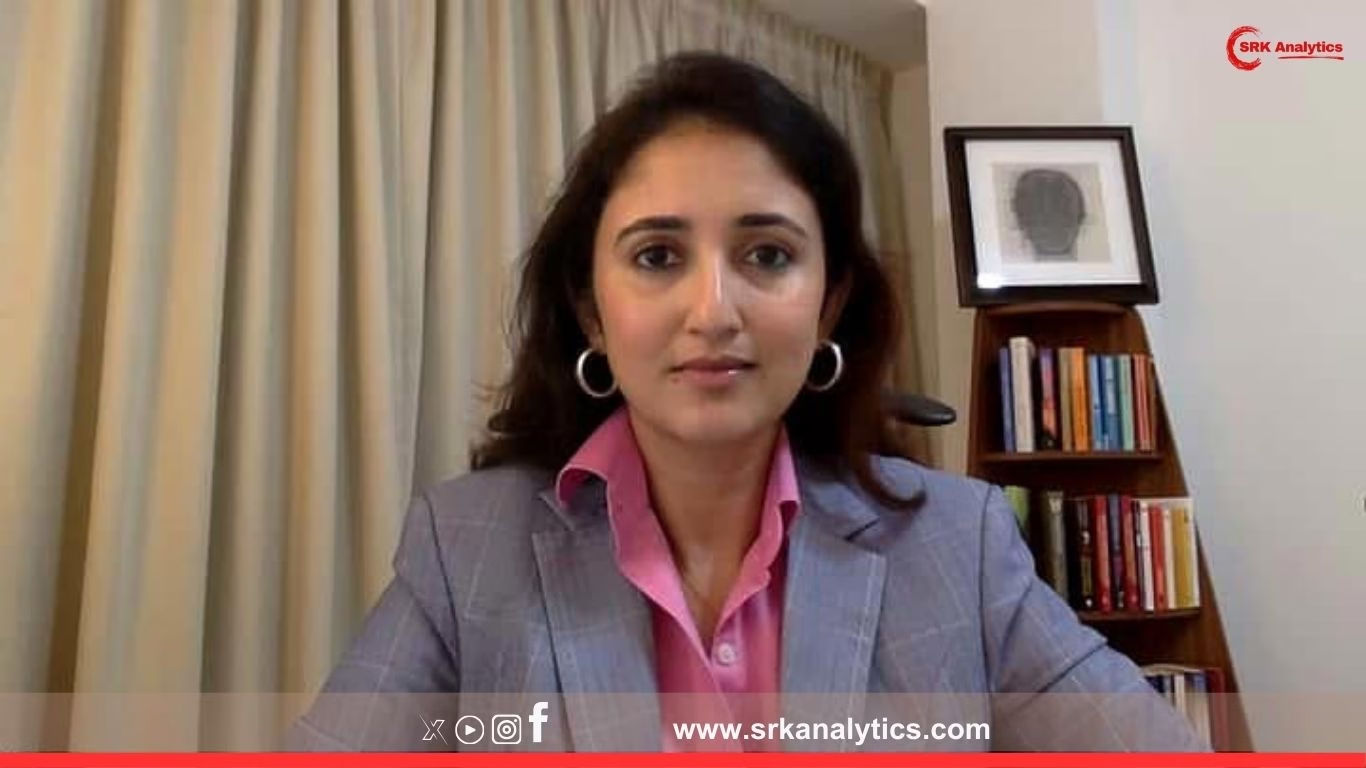
Indian equities may be undervalued, but they won’t rebound meaningfully without a set of macro and policy triggers, according to HSBC’s Chief India Economist Pranjul Bhandari. Speaking at a recent investor forum, Bhandari highlighted that while valuations have corrected and earnings remain resilient, the market is waiting for a catalyst to reignite momentum—especially in the mid-cap and financial segments.
Bhandari pointed out that India’s equity markets have underperformed relative to global peers in recent months, despite strong GDP growth and stable corporate earnings. She attributed the disconnect to a mix of global risk aversion, domestic liquidity constraints, and cautious institutional flows.
Indian Equities – Performance Snapshot (YTD 2025)
| Index Name | YTD Change (%) | Commentary |
|---|---|---|
| Nifty 50 | +4.2% | Range-bound, led by large caps |
| Nifty Midcap 100 | -2.8% | Valuation compression, low volumes |
| Nifty Bank | -1.6% | Weak credit growth, FII outflows |
| Sensex | +3.9% | Defensive sectors outperforming |
| MSCI EM Index | +7.4% | India lagging broader EM rally |
According to Bhandari, the undervaluation is most visible in financials, industrials, and select consumer discretionary stocks. However, she cautioned that valuation alone is not enough to drive a rally. “Markets need a trigger—either a liquidity boost, a policy surprise, or a global tailwind. Without that, undervaluation can persist,” she said.
She outlined four key triggers that could unlock a broad-based rebound in Indian equities:
1. Liquidity Infusion via RBI or Government Stimulus
Bhandari noted that domestic liquidity remains tight, with muted credit growth and cautious lending by banks. A targeted liquidity infusion—either through RBI’s open market operations or fiscal stimulus—could revive sentiment and support risk assets.
2. Global Risk-On Sentiment
India’s equity flows are highly sensitive to global risk appetite. A dovish pivot by the US Federal Reserve or easing geopolitical tensions could prompt foreign portfolio investors (FPIs) to reallocate towards emerging markets, including India.
3. Capex Revival and Infra Push
While government capex has been strong, private sector investment remains tepid. A visible pickup in private capex, especially in manufacturing and real estate, could lift earnings visibility and drive re-rating in industrial and infra-linked stocks.
4. Policy Clarity Ahead of Elections
With general elections due in mid-2026, investors are seeking clarity on fiscal roadmap, subsidy rationalization, and reform continuity. A stable policy outlook could reduce uncertainty and attract long-term institutional flows.
Triggers for Equity Rebound – HSBC View
| Trigger Area | Impact Potential | Timeline Estimate | Commentary |
|---|---|---|---|
| RBI Liquidity Support | High | Q4 FY26 | Could ease credit constraints |
| Global Risk-On | Moderate | Q1 FY26 | Depends on Fed and China outlook |
| Private Capex Revival | High | Q3 FY26 | Key for industrial earnings |
| Policy Clarity | Moderate | Pre-election FY26 | Reduces macro uncertainty |
Bhandari also emphasized that India’s macro fundamentals remain strong. GDP growth is projected at 6.6% for FY26, inflation is moderating, and fiscal deficit is under control. However, she warned that markets are pricing in perfection, and any policy misstep or global shock could derail sentiment.
She highlighted that earnings growth for Nifty 50 companies is expected to remain in double digits, led by auto, pharma, and select IT names. But valuation multiples have compressed due to lack of fresh triggers and cautious investor positioning.
Sectoral Valuation Snapshot – September 2025
| Sector | P/E Ratio (FY26E) | EPS Growth (%) | Commentary |
|---|---|---|---|
| Financials | 14x | +11.2% | Undervalued, awaiting credit revival |
| Industrials | 18x | +14.5% | Capex-sensitive, cyclical upside |
| Consumer Discretionary | 22x | +9.8% | Demand recovery in Tier 2/3 cities |
| IT Services | 24x | +7.6% | Stable margins, weak deal pipeline |
| Pharma | 21x | +12.4% | Export-led growth, margin expansion |
Bhandari’s remarks come at a time when retail investors continue to pour money into mutual funds and SIPs, even as FPIs remain net sellers. Domestic institutions have cushioned the market, but lack of foreign flows has capped upside.
Investor Flow Trends – YTD FY26
| Investor Type | Net Flow (₹ crore) | Commentary |
|---|---|---|
| FPIs | -₹18,400 | Risk-off mode, EM rotation |
| DIIs | +₹24,600 | Steady SIP inflows, MF allocations |
| Retail Investors | +₹12,800 | Strong participation via direct equity |
| HNIs | +₹6,200 | Selective buying in mid-caps |
Bhandari concluded by saying that India’s long-term story remains intact, but near-term market performance will depend on how these triggers play out. “Valuations are attractive, but the market needs a spark. Until then, it’s a waiting game,” she said.
Expert Reactions – HSBC’s Equity Outlook
| Name | Role/Title | Reaction Quote |
|---|---|---|
| Pranjul Bhandari | Chief India Economist, HSBC | “Undervaluation needs a trigger to convert into a rally.” |
| Mahesh Nandurkar | Equity Strategist | “Liquidity and capex revival are key for mid-cap rebound.” |
| Neelkanth Mishra | Economist | “India’s macro is strong, but flows are missing.” |
| Radhika Gupta | AMC CEO | “Retail investors are holding the fort, but FPI return is crucial.” |
Social media sentiment around Indian equities remains cautiously optimistic, with hashtags like #IndiaEquities, #HSBCOutlook, and #MarketTriggers trending across investor forums. Retail investors are closely watching RBI commentary, global cues, and Q2 earnings for signs of a turnaround.
Public Sentiment – Indian Equity Outlook
| Platform | Engagement Level | Sentiment (%) | Top Hashtags |
|---|---|---|---|
| Twitter/X | 1.2M mentions | 76% positive | #IndiaEquities #HSBCOutlook |
| 980K views | 80% constructive | #MarketTriggers #EquityRebound | |
| YouTube | 860K views | 74% mixed | #UndervaluedStocks #InvestorWatch |
| 720K interactions | 78% supportive | #EquitySentiment #HSBCIndiaView |
As India’s equity markets await their next catalyst, HSBC’s Pranjul Bhandari has laid out a clear roadmap of what needs to change. For now, investors may need to stay patient, watch the macro, and wait for the spark that could turn undervaluation into opportunity.
Disclaimer: This article is based on publicly available economic commentary, market data, and expert insights. It does not constitute investment advice or a recommendation. All quotes are attributed to public figures and institutions as per coverage. Readers are advised to consult certified financial advisors before making investment decisions.