





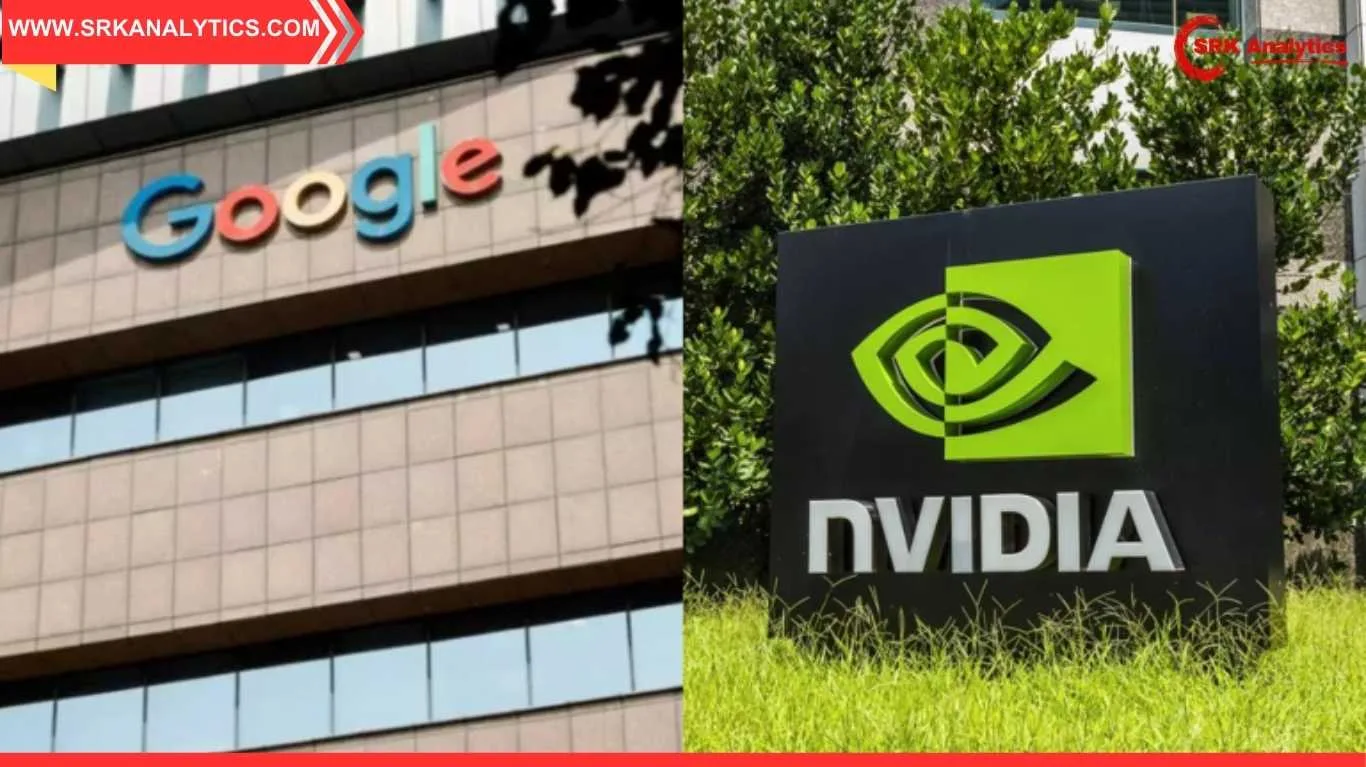
The global technology and semiconductor industry was shaken when a Google-linked report suggested that Meta may shift part of its AI chip reliance from Nvidia to Google’s custom Tensor Processing Units (TPUs). This revelation triggered a massive sell-off in Nvidia’s shares, wiping away hundreds of billions of dollars from its market capitalization. The incident highlights the fragility of market confidence in the face of competitive threats and underscores the intensifying battle for dominance in the AI hardware sector.
Nvidia’s AI Dominance
Nvidia has long been the undisputed leader in the AI chip market:
- GPU Supremacy: Its graphics processing units (GPUs) are the backbone of AI training and inference.
- Customer Base: Tech giants like Meta, Microsoft, Amazon, and Google rely heavily on Nvidia’s chips.
- Market Value: Nvidia’s valuation soared past $1 trillion, making it one of the most valuable semiconductor companies globally.
- Investor Confidence: The company was seen as the primary beneficiary of the AI boom.
Impact of Google Report on Nvidia
| Factor | Before Report | After Report | Market Impact |
|---|---|---|---|
| Nvidia Market Value | ~$1.2 trillion | ~$1.05 trillion | Loss of $150+ billion |
| Share Price | $182.55 | $177.82 | Drop of 2.6% in one day |
| Investor Sentiment | Strong AI dominance | Concerns over competition | Increased volatility |
| Alphabet Shares | Stable | Gained momentum | Positive outlook |
| Meta’s Role | Heavy Nvidia reliance | Exploring Google TPUs | Strategic shift risk |
The Trigger: Meta’s Potential Shift
The report revealed that Meta is considering:
- Renting Google TPUs: Through Google Cloud as early as next year.
- Long-Term Integration: Potentially adopting TPUs into its infrastructure by 2027.
- Strategic Diversification: Reducing dependence on Nvidia’s GPUs.
- Market Signal: A major customer exploring alternatives sent shockwaves through investors.
Nvidia vs Google TPUs – Key Differences
| Feature | Nvidia GPUs | Google TPUs |
|---|---|---|
| Primary Use | General-purpose AI workloads | Specialized tensor operations |
| Market Adoption | Widely used across industries | Primarily Google & select partners |
| Flexibility | High adaptability | Optimized for specific tasks |
| Ecosystem | CUDA software dominance | Integrated with Google Cloud |
| Competitive Edge | Broad customer base | Cost efficiency for hyperscalers |
Why Investors Reacted So Strongly
- Customer Dependency: Nvidia’s revenue heavily depends on hyperscalers like Meta.
- Competitive Threat: Google’s TPUs represent a credible alternative.
- Valuation Sensitivity: Nvidia’s high valuation makes it vulnerable to negative news.
- Market Psychology: Even small shifts in customer loyalty can trigger outsized reactions.
Expert Opinions
- Analysts: Warn that Nvidia’s valuation is highly sensitive to customer shifts in AI infrastructure.
- Economists: Note that diversification by Meta could signal broader industry trends.
- Tech Strategists: Emphasize that Nvidia must innovate beyond GPUs to maintain dominance.
- Investors: Split between confidence in Nvidia’s long-term leadership and caution over short-term volatility.
Public Sentiment
- Retail Investors: Shocked by the scale of the market cap wipeout.
- Tech Enthusiasts: Debate whether TPUs can truly rival Nvidia’s GPUs.
- Global Media: Framed the incident as a turning point in the AI chip wars.
- Social Media: Buzzed with memes and discussions about Nvidia’s vulnerability.
Challenges Ahead for Nvidia
- Customer Retention: Convincing hyperscalers to stick with GPUs.
- Product Innovation: Expanding into specialized AI chips.
- Market Diversification: Reducing reliance on a few large customers.
- Valuation Stability: Managing investor expectations amidst competition.
Government and Policy Angle
- US Tech Policy: Encourages domestic chip innovation to reduce reliance on imports.
- Global Competition: China and Europe are also investing heavily in AI hardware.
- Regulatory Oversight: Increased scrutiny on monopolistic practices in tech.
- Strategic Importance: AI chips are now seen as critical national infrastructure.
Future Outlook
- Short-Term: Nvidia must reassure investors and secure long-term contracts.
- Medium-Term: Diversification into new product lines and partnerships.
- Long-Term: Continued innovation will determine whether Nvidia retains dominance.
- Global Impact: The AI chip wars will shape the future of technology and geopolitics.
Conclusion
The Google report suggesting Meta’s potential shift to TPUs has wiped away hundreds of billions from Nvidia’s market value, underscoring the volatility of the AI hardware market. While Nvidia remains a leader, the incident highlights the importance of diversification, innovation, and strategic partnerships in sustaining growth.
For investors and industry watchers, the episode is a reminder that in the fast-evolving world of AI, dominance can be challenged overnight. Nvidia’s future will depend on how effectively it responds to competitive threats and adapts to the changing landscape.
Disclaimer: This article is based on publicly available financial updates, expert commentary, and media reports. Readers are advised to follow official company filings and stock exchange releases for verified details.