


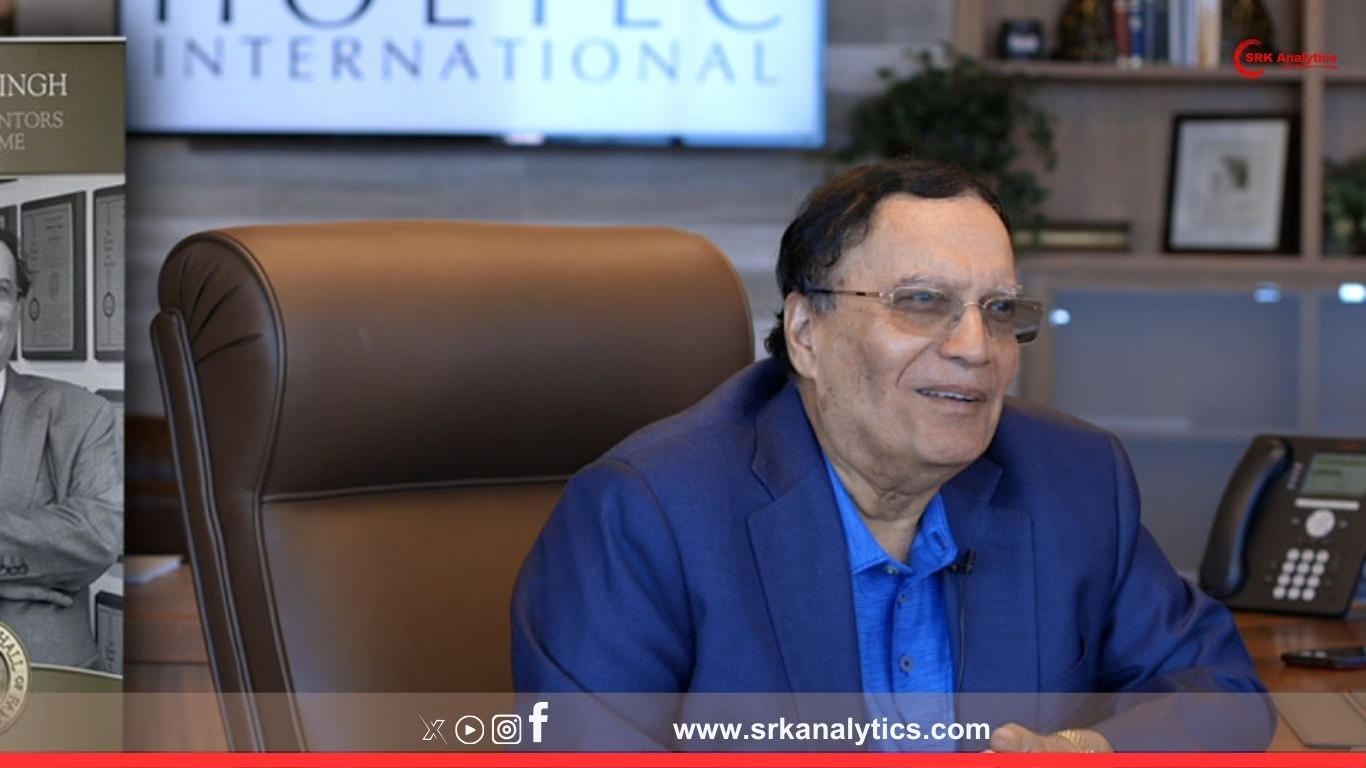
In a bold move that could redefine India’s energy landscape, Holtec International, a leading US-based nuclear technology firm, has announced plans to build 200 Small Modular Reactors (SMRs) across India. The announcement was made by Holtec’s founder and CEO Dr. Kris Singh, who emphasized that India’s energy needs and infrastructure challenges make it an ideal candidate for distributed nuclear power generation.
The SMR300 reactors, each with a generation capacity of 300 MW, are designed for flexible deployment near industrial zones, urban centers, and even deserts. Holtec’s expansion plan aligns with India’s push for clean, scalable, and decentralized energy solutions, and is expected to deepen the India-US strategic partnership in nuclear technology.
🧭 Holtec’s Vision for India: Distributed Nuclear Power at Scale
| Project Component | Details |
|---|---|
| Total Reactors Planned | 200 SMR300 units |
| Generation Capacity | 300 MW per unit |
| Total Output | 60,000 MW |
| Land Requirement | ~30 acres per 2 reactors |
| Technology Transfer | Approved by US Department of Energy |
| Local Manufacturing | Planned with Indian partners like L&T |
Holtec’s SMR300 reactors are designed for distributed power generation, meaning electricity is produced close to where it is consumed—reducing transmission losses and infrastructure costs.
📊 SMR vs Traditional Nuclear: Efficiency and Land Use
| Parameter | SMR300 (Holtec) | Traditional Nuclear Plant |
|---|---|---|
| Output per Unit | 300 MW | 1000 MW |
| Land Required | 15 acres | 1000 acres |
| Cooling Requirements | Minimal | High |
| Exclusion Zone | Integrated with fencing | Large buffer zone needed |
| Deployment Flexibility | High | Limited |
Holtec’s design allows reactors to be installed near residential and industrial areas, making them ideal for densely populated regions like India.
🔍 Strategic Fit for India’s Energy Goals
India’s growing energy demand, coupled with its commitment to net-zero emissions by 2070, makes SMRs a strategic fit. Unlike large nuclear plants that require massive infrastructure and long lead times, SMRs offer modularity, faster deployment, and lower capital intensity.
| National Energy Goal | SMR Contribution |
|---|---|
| Net-zero by 2070 | Clean, non-carbon energy source |
| Energy Access for All | Distributed generation in remote areas |
| Industrial Growth | On-site power for manufacturing zones |
| Grid Stability | Localized generation reduces outages |
Holtec’s reactors can also provide steam for industrial use, enhancing energy efficiency in sectors like textiles, chemicals, and food processing.
🧠 CEO Kris Singh’s Pitch: India as a Global SMR Leader
In an interview, Dr. Kris Singh highlighted India’s unique suitability for SMRs due to its fragmented power grid and land constraints. He stated:
“India doesn’t have a power grid that can transport large quantities of energy over wires. Our SMR300 is essentially a small power station that can be placed next to an industrial park and provide electricity and steam. It’s efficient, scalable, and designed for India’s needs.”
Singh also emphasized that Holtec’s reactors can operate in deserts and require minimal water, making them viable in arid regions like Rajasthan and Gujarat.
📉 Challenges and Policy Bottlenecks
Despite the ambitious plan, Singh acknowledged hurdles such as:
- Delays in amending India’s Civil Nuclear Liability law
- Lingering effects of Trump-era tariffs on India
- Need for streamlined regulatory approvals
| Challenge | Impact on Project Timeline |
|---|---|
| Civil Nuclear Liability Law | Limits foreign participation |
| Tariff Disputes | Affects component imports |
| Regulatory Complexity | Slows down site approvals |
| Land Acquisition | Requires coordination with state governments |
Holtec is working closely with Indian authorities to address these issues and accelerate deployment.
🧠 Local Manufacturing and Job Creation
Holtec plans to set up assembly-line manufacturing plants across India to produce reactor components domestically. This initiative could generate thousands of skilled jobs and boost India’s engineering ecosystem.
| Manufacturing Plan | Details |
|---|---|
| Partner Companies | Larsen & Toubro, BHEL, Bharat Forge |
| Component Production | Reactor vessels, control systems, turbines |
| Job Creation Estimate | 50,000+ direct and indirect jobs |
| Skill Development | Training programs for nuclear technicians |
The company has already received clearance from the US Department of Energy to transfer technology to Indian partners.
🧠 Global Competition and Strategic Implications
Holtec’s India expansion is also seen as a strategic counter to China’s dominance in nuclear exports. Singh noted that a strong India-US nuclear partnership is essential to balance global influence in the energy sector.
| Country | SMR Strategy |
|---|---|
| China | State-backed SMR exports |
| Russia | Floating SMRs for Arctic deployment |
| USA (Holtec) | Private-sector led, modular design |
| India | Strategic partner, manufacturing hub |
India’s entry into the SMR space could position it as a global leader in clean energy innovation.
📌 Conclusion
Holtec’s plan to build 200 SMR nuclear reactors in India marks a transformative moment in the country’s energy journey. With scalable technology, efficient land use, and strategic alignment with national goals, SMRs offer a compelling solution to India’s power challenges.
As Holtec navigates regulatory and policy hurdles, its commitment to local manufacturing, job creation, and sustainable energy positions it as a key player in India’s clean energy future. If successful, this initiative could redefine how India powers its industries, cities, and rural communities—ushering in a new era of decentralized nuclear energy.
—
Disclaimer: This article is based on publicly available interviews and media reports as of August 22, 2025. It is intended for informational purposes only and does not constitute investment, engineering, or policy advice.