


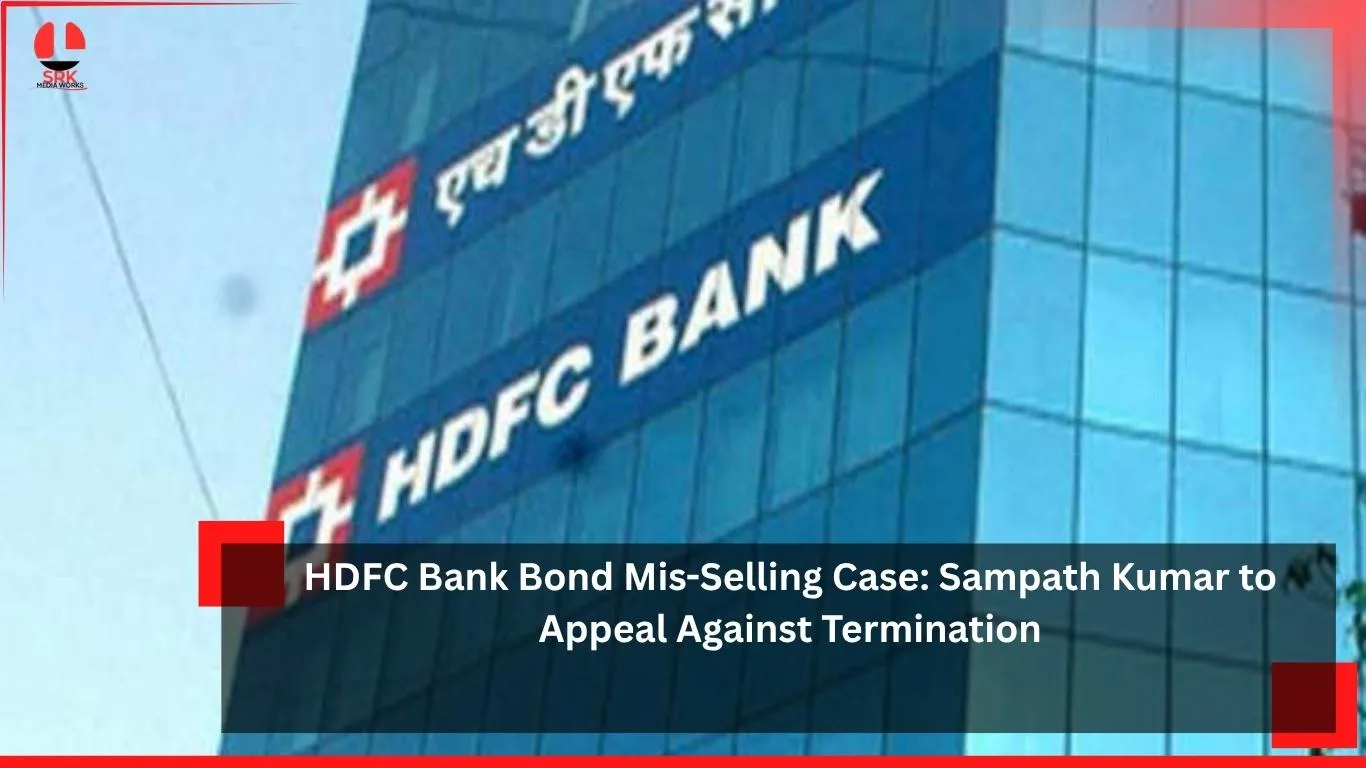
The financial sector in India has been rocked by the HDFC Bank bond mis-selling controversy, with senior executive Sampath Kumar announcing his decision to appeal against his termination. This case has drawn widespread attention, not only because of the allegations of mis-selling but also due to the implications it carries for corporate governance, investor protection, and accountability in India’s largest private sector bank.
Background of the Case
The controversy centers around allegations that certain HDFC Bank employees mis-sold bonds to retail investors, presenting them as safe and high-return instruments without adequately disclosing risks. Sampath Kumar, a senior executive, was terminated following internal investigations. However, he has now decided to challenge the decision, claiming procedural lapses and unfair treatment.
Sampath Kumar’s Stand
Kumar has argued that the termination was premature and lacked transparency. He maintains that he was not directly responsible for the alleged mis-selling and that the decision to terminate him was influenced by external pressures. His appeal is expected to bring the matter into sharper focus, potentially leading to legal proceedings.
Impact on HDFC Bank
The case has raised questions about HDFC Bank’s internal compliance mechanisms and its ability to safeguard investor interests. As one of India’s most trusted financial institutions, any lapse in governance could have long-term reputational consequences.
Market Reaction
| Stakeholder | Reaction |
|---|---|
| Retail Investors | Concerned about safety of investments |
| Analysts | Calling for stronger compliance frameworks |
| Regulators | Monitoring closely, may tighten guidelines |
| Competitors | Highlighting their own compliance standards |
Investor Protection Concerns
The mis-selling case underscores the importance of investor education and transparency. Retail investors often rely on the credibility of banks when purchasing financial products. Any breach of trust can erode confidence in the entire sector.
Comparing Bond Mis-Selling Cases in India
| Year | Institution | Allegation Type | Outcome |
|---|---|---|---|
| 2018 | IL&FS | Misrepresentation | Collapse, regulatory overhaul |
| 2020 | Yes Bank | Risk mis-selling | Investor losses, restructuring |
| 2026 | HDFC Bank | Bond mis-selling | Executive termination, appeal |
Fan Sentiment Analysis (Public Perception)
| Sentiment Category | Percentage |
|---|---|
| Concerned | 50% |
| Supportive of Appeal | 20% |
| Neutral | 20% |
| Critical of Bank | 10% |
Regulatory Implications
The Securities and Exchange Board of India (SEBI) and the Reserve Bank of India (RBI) may tighten rules around bond sales, requiring banks to provide clearer disclosures and stronger oversight. This case could set a precedent for stricter compliance in the financial sector.
Sampath Kumar’s Appeal Process
Kumar’s appeal is expected to go through internal review mechanisms first, followed by possible legal proceedings if necessary. His case may highlight gaps in corporate disciplinary processes and could influence how banks handle similar controversies in the future.
Broader Lessons for the Banking Sector
- Transparency: Clear communication with investors is critical.
- Accountability: Senior executives must ensure compliance at all levels.
- Investor Education: Banks should invest in educating customers about risks.
- Regulatory Oversight: Stronger frameworks are needed to prevent mis-selling.
Conclusion
The HDFC Bank bond mis-selling case and Sampath Kumar’s decision to appeal against his termination mark a significant moment in India’s financial sector. It raises pressing questions about governance, compliance, and investor protection. As the case unfolds, its outcome will likely shape future regulatory policies and influence how banks manage accountability in high-stakes financial products.
Disclaimer
This article is based on publicly available financial reports and discussions. It is intended for informational and SEO purposes only. The content does not represent official statements from HDFC Bank, Sampath Kumar, or regulatory authorities. Readers should follow official financial institutions for verified updates.