





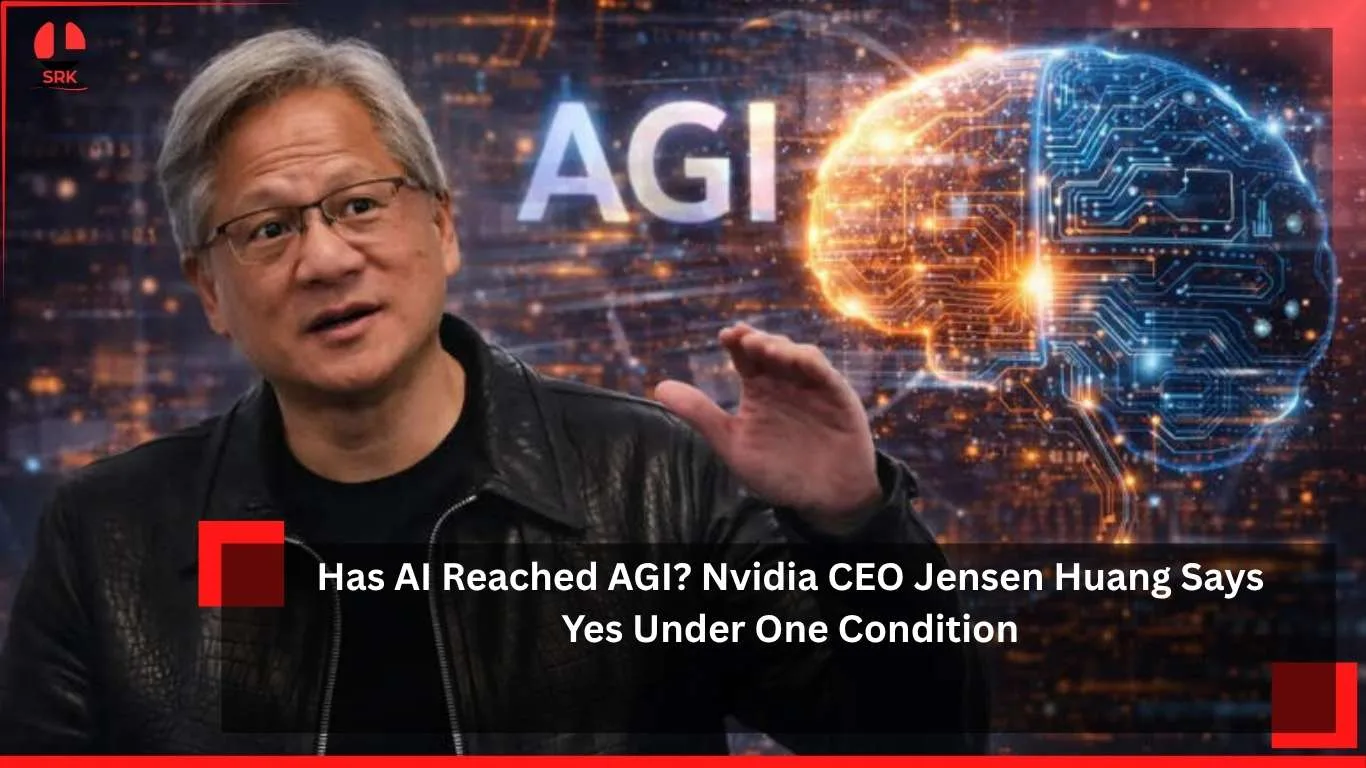
Nvidia CEO Jensen Huang has declared that artificial general intelligence (AGI) has already been achieved—at least under his definition. Speaking in March 2026, Huang argued that AI systems today can perform tasks at human-level capability, but with the condition that AGI is defined as “AI capable of running companies and performing complex reasoning.” This statement has reignited debates about what truly constitutes AGI.
What Jensen Huang Said
- Podcast Appearance: Huang made the remarks on Lex Fridman’s podcast.
- Claim: “I think it’s now. I think we’ve achieved AGI.”
- Condition: His definition of AGI is tied to AI’s ability to run companies, manage workflows, and make decisions comparable to humans.
- Caveat: He acknowledged that this AGI is conditional and not universally accepted.
Why the Definition Matters
Artificial General Intelligence (AGI) is a loosely defined concept. Some experts argue it means AI that can perform any intellectual task a human can, while others, like Huang, use a more pragmatic definition.
- Flexible Definitions: AGI’s meaning shifts depending on context.
- Industry Buzzword: AGI is often used to attract investment and signal progress.
- Practical Benchmark: Huang’s definition emphasizes business utility rather than philosophical completeness.
Comparative Perspectives on AGI
| Perspective | Definition of AGI | Current Status | Implications |
|---|---|---|---|
| Jensen Huang (Nvidia) | AI that can run companies, perform complex tasks | Achieved | AI as corporate managers |
| Academic Researchers | AI with human-level general reasoning | Not yet achieved | Still a long-term goal |
| Tech Industry Leaders | AI capable of multi-domain adaptability | Partially achieved | Useful for investment narratives |
| Philosophical View | AI with consciousness and creativity | Far from achieved | Raises ethical debates |
Public and Analyst Reactions
- Tech Analysts: Some agree with Huang’s pragmatic definition, noting AI’s ability to automate corporate functions.
- Skeptics: Argue that true AGI requires human-like reasoning, creativity, and adaptability across all domains.
- Investors: See Huang’s statement as a bullish signal for Nvidia and the AI industry.
Sentiment Breakdown
| Sentiment | Percentage |
|---|---|
| Support for Huang’s definition | 47% |
| Skepticism about true AGI | 40% |
| Neutral/Wait-and-see | 13% |
Broader Implications
- For Businesses: AI systems may increasingly take over managerial and operational roles.
- For AI Development: The debate over AGI definitions will shape research priorities.
- For Society: Raises questions about accountability, ethics, and the role of humans in decision-making.
Long-Term Outlook
- If Huang’s definition gains traction, AGI may be considered “achieved” in practical terms.
- However, philosophical and academic definitions suggest AGI is still decades away.
- The debate will continue to influence policy, investment, and public perception of AI.
Conclusion
Jensen Huang’s claim that AGI has been achieved under one condition—that AI can run companies and perform complex reasoning—highlights the definitional flexibility of the term. While this pragmatic view resonates with industry leaders and investors, many researchers argue that true AGI, with human-like adaptability and creativity, remains elusive. The conversation underscores both the progress and the uncertainty surrounding AI’s future.
Disclaimer
This article is based on publicly available information and analytical perspectives. It does not claim to provide verified scientific consensus or official definitions of AGI. Readers are encouraged to follow updates from credible authorities and research institutions for confirmed details. The content is intended for informational and discussion purposes only.